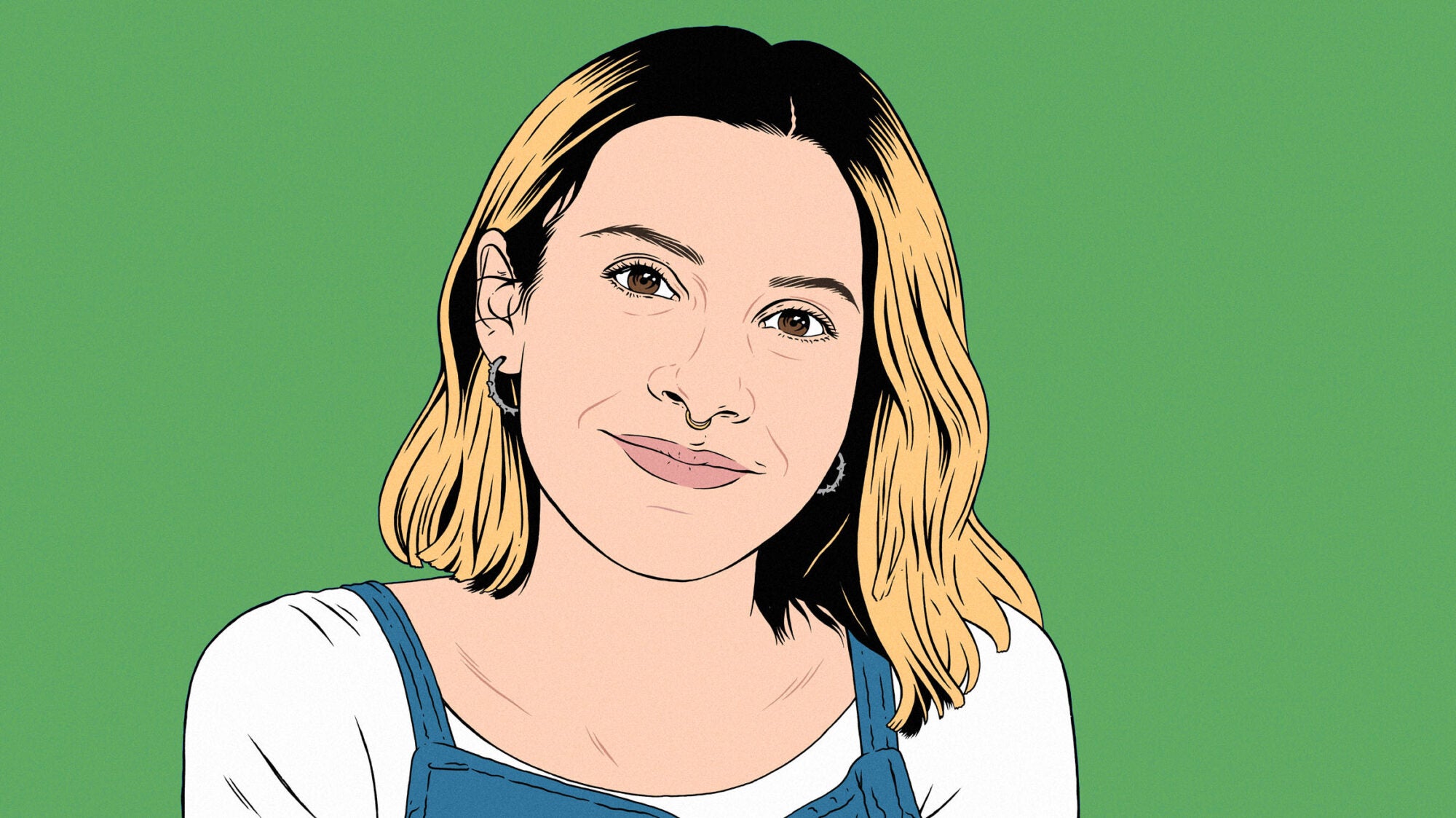
Our friend Tanya Bush is back. The Brooklyn-based pastry chef, writer, and co-founder of Cake Zine visits the studio to talk about her incredible debut book, Will This Make You Happy: Stories & Recipes from a Year of Baking. It’s part coming-of-age memoir, part baking book, and the rare cookbook that is also a page turner. In this episode we get into the year of Tanya’s life that inspired this book and get into what is exciting at Tanya’s restaurant, the acclaimed Little Egg.
Subscribe to This Is TASTE: Apple Podcasts, Spotify, YouTube
Read the full transcript:
Matt Rodbard: Tanya Bush, welcome to This Is TASTE. So great to see you. I’m so excited to talk about your book, Will This Make You Happy. It’s a narrative cookbook, it’s a memoir — and I’ll say quickly, before we get into the conversation, it is one of my favorite books of recent memory. It’s a really wonderful addition to the back-of-house memoir. There have been a lot of them recently, but yours is very different. It’s structured in a unique way. There is a real story. We’re going to have no spoilers here — but the ending is worth it. Congratulations. It’s remarkable.
Tanya Bush: Oh, thank you so much, Matt. I really appreciate it. I think it’s somewhat of a humiliating exercise to release any kind of book, especially when it’s very personal. So I appreciate that it resonated.
Matt Rodbard: The structure is unique — it’s built around four seasons. There are a lot of terrific recipes in the book. Anyone who’s followed your work at Little Egg or through Cake Zine knows you’re such an inventive pastry chef and an amazing talent. The head notes are really well written, but I personally kind of just read it for the story — the story of your life. Tell us a little about this story and about deciding that you needed to write it.
Tanya Bush: Yeah, totally. I’m glad it read like a story, because that was very much what I was interested in. This whole notion of a narrative cookbook was alluring to me as someone who grew up reading novels and narrative nonfiction. The meaningful entwinement of recipes and story felt extraordinarily natural, especially when you are teaching yourself a new skill. This book is a lot about trying to find a sense of meaning and purpose and falling back in love with your own abilities and appetites. It starts with the narrator — a younger version of myself — trying to learn how to bake. It felt extraordinarily important to have the recipes living alongside what was happening in the wings. And there was a lot happening in the wings. I was failing and humiliating myself, and also feeling utterly exhilarated. I went to Italy. I started a new job at a local bakery. All of these things felt like constitutive parts of the process of learning a new skill. And baking, in and of itself, is naturally narrative to me — there’s the assembling of ingredients, the whisking and mixing and kneading and waiting, and hoping that this cake is going to rise and transform as you hope it will. This is very much a coming-of-age story, and you’re watching the narrator transform. That entwinement felt like a very natural form.
Matt Rodbard: The younger version of yourself — to be clear — this is a bit of a pandemic book. It’s very much a Brooklyn book, which I think is cool. And it’s a book about coming to the world of professional cooking really from the outside. You did not go to culinary school. The pastries at Little Egg have since been acknowledged as the best in the city by New York Magazine. That happened over a relatively short period — you’ve got the goods — but this book is the beginning of that process.
Tanya Bush: Totally. I do think the book is a lot about what it means to teach yourself something new when you have no constraints, or other people inculcating within you the “proper” ideas. There’s this scene at the beginning where the boyfriend — one of the main characters in the book — gives the narrator a book on the science of baking, and she’s like: good lord, I am not charmed by this. I’m entirely afraid of it. I thought this was something I could play with and experiment with in my kitchen. I was viewing it as a hobby, and to suddenly mystify the experience is utterly terrifying. One of the pleasures of writing this book, and of teaching myself how to bake on my own, was getting to experience firsthand what was working for me. Rather than being in a rarefied culinary school environment, I absorbed the ratios and the techniques that resonated with me and gave myself freedom to play and experiment in the margins.
Matt Rodbard: You can see your progression throughout. And we’re going to talk about Italy. I also love the sub-character — the influencer. The name isn’t used, but you’ll have to tell me who it is off-mic. It’s very real, the way you write about this influencer speaking to you and how you absorb the techniques they present and take those into your home kitchen. This is a modern, social-media-era memoir that addresses that world head-on.
Tanya Bush: I think we all have parasocial relationships with people online. I was spending an inordinate amount of time on Instagram, which is part of what impelled me toward baking as this idea of a panacea. It was the pandemic — we were all looking to sourdough and banana bread to quell our existential malaise. I was sort of originally lambasting that, and I don’t actually write about @will.this.make.me.happy — the Instagram account that I run, which was born out of that moment — because the only thing more boring than spending a lot of time on Instagram is writing about spending a lot of time on Instagram. But online culture was very much shaping my relationship to baking. I was watching countless reels and YouTube videos of people professing to know the best techniques, offering two-minute tutorials on how to make a custard or a chiffon. It was emerging from a very online moment, because we were all cloistered away in our homes.
Matt Rodbard: Tell me about food growing up in a New Jersey suburb. It’s clear from the book that becoming a pastry chef was not really your goal in your youth.
Tanya Bush: It was not my goal at all. I think food growing up was often about utility and function more than pleasure. Both my parents worked full time, so there was a lot of frozen samosas and Lean Cuisines and fish sticks — though I will say my mother has taken issue with the fact that I’ve said this publicly before. Let me set the record straight: there were a lot of extemporaneous stews she made that were totally improvisational, cupboard miracles. She’s a stew remixer. She slayed the stews. It was absolutely delightful. I also always had a ferocious sweet tooth — ice cream was very much a part of my identity as a young person. I actually worked at an ice cream shop for many years growing up, where we participated in the ice cream making itself. But I didn’t really see it as a feasible or viable path to a career. Food just didn’t seem to me in any way like an art form at that particular moment in my life. It was really about function.
Matt Rodbard: What about college in Minnesota? Does food have a role there? I love that your pastries at Little Egg are informed by the upper Midwest. A cinnamon roll is very much upper Midwest canon.
Tanya Bush: Absolutely. We are not skimping on butter at Little Egg, for sure. As I write about a little in the book, there was this house on campus called Daisy Moses — the cookie house. It was open 24 hours a day and eternally stocked with all the ingredients to make chocolate chip cookies. I did spend a lot of time there. In retrospect you can imbue those moments with meaning, but at the time I was just like: I love getting stoned and making chocolate chip cookies. I really loved living in Minnesota — I was there for four and a half years. I loved the food culture. There was a lot of delicious, indulgent fare — hot dish, casseroles — but there was also an amazing Mexican restaurant in town that I still yearn for. And the Twin Cities, Minneapolis and St. Paul specifically, have an incredible food scene. It’s super international. There’s incredible Somali cuisine, incredible Ethiopian cuisine, Hmong Village — oh my gosh, it’s incredible. I had a professor in college who took me there, and that was a formative experience. I’ve always been enamored with food. But it took me some time to really understand that I was interested in probing that intersection intellectually.
Matt Rodbard: Carleton College — Northfield, Minnesota, baby. I went to Wisconsin, so I know the cold. Okay — no spoilers, pick up the book, link in the show notes. I want to talk about the spring season. You end up in Italy, working at an agriturismo. What I love about this section is that we have so many chefs on this show talking about their incredible stages and amazing experiences traveling for their work — and you had the opposite. Talk about ending up in Italy and working there.
Tanya Bush: I was lusting for my Eat, Pray, Love moment — aren’t we all? And it was a lot of eating, not so much praying and loving. It was an extraordinarily weird experience. It’s funny because I wrote an essay pretty soon after I came back about that time for Guernica magazine, and I was really fixated on the discomfort and the torturous sensibility of having to eat vast quantities of food, which was genuinely part of the job. I was eating on display, very much keeping up this performance of the American intern in paradise.
Matt Rodbard: A prop, essentially. The American intern sitting with the guests, part of the scenery.
Tanya Bush: Yeah, yeah. And what was fun to revisit for the book was that, as uncomfortable as the gastronomical aspects of it were, it was also an extraordinarily clarifying experience in terms of my baking identity. There had been this real moment where I was like: I want to be a pastry chef — this rarefied term, extraordinarily professional, pastry as art, perfection as the ultimate pursuit. I was bearing witness to what that looked like in the context of the agriturismo, and I realized it really wasn’t for me at all. Those persnickety, fastidious desserts were antithetical to the type of dessert I loved and wanted to serve. It was really fun to revisit for the book because, in retrospect, I had a new take: this was an importantly clarifying experience for my sense of food identity. This was not the kind of baking I wanted to make. I wanted something messier, a little more homemade-feeling, a little more communal. And I don’t think I would have come to that without being confronted with the alternative.
Matt Rodbard: The chef there is doing these plated desserts with foams, and you’re trying to get your baking onto the table and he’s just not letting you. He’s the ultimate gatekeeper. Looking back — did you have the skills to bake there at that time?
Tanya Bush: I think I had the skills, because I was pretty confident in home baking at that point, and it wasn’t such a massive group that I was suddenly moving from baking for six people at home to serving a 60-seat restaurant. I totally understand their skepticism and reticence to involve an intern — they ordinarily had culinary students, and I didn’t have any formal training. But I also think I just wasn’t willing to play the role they wanted me to play, and so there was indelible friction from the offset. We just didn’t entirely vibe. I won’t spoil anything, but it sort of erupts in a particular way at the end of that season. I still feel that sting of humiliation and shame about what happened there.
Matt Rodbard: Read the book. I also love the way you paint the American guests who come for their quote-unquote culinary school at the agriturismo in Tuscany. What are the conversations like at the table with these folks?
Tanya Bush: It was wild. I have diaries full of these conversations, because my refuge was documenting what was happening while I was there. There was just a wild number of strange conversations going on. These are really wealthy Americans in search of a very particular experience. I did feel very much like I was only relevant insofar as I was helping them have the best time possible — which should have its pleasures, of course. Hospitality is so much about helping people feel good and fed and sated. But at this particular juncture in my life, that wasn’t what I was looking for. I really wanted to bake. And I had this somewhat delusional sense of what I would learn there that was quickly punctured when I arrived.
Matt Rodbard: There’s an alternate reality where the chef actually pulls you aside and teaches you a few things on the side — but this is the least generous pastry chef you worked under. The scene where a guest drops a scalding tea bag into your hand and gives you welts is wild. You can’t make that up, which is exactly why you keep a journal when you’re on the road. Okay — you return to New York. I love the next season. Many listeners work in the industry or have aspirations to work in it, and I love how you write about throwing yourself into a role at a busy Brooklyn café and bakery. I felt anxiety reading it. Spoiler: you’re great, you nail it. But I love the anxiety of throwing yourself into becoming a pastry associate at a production bakery without any culinary school background — the stage, the test, eventually landing the job. What was it like entering New York City’s pastry world at 60 miles per hour?
Tanya Bush: At that juncture I felt like I had very little to lose. So you just go: here we go, free fall. One of the pleasures of being young is that the stakes are so high and also so low — I didn’t have many responsibilities to attend to, and you can kind of just do things. It was also a moment where the world was waking up from this long hibernation. People were coming out and about, but restaurants were really in need of workers. There had been a mass exodus from restaurants in the wake of the pandemic, so it was a particularly lucky moment. But it was extraordinarily anxiety-producing, because I had never even known that you needed to label a quart container, or anything about health inspections or food safety. It was very much learning as I went. But so many of the bakers I know and love and admire have learned on the job. In this day and age, I think it’s rarer for people to shell out the money to go to culinary school when you really can learn as you go — find mentorship, find bakers or cooks you admire and learn from them alongside the baking videos and influencers you follow online.
Matt Rodbard: I think you’re being humble. You enter this production bakehouse and the punch list for the bake-off is long — I’m feeling the pressure. You’re writing in a beautiful way —
Tanya Bush: I wanted you to feel anxious, so I’m glad it worked.
Matt Rodbard: You’re me and I’m you. It’s a new entry into the back-of-house memoir. I look at Ruth Reichl as an example — not back of house, but writing about people in the food world. I liken you to Ruth’s writing. When you’re learning on the fly but you have a busy café that needs pastry — how the hell did you get through that?
Tanya Bush: You stay humble, and you know that you’re going to fail — often. There continue to be batches of things I make that just don’t turn out the way you expect. And that was one of the reasons I felt so drawn to this form of a narrative cookbook. Pastry books and cookbooks more generally tend to be glossy tomes — aspirational, showing you the finished product in its perfect form, and not showing you the mess and anxiety that preceded it. It felt very important to say: this was not smooth sailing. It was not smooth sailing to jet off to Italy and have that weird internship, and it was not smooth sailing inducting myself into the pastry scene in Brooklyn with very little experience. I do fail and humiliate myself on multiple occasions — and that is something you are going to read about. Maybe that resonates. And then you’ll see the finished recipe, and you’ll see that this writer has splayed herself out on the page to show you that this anxiety, this depression, things not working out the first time — that’s a fundamental part of the process. That’s important to say about baking especially, because baking is often considered chemistry, a science, where if you don’t do everything exactly right it’s not going to work. That’s just not how I experienced learning pastry. I was flailing about in my galley kitchen, making mistakes left and right, and making mistakes at the bakery too. People are more forgiving than you give them credit for. And you have to be more forgiving of yourself. When you’re learning something, it’s not always going to come easily — but you pick up and try again.
Matt Rodbard: When you were learning to bake professionally, did you feel that nailing the golden ratios was important first, and that once you had them down you could expand the creativity? You’re a hyper-creative person — not just in this memoir but in your work at Cake Zine. Talk about that foundation and how you were able to spin off into these recipes.
Tanya Bush: Ratios are extraordinarily important. Figuring out a base recipe that feels really good to you, that works in your body, that feels right — and from there, finding the moments and opportunities to insert your own palate and taste into a pastry or a dessert. Like, I was making a caramel this weekend at the restaurant — it’s a miso caramel, and it’s a recipe in the book — and we were low on heavy cream. I was like: I know the amount of liquid going into this recipe, and we have apple cider. Let’s play. I reduced the apple cider into a syrup and used that in place of half the heavy cream. Utterly delicious. When you have a general sense for technique and ratios, you understand where you can play. And maybe it’s a bit of misogyny that, historically, baking has been siloed in a way that cooking hasn’t been. But the way I was teaching myself was so much more akin to cooking. I am touching and tasting and smelling and noticing as I bake, because that’s how I was cooking at home — the way a savory cook would. Those things so deeply translate to baking. Of course there are parameters to adhere to, but within the margins, especially once you begin to notice things, you can really play.
Matt Rodbard: That’s how Brooks Headley looks at it. I just talked to him about the way he thinks about pastry — at Superiority Burger now, and previously at Del Posto. Different styles of desserts, but he, like you, knew the ratios and then could expand and do exactly the kind of move you just described with the apple cider.
Tanya Bush: He is a North Star. Fancy Desserts was a book I had early on that was so formative and important. Beyond the genius of the recipes — which are referenced in this book — he’s a damn good writer. He actually just wrote a piece for our new issue of Cake Zine that is extraordinary. So singular in voice and exhilarating. That sensibility is entirely threaded through Fancy Desserts, and it was one of the first cookbooks I read where I was like: I could read thousands of pages of this and still want more.
Matt Rodbard: I remember a scene in that book where he’s basically breaking out of his pastry job in DC and taking his books with him — climbing a fence or something. A classic.
Tanya Bush: There are so many wild and incredible moments in that book. It’s a reminder to just go back and read it. And it’s an important point — even though there are fewer strictly narrative cookbooks where recipes and story are equally constitutive of the project, a true 50/50, there are so many unbelievable cookbooks with absolutely genius writing. I was immersing myself while researching this book. Natasha Pickowicz — incredible writer, More Than Cake is so beautiful. There are so many books like this. Even if they aren’t narrative cookbooks, they have that extraordinarily singular voice, which is really what I crave in books in general.
Matt Rodbard: We look at it here at Penguin Random House — the cookbook can be many things, but for so many people it’s not a vehicle to make something. We’re still making literary works. Even if the word count looks low, just read the cookbook.
Tanya Bush: One hundred percent. And I think the industry in certain ways has bifurcated storytelling and recipe writing. There are so many memoirs with recipes, but often the recipes feel like a tacked-on addendum, a compulsory part of the process. It’s rare to find books that are really compellingly intermingling the two.
Matt Rodbard: You’re definitely an entry into that genre. I want to talk about going back to your home kitchen — after Italy, after the production bakehouse, you’re back home and finding your voice. It’s kind of a rejection of what you encountered in Italy and a synthesis of what you took from the bakehouse. How did you find your voice, Tanya? How does one self-define?
Tanya Bush: The whole question of the book is: who am I when I don’t know who I am? A lot of the baking I do now is informed by the ethos of Little Egg as a restaurant. We’re a community restaurant. We use local and organic ingredients whenever possible. We’re very seasonally oriented, which was also a big part of the book — it’s structured over the course of a year, and the recipes get more difficult as the book progresses, but they’re also seasonal, rooted in the moment they’re made. I’m very much committed to seasonality. But nostalgic flavors in unconventional forms feels like what I love in a pastry. The cinnamon roll is actually a great example. We serve a brown butter hojicha iteration, and right now on the menu we have a tahini cream cheese cinnamon bun. Tahini and cinnamon was a combination I hadn’t really had before, but I was looking for something that would make the cinnamon bun a little more savory — one of the hopeful hallmarks of my desserts is that they’re never too sweet. They’re really toeing that line between just sweet enough and satisfying the impulse for sugar. When I tried that combination I was like: this makes so much sense. It’s really special and fun to take an ingredient I’ve used in other contexts and never in a cinnamon bun, and use it in both the filling and the frosting. I think a lot about flavor combinations that feel familiar and unexpected and nostalgic, because Little Egg is very much about nostalgia. We have a Southern influence, it’s homey, comforting diner fare — we’re essentially a diner. People come to us because they want a delicious griddled corn muffin, or a big bowl of grits, or a sumptuous katsu sandwich. I want all of my pastries to feel like the perfect bookend to that meal: familiar and nostalgic, but with something a little different.
Matt Rodbard: I love that description. And back to the cinnamon roll — what’s the technical pastry chef term for the center that we all want?
Tanya Bush: The supple center. I don’t think that’s actually a technical term, but —
Matt Rodbard: We could rip on this all day. So many cinnamon rolls, you get to the outer two-thirds and you’re wondering: what are you guys doing here? How do you think about that ratio?
Tanya Bush: This reminds me — when I was a kid, much to the chagrin of my parents, I would always hollow out the loaves of bread we’d get. I would just go in with my little claw and extract the soft interior, and it would look like a mouse had gotten into the pantry. So I’m very familiar with the impulse toward the soft center. I think it’s a lot about your brioche base. It’s about proof time. We are bathing ours in heavy cream so it stays really soft and supple. But the pleasure of a pastry is that every part is a little different — the outside is going to be a little crisper, there’s a little more chew, and then the pleasure is working your way to the center and hopefully saving it for the end.
Matt Rodbard: There are some psychos who prefer the outer side — same as preferring the chicken breast over dark meat. They are wrong. Sorry, listeners. Now — I’m not trying to avoid it — there are love stories in this book and personal relationships, and that’s what makes it more than just Tanya learning to cook. It’s Tanya learning to deal with relationships. What was it like to write about the boyfriend and the crush?
Tanya Bush: Because so much of this had transpired before I was writing it, I really knew what I felt comfortable sharing and what I didn’t. But this is a year in a life — a snapshot. To me, cookbooks are so special because they’re an archive of a moment. I wasn’t giving the reader every detail — I was being very deliberate about what I was sharing, which was obviously vulnerable and intimate. I had yet to read a compelling representation in the food world of what it feels like to be very old and young at the same time in a long-term relationship, when you’re trying to figure out who you are and what will give you meaning and purpose as the world is crumbling. It felt extraordinarily important and constitutive to my experience of learning to bake, because I was trying to individuate and identify who I was alongside someone else. We’d been together for five years at that point. It just felt very much like what was happening in the wings of my baking. It’s a story about appetite and falling in love with your own ability, and also trying to figure out what it means to be in love with someone else — to court pleasure as opposed to happiness, and the divide between those two impulses. It’s strange now, years past finishing the book, to be exposing this part of my life in this particular way, especially because I was entirely anonymous on the internet for a long time, writing personally but in a way that invited readers to imagine themselves in my position. As much as there is disclosure in this book — and there is disclosure — these are also characters. The boyfriend, the crush, the self-involved young narrator trying to figure out who she is — they’re archetypes in certain ways, particular iterations of something very familiar. I really wanted the reader to be able to imagine themselves into this scenario, to remember that totally weird, uncomfortable time of coming of age and feeling like you’re outgrowing a relationship and wondering if that’s true.
Matt Rodbard: I think you paint a vivid picture of the post-pandemic coming-out-of-the-malaise — these hot Brooklyn nights that so many people who lived here or around the country experienced. That time and place, right out of lockdown, was crazy.
Tanya Bush: We were all feral. Everyone was hungry for experience — our appetites had not been sated in years. And that was so much of what was happening for me at that moment. I was like: what else? What does the world have to offer me? What do I have to offer the world?
Matt Rodbard: Read the book. It’s terrific. No spoilers, but there is a great twist at the end — I highly recommend you pick it up. Now — Aliza and I chat all the time on the show, and we’ve had you on many times to talk about Cake Zine. I love the work you and Aliza Abarbanel put out — it’s some of our best food writing, and I’m so happy to work alongside her on edits. She is our queen. Tell me about the next issue of Cake Zine. I know about it, but I want to hear what you have to say.
Tanya Bush: Okay, hell yeah — special preview. So as you might have heard, we have moved into meat territory. We’re doing Steak Zine as our next issue. We actually just sent it to the printer about a week and a half ago. It’s honestly an incredible issue — I think our best yet. The theme is quite topical, in this whole inversion of the food pyramid, the protein-maxing of it all, the whole RFK Jr. of it all. But it’s not just a topical response to what’s happening in the world. It’s very much a historical and personal and experimental exploration of steak in very unexpected ways, which is very much a hallmark of the Cake Zine approach. We’ve got this incredible story by Brooks Headley about what it’s like to own a lacto-vegetarian restaurant in a meat-hungry town, and how he charts his first experience cooking on his own — which was meat. He really delves into that moment. It’s just incredible. We also have this amazing new format helmed by Michelle Moses, our fiction editor, where we commissioned five different fiction writers we love and admire to each write from the perspective of a particular role at the platonic ideal of a steakhouse. We’ve got the maître d’, the server, the bartender, the cook — and it all adds up to this kaleidoscopic portrayal of a steakhouse. They interweave in interesting ways and make you feel like you’re there. It’s a special issue. We thought a lot about ways to make it feel very much like a Cake Zine publication while also experimenting with new forms. It’s out in early April — pre-orders are coming soon.
Matt Rodbard: Pre-orders may be available when this episode runs, so I’ll link to all of that in the show notes. Definitely subscribe to the Cake Zine newsletter for all the events as well. Tanya, I want to ask about your peers in pastry. One big part of what you and Aliza have fostered through Cake Zine and your work at Little Egg is this sense of community — bringing so many voices together through pop-ups, fundraisers, the magazine. Who are some of the peers you really respect right now that we may or may not know?
Tanya Bush: There are so many. Caitlin Wong, who is the pastry chef at Uma — a new bakery and café in Flatbush that I went to this weekend — is just truly an incredible pastry chef. She was like my baking hotline while I was writing the book. If my brioche wasn’t proofing properly I’d text Caitlin, and she’s just a wealth of knowledge with a very similar palate to mine. Everything she makes is perfectly seasoned and creative. I had this focaccia studded with scallions that she described as her take on a scallion pancake focaccia, and it was divine. You’ve got to check out Uma. And Dria Tansio, who is the chef at Salty Lunch Lady in Ridgewood — I’ve always adored and admired her sweets and her savory food. She really takes a cook’s mentality to desserts, so everything is quite balanced. She’s sidelining buttercream in favor of more tangy moments. There are just so many slices of cake I’ve eaten there where I’m like: this is the best cake I’ve ever had. She had this peanut butter and jelly cake that I was absolutely changed by.
Matt Rodbard: There are a lot of great PB&J pastries in our world, but this one was special. What was it doing? It wasn’t buttercream.
Tanya Bush: It’s been probably six months since she had it on the menu, but it was a really plush and delightful yellow sponge, tart raspberry jam, a sumptuous peanut butter frosting, and some peanut crunch on top. It had that nutty savoriness, the brightness from the jam, the nostalgia from the yellow cake. I was like: this is everything I want in a dessert. And then — maybe a less obvious name — Nico Villaseñor, who is the CDC at Smithereens and has a really robust pastry background. He had a long tenure at Four Horsemen and has bopped around, and he just truly treats desserts like a cook. I write about this in the book — I remember having a glass of wine at Four Horsemen when he was the chef there, and he just whipped up this dessert where he’d toasted some dates in brown butter on the stove with a little drizzle of honey. It was a reminder that the simplest things are the best things. You could be laboring for days over rough puff or a hand pie, but the ingredients coming together in six minutes in a pan with a dash of heavy cream are going to be better than almost anything you’ve imagined. Nick Tamburo is the chef at Smithereens as well — Nick’s been on the show. Everything they do there is really thoughtful, well-executed, and playful.
Matt Rodbard: Listeners: you just cannot skip dessert at a restaurant. Figure it out — maybe order a lighter savory course. You need room.
Tanya Bush: Or — here’s my hot take — order dessert first. I used to do this.
Matt Rodbard: Wait. How does that work?
Tanya Bush: Base your meal around the dessert you’re going to have. Literally: I really want the cheesecake, I’m going to order the cheesecake now, we’ll have a glass of wine with our cheesecake, and then we can get into the risotto.
Matt Rodbard: I am so down with that. I’m also very down with dessert tasting counters — I’ve been saying it for years. We need more of them. Instead of going to the bar and having three cocktails, why not a dessert tasting menu?
Tanya Bush: Even just more bars with two cake options on the menu. I really love Romans — one of my favorite things to do is get an after-dinner drink and the chocolate sorbet there. I wish that was more common. I would linger and loiter at a bar with two cake options and probably order both.
Matt Rodbard: Backwards day, folks. And I feel like restaurants will play ball with you on ordering dessert first.
Tanya Bush: Oh, they do. There’s always this moment of “huh” — and then I think they respect the decision. They’re like: you’re marching to the beat of your own drum.
Matt Rodbard: What percentage of Little Egg diners are just ordering straight dessert, nothing else?
Tanya Bush: I don’t know the answer to that. The cruller is pretty much a staple on everyone’s table. But honestly, I think a lot of people come to Little Egg at nine in the morning when they’re really hungry and they want something rich and delicious — a biscuit, a gravy, their eggs. Such a great restaurant.
Matt Rodbard: On This Is TASTE, we ask guests about their discerning taste. To close this interview — a little rapid fire, fast and furious Taste Check. Are you ready?
Tanya Bush: I’m so ready.
Matt Rodbard: Best fruit?
Tanya Bush: Pears. I think pears are an underrated fruit. A really perfectly ripe, juicy, tangy pear is just so satisfying. We have a pear hand pie on the menu at the restaurant right now that has really made me fall in love with pears again. It’s hard to find that peak-ripeness pear — we get them hardened from the grocery store — but when they’re truly ripe they have all the pleasures of stone fruit. Better than an apple. Juicy. Delicious.
Matt Rodbard: I would love to do a full podcast investigation of pears. Worst vegetable?
Tanya Bush: Broccoli. I have the broccoli gene. It tastes inedible to me. I really feel like I’m trying to eat a little tree and I shouldn’t be eating a little tree. It’s so fibrous, it has such a particular flavor. It feels like the vegetable that kids refuse to eat, and as an adult I’m like — no, the kids are right.
Matt Rodbard: I could not disagree more. I love broccoli. Your typical breakfast?
Tanya Bush: Oatmeal or cinnamon toast — one of the two. Oatmeal when I really need energy and protein to power through the day ahead. Cinnamon toast when I need a little blip of pleasure.
Matt Rodbard: Are you baking the cinnamon toast?
Tanya Bush: No — it’s so lo-fi you cannot mess it up. I actually just wrote a little piece about this for Nicola Lamb’s Substack. It’s literally any bread you have in the house: toast it, slather it in butter — salted, unsalted, doesn’t matter. Sprinkle some sugar — brown, white, turbinado, doesn’t matter. Some cinnamon. A little flaky salt, because you want it to taste more like itself. And it is heaven. Literally better than most pastries I encounter in the world.
Matt Rodbard: Cinnamon toast at a dinner party with vanilla ice cream — actually kind of sexy. Big one: the best dessert in the world.
Tanya Bush: A hot fudge sundae. There’s nothing like it. I’m a huge ice cream girl — grew up with it, worked in the industry. I’m an ice cream head. And then to smother it in a delicious bittersweet fudge sauce, a little whipped cream, some toasted nuts — maybe hazelnuts.
Matt Rodbard: It’s on the podium for me too. I’m currently reading Colson Whitehead‘s Sag Harbor — I hope to have him on the show, I’m working on it — and the main character works at an ice cream shop. It changes the way you think about those summer ice cream jobs. You probably learned a lot and are only just realizing it now.
Tanya Bush: Oh, totally. I worked there for five years — a very long time. Shoutout to the Bent Spoon in Princeton, New Jersey. I was just back in New Jersey and visited, and it was such a delight. They have experimental flavors alongside the classics, which is an amazing combination — lavender mascarpone, sweet basil, and also cookies and cream, which is perfect to me. You learn a lot working in an ice cream store. You’re hot and sticky and covered in sugar at all times. It was formative in certain ways.
Matt Rodbard: When you’re craving fast food, where are you going?
Tanya Bush: Five Guys. I really like their milkshakes.
Matt Rodbard: A restaurant you wish you could bring back from the dead?
Tanya Bush: I never got to try Frannies. It’s a storied institution — everyone has devoted themselves to it and talked about how good it was. I’m very sad I missed out, especially because it was in my neighborhood. It could have been my local spot.
Matt Rodbard: Right up on Flatbush, kind of tucked in on a busy street. It’s been Fausto for a while now. Iconic place — changed the pizza scene in New York forever.
Tanya Bush: I love a pizza spot. I went to Ileon about a month ago and thought it was really good. I didn’t try the lobster pizza — their iconic dish — but next time.
Matt Rodbard: Your favorite city outside America to visit for food?
Tanya Bush: This feels like an utterly boring answer, but Paris — because I’ve spent the most time there. Our designer for the magazine lives there, I’ve traveled there a few different times, and my dad loves Paris so I’ve met him there. But it’s just such a vibrant food scene. You can get the best pho you’ve ever had in your life, and then also the sacristain pastry I’d never had before at Du Pain et des Idées that changes your life. I do flirt with the idea of moving to Paris for six months. I’d love to have a better experience staging abroad at some point. But no imminent plans right now — first I’ve got to get the book out.
Matt Rodbard: Are you going to write another book?
Tanya Bush: It’s a good question. While I was writing the book, I was interested in this idea of a sequel — a couple of different iterations of a year in a life from this narrator. I love a trilogy: Before Sunrise, Before Sunset, Before Midnight, but make it baking. I just pitched it. But I think it would be interesting to revisit this character — who is me — in eight years. What is she baking? Am I still baking in a professional context? What is her life like? Tracking a life through cookbooks could be a really interesting form.
Matt Rodbard: I’m into it. Have you sold the film rights yet?
Tanya Bush: We’re actually going out right when the book comes out.
Matt Rodbard: Fingers crossed. Somebody’s got to pick it up. It definitely lends itself to that world. Last one: your favorite sandwich?
Tanya Bush: PB&J. You can’t mess with classics.
Matt Rodbard: What kind of peanut butter are you using?
Tanya Bush: Jif creamy. Definitely creamy, industrial — never crunchy. Crunchy is a huge mistake. And then maybe an artisanal jam, and ideally on a sourdough. But it has to be a soft sourdough. I don’t want a burnished boule — I want something soft, San Francisco-style. It’s giving me that tang and plushness but it’s not hurting my teeth.
Matt Rodbard: Kind of like a grocery store sourdough. Acme Bread does a good job. I’ve personally been dabbling in just a soft wheat, really industrial — it’s like childhood for me. Tanya Bush, what a great conversation. Love the book. Thank you so much for joining This Is TASTE.
Tanya Bush: Thank you so much for having me.