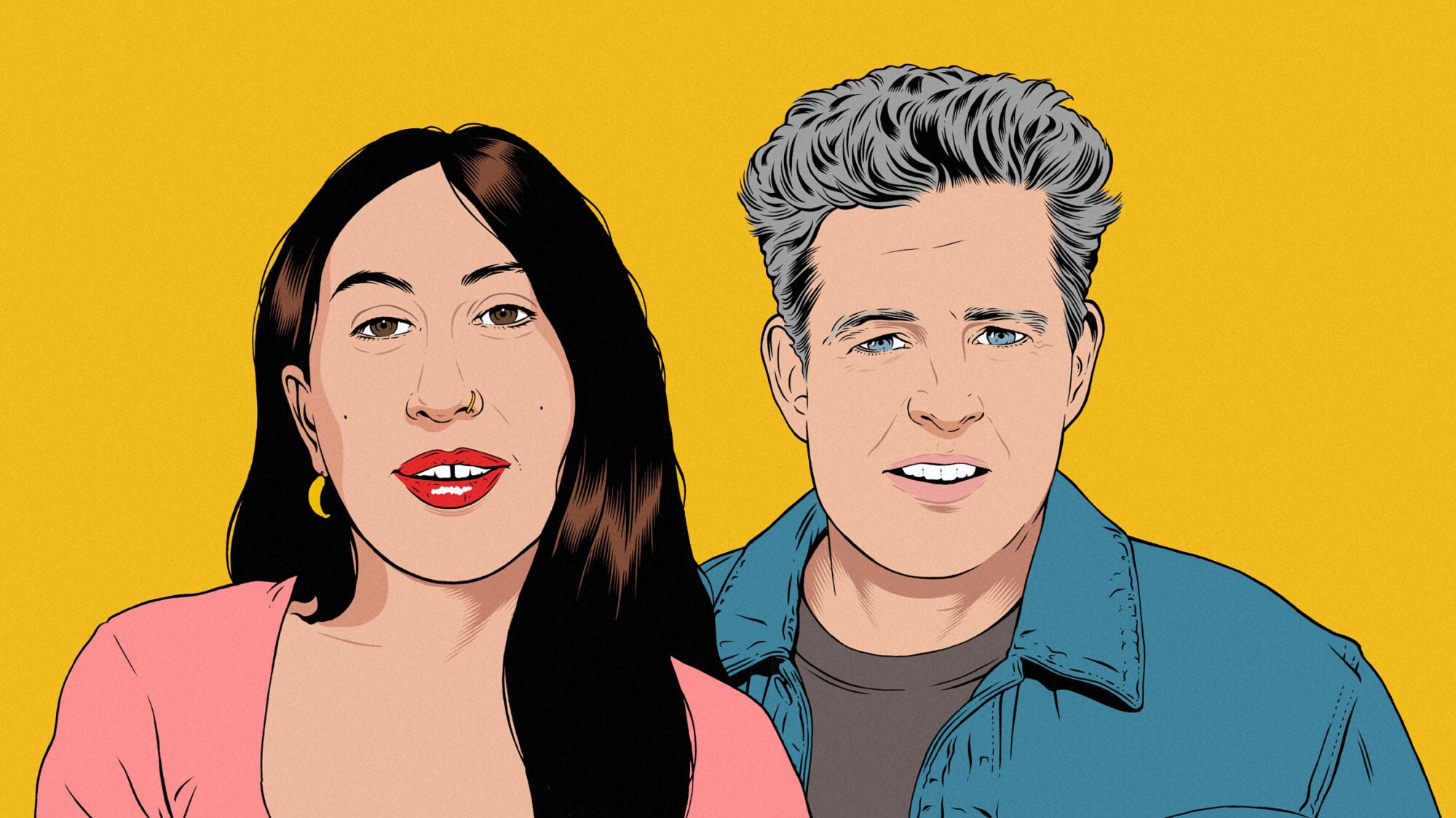
It’s the return of Food Writers Talking About Food Writing. Every couple of weeks, Matt invites a journalist to talk about some favorite recent food writing as well as their thoughts on the industry as a whole. In today’s episode, we talk with Emma Orlow. Emma is a founding journalist at Caper, the new food media startup covering the restaurant industry and food culture with a fresh set of eyes. We talk about why she joined the team, what Caper is doing differently, and this exciting era in food journalism. We also discuss some recent food writing that caught our attention.
Discussed on the episode:
My Dinner Date With A.I. [NYT]
Would You Wait 8 Hours for This Waffle? [New York Magazine]
Uncovering an Underground Cheese Sample Sale [Caper]
Subscribe to This Is TASTE: Apple Podcasts, Spotify, YouTube
Here’s the transcript:
Matt Rodbard: We are back with Food Writers Talking About Food Writing. It’s been a few months — we took a little bit of a hiatus over the holidays, getting into the January swing — but I think more journalists are going to be coming into the studio. I’ve been talking to a few, and I’m so happy to have Emma Orlow in the studio. Emma Orlow is a founding journalist at Caper, which is a brand new startup. You’re putting out newsletters already, even though you haven’t officially launched — you’re still slowly trickling them out.
Emma Orlow: Yeah.
Matt: And we’ve said it on the show briefly, but I’ll just say it again: I’m so excited about this launch. I love seeing new things shooting up from the digital earth.
Emma: Yeah, it’s a really exciting time in food media. I think there’s a lot of energy around it.
Matt: There are so many interesting voices — not just on Substack, but with Caper, and the new Gourmet, and Best Food Blog. Before we get to that, let’s just get right into food. What’s a meal you’ve had recently?
Emma: So over the weekend I went to Cafe Kestrel, which I personally think is the best restaurant in New York City. It’s in Red Hook — incredibly tiny, very intimate. You’re going to nestle up against people as you move around to the tables. The food almost reminds me of a restaurant in London where everything is so on point, but simple. They have this amazing sticky date chicken and an apple sauce sundae that’s comforting but elevated. And then other places on my mind: I recently went to Coba Pizzeria, which is this really cool pop-up Mexican pizza spot on a residential street in Astoria. I love those kinds of pop-up stories that have taken off and become their own businesses. And have you been to Every Daily?
Matt: No, I haven’t.
Emma: It’s a Hand Hospitality spot that’s kind of flown under the radar, but it’s like this prepared food place. They have stacks and stacks of all different lunch sets and everything’s kind of under $15. I’ve really been craving easy prepared food.
Matt: Is that Korean?
Emma: Yeah, sorry — Hand Group, yeah.
Matt: Hand Group is amazing. I’m impressed when I know one Korean restaurant that you don’t.
Emma: I’m impressed when I know one Korean restaurant that you don’t.
Matt: There are many out there. I’ll add mine. I was just in Copenhagen — Aliza and I were working on an episode that will air in a couple of weeks. Lots of great interviews and observations from this really terrific city that has changed a lot in the past decade. I want to feature one stop for this episode, and it’s Sur — a pizzeria from Giuseppe Oliva, who came from Bæst, Christian Puglisi’s acclaimed pizzeria. This is like the best pizza I’ve had in the world in the past decade. Big praise — I’m thinking of all the pizza I’ve had in Italy, in New York, everywhere. What he’s doing is really interesting. It’s a Sicilian style, a three-day process with the dough. Very elastic and very light. We had three pizzas, and the one I liked most had Taleggio, potatoes, and these spruce tips — very Danish, very cool. They also did a lion’s mane side dish that was truly one of the better mushroom preparations I’ve ever had. I’ll talk more about it on that episode. It’s called Sur.
Emma: Taking notes.
Matt: We could go all day about restaurants, but let’s get into Caper. Tell me everything. You’re a founding journalist there — I know Dana Brown is editor in chief, and you’ve got some great colleagues. What can you say?
Emma: I feel like there’s been a bit of mystery around it, so I’m excited to talk about it. Dan and Max both come from Puck, and I was really taken with that format of newsletters — I think that’s really where the future of food media is. They paired up with Dana Brown, who came from Vanity Fair. The idea is basically taking a business lens on the hospitality industry and inspecting power — but maybe power in ways you wouldn’t think of. Not just a big-name hospitality group, but also who the cheesemonger is, who the wholesale distributors are, the people making products that go into restaurants — all of those wider tentacles of the hospitality industry that food media has moved away from.
We’re in soft launch mode right now. We’ve sent about seven newsletters so far and are soon launching our website. It’s me, Chris Crowley, and Annie Armstrong. Chris was at Grub Street for a decade, and Annie comes from the art world and is a really strong reporter. I was coming from Eater, and I think all of us were really hungry for something that felt a little deeper. So much of what I had been writing was a big focus on new places, new openings, and breaking news. While that’s fun and gets your adrenaline going, what really attracted me to Caper was a slower pace. We’re going to give you the content you need to know and not overwhelm you with the rest.
Matt: It’s a really fascinating approach. What I’m hearing — and what I’ve read in your first couple of sends — is this deeply sourced journalism. It’s having sources, it’s getting scoops. But it’s not best-of lists. Dana wrote in his opening letter that there will be really no “best of” on Caper, which I think is smart to launch with something very different.
Emma: To be clear, we love lists — they’re really useful, and there are so many other players right now who do that really well. But best is subjective. We’re trying to move away from how food tastes and where you should go, and more toward: what are the business conditions that got this dish to this plate at this time?
Matt: So it’s the actual mechanisms behind the restaurants and the players. And I love this idea of restaurant business as news — food and restaurant culture is part of everyone’s life now. There’s going to be an audience for this.
Emma: For me, I’m born and raised in New York. When I’m writing about restaurants, of course it’s that they’re delicious and I’m excited to be there. But I see myself as almost like a metro reporter — the health of the city, what’s going on, the real estate changes, neighborhood shifts. Something I’m really excited about is that me, Annie, and Chris each have our own voice. Hopefully, like at Puck, you get a sense of our personal preferences, who we are, and the specialties we’re bringing.
Matt: Are you going to talk about going to restaurants — not reviews, but some color?
Emma: Oh, for sure. But it’s figuring out what’s different there. Maybe it’s an ingredient you’re seeing on a bunch of different menus, or this silverware that everyone started using all of a sudden. Less about recommendations, more about the space itself.
Matt: I agree — there’s been a bit of a rut with restaurant news. It’s been about the opening, opening, opening, and less about the synthesis of what that opening actually means. Give us the info: what makes a Caper story, and what is definitely not a Caper story?
Emma: We’re really interested in going deeper. Maybe it’s coming back three months in and seeing how a business has changed from day one. That gives a lot of freedom. And I think food media can often feel like a bit of a bubble. Something smart that was intentional with Caper is that Annie is an arts reporter with this really wide network of people who connect into hospitality in interesting ways — people who are real estate reporters, media reporters, who don’t necessarily come from food media. I haven’t seen that as much.
Matt: Let’s talk about your background. You were at Eater for years. How do you like to talk about your experience in food media?
Emma: I’m born and raised in New York — Upper East Side. My parents are from Brooklyn and Queens, many generations of New York. I got my start in high school writing a blog — not specifically about food, it was about thrift stores and little recommendations, but New York was always the through line. I started my career in lifestyle, fashion, cultural publications. In college I was working catering jobs and I was around this earlier wave of what is now the thriving pop-up scene, and I just started pitching stories around that. Then I worked freelance for a bunch of places, worked at Eater for the past four years as a reporter and then an editor. My beat has really been these up-and-comer movers and shakers in hospitality who are not yet household names — a lot of opening stories, breaking news, trend reports. But I’m excited to see what I’m capable of with more space to write features, which I really haven’t had the opportunity for much so far.
Matt: I can’t wait to read your work in Caper. You want to talk about some food writing?
Emma: Let’s do it.
Food Writing We’re Reading
Matt: The first story is “My Dinner Date with AI” by Ella Quittner in The New York Times. I had a great conversation with Ella a couple of weeks ago about her terrific new cookbook, and what a great voice she has. She’s really good at nailing scenes and capturing vibes. I love this story. It was really short.
Emma: She did such a good job with the scene reporting that it shows you exactly what is so entirely bleak about the AI dating world. I was so fascinated — we’re in this moment where we’re all on our phones, people crave connection. This story is about exploring the tentacles of AI: what does it actually look like to be in a physical space that we say we all crave, and then be on a date with an AI bot?
Matt: It was a stunt marketing event hosted by Ava AI, creating the first AI dating cafe in Hell’s Kitchen at the wine bar Same Same. There were a couple thousand diners, each given an iPhone or iPad and headphones to share a meal with an AI bot. I love this quote: “Much as in real life dating in New York City, almost no one seemed to be at the restaurant for love.” And really, one thing was that the tech was really glitchy. I love this quote from marketing consultant David Berkowitz: in this well-documented loneliness epidemic, this is exactly the technology that can bring us further apart, not closer together.
Emma: Hope not. But I think it’s interesting because we’re in this moment where there’s a lot of speed dating happening at restaurants, a lot of emphasis on getting off dating apps. This is not going to be the answer. And the funny thing I thought was also hearing the staff talk about how they were asked to treat the AI bot as a real diner. So dystopian.
Matt: One of the diners was enjoying their cheeseburger and remarking to the AI bot, and the AI bot was kind of lost.
Emma: That’s what people say — that food is the one thing AI can’t replicate because it doesn’t know taste.
Matt: It’s true. Food will probably be the last frontier. Okay, the next story: “Would You Wait Eight Hours for This Waffle?” by Matthew Schneier in New York Magazine. Love Matthew. One of our best critics. New York Magazine sent their critic west — controversial. You have thoughts?
Emma: This is just a personal thing: I think it’s right in the name of the publication — I want New York Magazine to stick to New York. But I understand why this is an important story, because Phil Rosenthal does have his hands in New York restaurants. There is this New York-LA connection.
Matt: The restaurant is Max and Helen’s in Larchmont. Phil Rosenthal — creator of Everybody Loves Raymond and Somebody Feed Phil — partnered with Nancy Silverton. The hype cannot be understated. Ruth Reichl wrote about it as the best waffles she’s ever had. Must note she is a very good friend of Nancy Silverton, so you can take that as you will. I love this line: “The patty melt beef may be dry-aged, but the ice cream in the milkshake is Thrifty, a SoCal budget scoop shop since 1940.” Nancy says they learned you cannot make a proper milkshake with premium ice cream. The headline felt a little clickbaity with the eight-hour wait, but I think it was a wise move to send him there.
Emma: The thing about line waits is it can be a problem for the restaurant because then people won’t even bother going without a reservation. But then often that story becomes its own thing and if you just showed up, there would be no wait at all. I think it’s a really fun story — he got some great quotes from Nancy. And I think it speaks to this moment where people crave this kind of comfortable modern diner food. What is gained and what is lost in the simulacrum of the old-school diner?
Matt: And it’s cool to see Larchmont getting this type of buzzy restaurant. But I appreciate the spirit of your “stay in your lane” — though I think New York Magazine is a national brand at this point. I liked that there’s the Hollywood side of it too. The kicker — Spielberg’s been in.
Emma: I always like this idea of power lunch spots. That kicker made me laugh — I can’t think of a worse place to gossip and have a meeting than a buzzy new restaurant where you’re going to run into all your food media friends. The best power lunch is the one where you’re maybe not going to run into people.
Matt: Like, go to Thai Town in North Hollywood if you want to do a real clandestine meeting. Okay, the third and final story — something you wrote for Caper: “Uncovering the Underground Cheese Sample Sale.” Terrific work. Subscribe to Caper in the show notes. What’s the pricing structure?
Emma: Dan and Max are still figuring that out, so I don’t want to speak on it. But the idea is that no matter the paywall, the scoopy bits — who signed on, what leads — will always be free. And with higher tiers, eventually we’ll be doing events and making it so there are things that live outside the Caper universe.
Matt: As a Puck fan, I see it. So tell us about this send — you profiled Caroline Hess, a pop-up once a month selling cheese at a wholesale warehouse in Brooklyn.
Emma: So Caroline Hess — if you work in the restaurant world, especially in New York, you might know her name. She’s a cheese distributor and wholesaler. She sells to restaurants like Lodi, Oxbow, Bar Kabawa. She got her start working at Crown Finish Caves — a cheese aging cave in Crown Heights that closed in 2022 — where she was sales director. When they closed, she was able to act on the client list she had built to start her own business. She has this warehouse in East Williamsburg, and she started slowly doing these warehouse sales to bring in people who are not restaurant people — fans of cheese, fans of hers.
I had known about them for a while but was truly struck by the fanfare. We’re on an industrial street in Brooklyn, basically no signage, in one of these loft buildings with many studios, and she’s in the basement. When I showed up — about 30 minutes after it started — I thought, “Oh great, there’s no line.” And then the door swings open and there are two separate lines, each going an hour long. An hour to wait to get samples. They had about 15 cheeses spread out on the table. You take your sample with your plate, and then you get back on another line and wait another hour to buy the cheese.
Matt: What about the cheeses? Any highlights?
Emma: So many blues. One was wrapped in a fig leaf from Tennessee that was really great. An alpine cheese from Switzerland. But part of the fun is you get these disposable plates with 15 cheeses and you’re taking pictures to remember which ones you want to buy. The report was about the sample sale experience, but also talking to restaurant owners about what makes her specialty service worth it — because it is an investment to prioritize that for your restaurant.
Matt: Did you buy some cheese?
Emma: I did. And next time I’ll go back with a better game plan. Some people were smart and split up — one friend on the sample line, one on the buying line.
Matt: That’s the way. One more item I want to bring up: our friend Chloe Frechette and her partner Paul are opening not one but two cocktail bars in Brooklyn.
Emma: I’m always excited by media people going to open physical spaces.
Matt: It’s a massive space — the old Gertie in Williamsburg. The top is called Echo Lake, the bottom is Undercurrent, which is meant to be a more intimate Rum Bar. A lot of it is Chloe and Paul’s collection that they’ve been amassing for years. They’ve emphasized that they will be working the floor — Paul will be the one making drinks. I feel like it’ll be kind of a hangout for the industry.
And finally — I love that you covered a cookbook cover reveal party. Carla Lalli Music is one of the authors here at Clarkson Potter, and she may have invented this format, or at least modernized it. What did you see?
Emma: When you’re on your third cookbook, there’s this energy of: how do I market it a little differently? She had this launch party partly to give her newsletter subscribers a perk, since the book doesn’t come out until September. It was in the basement of Parcel Wine Bar in Chinatown. When you walked in, there was a sheet pan where you could Sharpie your guess of what was on the cover. And then hiding behind a red curtain was the cookbook cover, which she dramatically unveiled with assistants and top hats. She had originally posted it on Instagram with a pixelated image. It was just a really smart way to get people in person and give your subscribers something special.
Matt: I love it. We work in cookbooks here, and to make a cover reveal an event — more people should do it. Pre-order to get a ticket to the party. What are you working on?
Emma: I’m figuring out which things I want to keep small for the newsletter and which will be my big features. Right now I’m talking with a lot of people about who the distributors and wholesale people are that haven’t been profiled. I want to know who the guy is cleaning the grease trap. I want to know who’s fixing everyone’s refrigerators. I really want to do a story about the remaining restaurant supply shops of the Bowery. Next week should be a piece about a new Thai curry brand that comes in freeze-dried brick form — and sort of how you go from an idea for a new food brand to actually getting it onto the shelves of smaller specialty shops.
Matt: So needed. Who is the audience for Caper?
Emma: It’s kind of B-to-B in its truest form — people who work in the industry who maybe want to learn about different sides of it that they don’t already know. But also people who work in the business world and are fascinated by restaurants as cultural stories. And then fans of restaurants who, specifically in New York, want that scoopy gossip. It’s B-to-B done in a more fun, less dry way than some of the way we tend to think of trade publications. Starting with New York, although we’ll have some stories that bridge outside of it — we really want to run the local point of view.
Matt: I love it. The talent Dana and the team bring from the consumer side is smart. When you write about food and restaurants long enough you become a trade reporter by nature, because we’re constantly talking to chefs and the people behind the scenes.
Emma: And bridging both — we really do want it to be people who are experts in their industries outside of food media, putting their lens on it too.
Rapid Fire: Taste Check, Media Edition
Matt: On This Is TASTE, we ask guests about their discerning taste. To close this interview, here’s a little rapid fire. What is the first thing you read in the morning, and where do you read it?
Emma: I’m really going through a lot of the neighborhood blogs — like East Village Grieve — going through community board notes, reading the style section, the metro section. For me, the stories I get the most from are the ones outside of food media. When I’m reading in the morning, those things outside of my theme help me the most to come up with interesting stories.
Matt: What do you read on actual paper?
Emma: Nothing. I mean, books — but as far as daily news, nothing.
Matt: Any print magazines in your house?
Emma: No. I know. It’s sort of how it is. So much of what I’m doing, I want to respond to things as they’re coming out. The first thing I’m doing in the morning is also going on the Substack app and going through all my Substacks — from The Ankle to Shop Rat to Kristen Holly’s Expedite. I saw someone recently created a plugin where you can print out your Substacks and they auto-print into a newspaper format. Maybe I should get into that.
Matt: What were your favorite food publications growing up?
Emma: My mom subscribed to Gourmet and Martha Stewart Living, so those were always in our house. Lucky Peach was really big for me. And I think I had just maybe graduated high school whenever the Food Book Fair first launched — that earlier era of really exciting independent publishing energy was really important to me.
Matt: What do you remember about Lucky Peach?
Emma: At the time, it seemed like such a distinct thing from the Martha Stewart Livings and the Gourmets of the world. The voice of it was new for me.
Matt: Did you have a relationship with PBS food programming growing up?
Emma: Not PBS so much — the shows my family watched were like Best Thing I Ever Ate when it first launched in 2009 on Food Network. We watched a lot of Diners, Drive-Ins, and Dives. Less so PBS. But later, obviously, Mind of a Chef.
Matt: When did you know you wanted to work in this field?
Emma: Sometime in college. I was piecing together: okay, I’ve written for a lot of cultural publications, but I find myself actually working in food service, and those are the stories I’m really attracted to. But it takes you a while to be like, I am this. At first it’s like, I’m a writer who likes multiple things. Then it takes time to be like: I’m a restaurant reporter. I think before I was at Eater, I worked as a editor at Time Out New York, and that was the first time where I really owned that title.
Matt: What a great place to learn about New York City dining and culture. Let’s talk about YouTube, TikTok, social video. Are you consuming a lot of it?
Emma: YouTube, really not at all. TikTok constantly — not just food, but a lot of neighborhood drama. My feed is so dialed into where I live. On TikTok, I really like Rob Martinez — he does such a beautiful job highlighting smaller family-run businesses. And Young Kim, the guy who owns Jubilee Grocery, uses his TikTok in such a cool way to tell you about sales and changes in the grocery store in a way I’ve never seen from a grocery store. Then there’s this woman whose account is called Food Relics — she’s based in London and works in the cheese world, and the way she talks about food, it feels like she’s reading a sonnet. She has such a fun way of making it not feel pretentious, but also beautifully done.
Matt: Is there a vertical video moment for Caper?
Emma: I hope so — down the line. We’re really trying to run point on the newsletter and get the website launched. One step at a time.
Matt: Where do you want to be in five years with your media career?
Emma: I hate this question. But it’s important to think about why we’re doing any of this. I think it’s just being in a place where I’m really confident in the work I’m doing. In some ways, this is just the start of my career, and I want to feel like I’m constantly learning and really proud of the depth of the reporting I’m doing. I’m really excited to see Caper grow.
Matt: And what’s it like being a founder, having equity in a startup? It’s very rare and progressive in this industry. What was that like — talking about the company as a shareholder, as a partner?
Emma: It’s such an honor. I’ve never been involved in the business side of conversations before. Talking through who our audience is, why we’re positioning ourselves this way, how we’re going to set up this business — having equity also incentivizes you to think in a larger picture way. What should our partnerships be? What are our events? What does it say about the company? So I’m excited to see where that takes us.
Matt: It gives you agency. It aligns you. It’s a little bit different when you actually have your name on the door.
Emma: You feel so empowered. It’s such an honor.
Matt: Well, I’m rooting for Caper. I’m really excited about the work you’re all putting out. Thank you so much for joining.
Emma: This is TASTE. Thank you for having me.