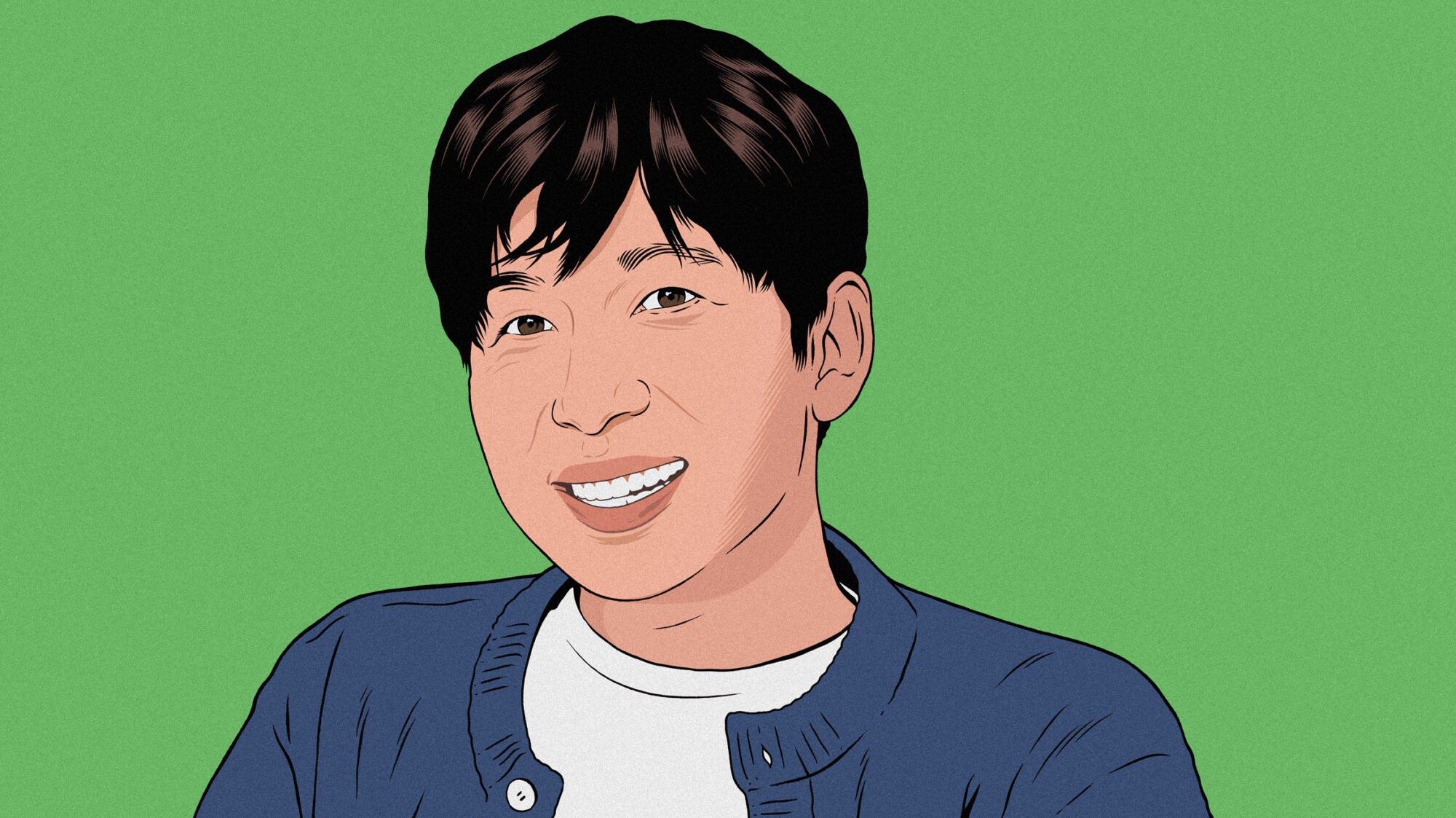
It was a lot of fun having David Cho in the studio. David is a longtime media executive, having helped launch The Awl and Grantland. He’s also a pretty great guy to talk about restaurants with, and we do that. We also discuss Postcard, a new restaurant discovery tool and community. Matt’s a user, and thinks it’s a great way to organize the restaurant recommendations that are constantly flowing through our world through a simple interface. We talk all about that and much more.
And before that it’s the return on Three Things. Aliza and Matt discuss: A scene check at New York’s new favorite wine bar, Stars, and Easy Joy Dim Sum & AYCE Hot Pot. Also, we have a new favorite boxed cake mix: Oh So Easy. And we make visits outside of NYC to Golden Russet Cafe & Grocery, No Comply Foods, Zinnia’s Dinette, and Random Harvest Market.
Subscribe to This Is TASTE: Apple Podcasts, Spotify, YouTube
Read the full transcript:
Matt Rodbard: Aliza, we’re back with Three Things. It’s so great to have you back in the studio. We haven’t done this in a couple of months. I’m back with some New York recs. Good old New York. Do you want to start?
Aliza Abarbanel: Yeah. My first rec is that I went to Stars, which is the new wine bar from the folks behind Penny and Claud — two really special restaurants in the East Village area. I was excited to go to a wine bar that was firmly a wine bar: no reservations, no extensive food menu. They have a really tight food menu, and it’s really about this incredible bottle and glass list. The whole room is like a fishbowl — you walk in, there are 12 seats around the circular bar with the bartender in the middle, and then standing, leaning areas around the sides. They have 88 bottles under $88, and the by-the-glass list runs $11 to $18. Pretty affordable for what wine can cost in this city. The speakers are great, and I just had a really nice time sitting at the bar, chatting, having a glass or two. They also have this butterscotch pudding for dessert — it arrives in a little mug with a cloud of whipped cream on top and this creamy, gently butterscotchy pudding beneath. It almost looks like a latte when it arrives.
Matt Rodbard: That sounds incredible. I love butterscotch pudding. Is there a full food menu as well?
Aliza Abarbanel: A small one — charcuterie-type things, deviled eggs, et cetera. I was coming from dinner before going to a birthday, so I didn’t really need a snack, but I had to get the butterscotch pudding. I love an intermezzo. Drop by Stars between things for your evening. It just opened, and it’s interesting to see how it continues to unfold. But I had a really great time. They also have Unified non-alcoholic kombucha and other things as well. What’s your first thing?
Matt Rodbard: My first thing is actually a product. It’s called Oh So Easy — it’s a cake mix. It takes me back to a story we published; Jane Black wrote it maybe four or five years ago about the boom in boutique cake mixes. I’ve been interested in this category for a while, and I’m not the biggest baker, so I’ll take any help I can get. I really liked what they sent me. The current flavors are available online and on TikTok Shop: Ube Blondie, Spiced Yellow Cake, and a Miso Caramel Brownie. Really cool stuff. I like the way it’s formatted too — the time is printed very clearly on the label, and it’s broken into separate pouches for each component. The founders, Ava Lucocho and Bianca Fernandez, are two Filipina Americans. They have a Culinary Council, and I spotted Picheng on their site — that’s a great call to have her as an advisor. I love this category. Baking is very involved, and a lot of us don’t have time to do it for fun. Having a creative Ube Blondie mix around when people come over is really special.
Aliza Abarbanel: I saw this on Instagram a while ago and hadn’t had a chance to try it yet. I’m really glad to hear you like it — it’s such a smart idea to expand the flavors and types of baked goods in that category. What’s your next thing?
Aliza Abarbanel: My next thing is that I went to a hot pot place in the Little Italy neighborhood in Manhattan that I think is going to become my new go-to hot pot spot. It’s called Easy Joy Dim Sum & AYCE Hot Pot — that is the full name. I have a group of friends where for each other’s birthdays, we like to go get birthday hot pot. A lot of hot pot restaurants will offer a free meal to the birthday person if they bring friends, which is full disclosure, why we went to Easy Joy. But truly, this was a tough group to win over — and we all said, “This is our new spot.” The things I love: first, they have individual hot pots as opposed to the shared ones. Sharing is fun and communal, but if you’re really there to eat, you want to choose your own broth at your own pace. They have fun broth flavors — I did Tom Yum, which was delicious but probably not something I’d do again, just because I have a very specific dipping sauce I like to make that doesn’t pair naturally with Tom Yum’s lemongrass and coconut profile. They also have mala and a very good tomato soup broth. There’s a self-serve bar for most of the dipping ingredients — veggies, noodles, starches — and you can order the higher-priced meats and fish separately. And then dessert and dim sum staples like sesame balls and char siu pineapple buns are all included in the all-you-can-eat price.
Matt Rodbard: Wait — all-you-can-eat char siu buns?
Aliza Abarbanel: It’s the buns! Not loose pork, but still. The people who work there are really nice, and they have their own version of the birthday neon sign moment — two very sweet men bring out a neon sign that says “Happy Birthday” with a little hot pot graphic. It was just a really fun meal. For the value, it’s absolutely worth it. And with Natasha Pickowicz‘s book keeping me in the hot pot mood, I think Easy Joy is a great place to have in the rotation.
Matt Rodbard: That’s so cool. My next thing is a restaurant in Great Barrington, Massachusetts called No Comply Foods. I was up there for a Simpsons-themed bar mitzvah — great choice, Noah. The trivia absolutely slayed. We had a little extra time in Great Barrington and got a great rec to stop here for a late lunch. They call themselves a “post farm-to-table restaurant” on Instagram — I’m into that, even if we’re not sure exactly what it means. No Comply is a reference to a Bouncing Souls song, I believe, so there’s a bit of that attitude going on. Foundationally, it’s a very progressive restaurant: no tipping, no reservations, no table service, no alcohol — all stated right on the website. Founded by Steve and Julie Browning. I had the Plowman Plate, which was very New England — a nice slice of rye bread, a pâté, some Vermont cheddar, and a big hunk of herb butter. On the brunch menu: Turkish eggs, a fried squid sandwich. At dinner they expand to bánh mì fried tofu and a braised chicken leg with pork and peas. The vibe is great — fully self-service, sit where you want. They have a VHS stack with films like Tampopo, Big Night, Babette’s Feast, Mostly Martha, and a film called A Chef in Love.
Aliza Abarbanel: Does “post farm-to-table” mean they are or aren’t farm-to-table?
Matt Rodbard: Great question. My read is that they’re part of the farm-to-table ecosystem, but they’re post the act of calling themselves that. They had Alkaline Trio and Thursday posters — maybe it’s a post-rock reference. Maybe I missed a Tortoise poster. Anyway, the food was really good and the style is high. High style points.
Aliza Abarbanel: My last thing is a really cute grocery café I went to upstate in Rhinebeck, New York — it’s called Golden Russet Cafe & Grocery. Matt, have you been?
Matt Rodbard: I haven’t been! I know Rhinebeck well, and it’s been on my list.
Aliza Abarbanel: They know exactly what they’re doing. Open for breakfast and lunch, kind of on the side of the road. All the classics: tuna melts, burgers, sausage egg and cheese — great griddle going. Their pantry section is really well-stocked for a small upstate place. A fridge full of premade things to take home, an Asian pantry section with chili crisp and curry paste in multiple versions. And as the Golden Russet name implies — it’s more of an apple reference than a potato one — they have several varieties of heirloom apples in the fridge and some small-batch heirloom cider from the New England area.
Matt Rodbard: I love that they’re keeping apples around and selling them off-season. That’s my kind of place. My last thing is staying upstate — a restaurant I’ve mentioned before, probably about a year ago, called Zinnia’s Dinette in Craryville, New York. I went back, and I just have to keep saying: visit this restaurant. It’s run by Amy Lawton, who has — by her account — the largest tinned fish and conserva retail shop in the country. Over 40,000 tins on premise, organized by color-coded sticker dots. But first: the food. Amy is taking seafood shipments from both Boston and New York every day of service, and it is one of upstate New York’s finest seafood restaurants. We had fried clam bellies, a wonderful flaky cod sandwich, and a special of tinned mackerel over a farro and parmesan rind green bowl with the beautiful fish on top. I love it. And down the street is a market called Random Harvest — a bakery, a coffee bar, really cool local products everywhere. They had Bat & Kiln brittle, Chase Home Farm yogurts in 4% and 5%, and the biggest Toni’s Chocolonely selection I’ve ever seen. Like 20 bars. Really well curated. They need a shout-out.
Aliza Abarbanel: I love both of those recs. I have to do a one-two punch the next time I’m in the area.
Matt Rodbard: Craryville, baby.
Interview with David Cho
Matt Rodbard: David Cho, welcome back to This Is TASTE. How are you, my friend? Welcome back — because we actually recorded an episode that never came out.
David Cho: I’m glad you brought that up. We had a dry run about a year and a half ago. Postcard had been in beta. I’d been using it at that point, but now I’ve used it more, so we can really dig into it.
Matt Rodbard: Your history in media is great — I feel like we can go in many directions with this conversation. And honestly, I really want to figure out what’s going on with food TV right now. But before we get there — you’ve been in LA a bit. You live in New York. Restaurant-wise, what’s good right now for you?
David Cho: I have very basic tastes when it comes to New York restaurants. Everything the Ha’s couple does is amazing. Bridges is great. Penny is incredible. I love Sunn’s. It’s the greatest hits. But LA is interesting — I was just there last week, and I think the Korean food scene has evolved into the next era. When my grandmother lived in LA, those restaurants still exist and are still some of the greats — Sannongdang, Corner Place. But then there’s this new wave of Korean restaurants that are really, really compelling. Some went the super fine dining route — learned to cook in Europe, in non-Korean restaurants. Others went the other way: we learned to cook in Korea, and that’s what we’re bringing over. It’s modern Korean food — technically “fusion,” although that’s a very taboo term in 2026. You see the European inspiration in New York’s fine dining scene too, of course. Haas is essentially a French restaurant that you could find in Paris — but it’s also so clearly Vietnamese, so clearly his point of view, in a way that’s genuinely compelling.
Matt Rodbard: I want to get back to LA. Corner Place — I took Hannah Goldfield there when I was in town. Shout out to Hannah. She’s the best. They have this one dish of vegetable noodles — a fermented vegetable cold broth served with perfectly cooked rice noodles. Get that with a side of Korean barbecue. Incredible.
David Cho: Dongchimi naengmyeon is, like, Jimmy there is elite. Even in Korea, there’s nowhere quite like it. There’s also a place — I have to look up the name — that does Pyongyang naengmyeon, the North Korean style cold noodle. I don’t normally love it; I don’t have a sophisticated enough palate to fully enjoy it. But they do this thing where for every bite, they give you a little cup of kelp vinegar. Incredible. It makes each bite of the naengmyeon focused on the vinegar, which I tend to over-add anyway.
Matt Rodbard: You have to adjust it to the broth. What about Hwaro? I just went.
David Cho: Yes — the chef from Kochi. Really cool, kind of understated. Very French. I think you’re going to love it.
Matt Rodbard: Restaurants in New York are tough now, though. There’s this intense internet culture around them — TikTokers and Instagrammers making content constantly. It creates hype that’s really impossible to live up to. When people say you’re going to have the best meal of your life, that means so many different things to so many people. That’s why we keep saying: go support the restaurants you already know. Go to Hearth. Go to La French Diner. Go to Somtum Der. The sardine salad — I fucking love that. Things that live outside the hype cycle are still very good. Fish Cheeks is still great. Still a hard reservation, but not impossible.
David Cho: The expectation thing is real. Even if you recommend a restaurant first to someone, you want to say: have a great time, enjoy yourself, eat the food in a human way. We’ve all become critics. Arlo does that really well — great restaurants, no crazy concept, a very inviting space. That’s why it succeeds.
Matt Rodbard: I do think we’re at a really fun moment in New York right now. Better than ever. The amount of openings, four critics working for the Times now plus Matthew Schneier, and Pete Wells is back and really plugging away. Critically, we might be at our best moment in a decade.
David Cho: And you have people like Rob Martinez — very independent, very different tastes, not caring about what’s covered in established publications. He just cares about the people who make restaurants. The pop-up-to-real-space pipeline is really interesting too. Ha’s is part of it. Sunn’s is part of it. People building real reps independently before opening a killer restaurant. If only there were a way to organize all this information…
Matt Rodbard: We’ll get to Postcard. One more question first — I want to hear about your upbringing. You grew up in Tennessee, in a Korean American family. What was food like growing up?
David Cho: We were very poor, so my mom cooked a lot. Growing up in Knoxville, there was one Korean store — very small. We’d have to drive to Atlanta, three and a half hours away, to Buford Highway Farmers Market. These massive warehouses with a ton of Korean food. There were core ingredients you just couldn’t get. Nori, dried seaweed — you couldn’t get that at Kroger back then. If we ever wanted jajangmyeon — the black bean noodle that’s a Chinese import into Korean cuisine, one of the most famous dishes in Korea — my mom had to make it from scratch. Frying the black bean paste, the pork element, everything. We had a small house and an electric burner. We didn’t have all the equipment. So I grew up not really understanding my relationship with food the way I do now. Back then, you just ate things and either liked them or you didn’t.
Matt Rodbard: Would your mom hack commercial products — throw a Korean element into something from Walmart?
David Cho: No. My parents immigrated from Korea, and I think they wanted to feel like they were at home. One of the big Korean cooking hacks they always used is dashida — it’s essentially MSG in a meat base, and it makes everything taste like a restaurant. Add a half teaspoon to a broth and it just adds depth and saltiness — oh my god. When I was writing Koreatown, I hung out in the kitchen at Woo Lae Oak on 32nd Street for a couple shifts, and I saw their dashida station — a big old duck, and they were just hitting it. That is the flavor. I use it all the time at home now. But when my mom wanted to cook American food, she’d make spaghetti out of a Prego jar with some ground beef. Very Southern influences too. I was obsessed with Food Network as a kid, so I’d make things I saw on TV — Giada recipes, Bobby recipes. Which is funny now, obviously.
Matt Rodbard: Before we get to Postcard, I want to ask about your background in media. You worked on College Humor and Grantland, and you were part of the launch of The Awl — which, to me, was such an important moment for online publishing. A real changing of formats. You, Alex, and Corey launched that. Why was it so beloved?
David Cho: We live in a time now where there’s no subculture — everything is known and shared. The Awl was a product of us all being at Radar Magazine, a small independent magazine. I’d helped recruit Alex and Corey to work there as writers, and then Radar folded in ’08 because of the financial crisis. From that, we were like: we have to figure out a way to do this. We started it out of necessity. Why was it beloved? Because it felt really human. Not underappreciated — it felt new and special and real. Things like that still exist today, largely thanks to Substack. But at the time, it was harder. We were fortunate that Alex and Corey had existing audiences, and we built around them and expanded from there. Adam Frucci, a friend of mine, wanted to start a comedy thing — that’s how we started the comedy vertical. Then brands started reaching out. Edith started The Hairpin with Taylor’s support. And Intel reached out, which is where The Wirecutter came from. I met Brian Lam at a coffee shop called The Bean on Bowery and Second Street. He said he wanted to start a blog about the ocean. I said that sounds like a great Tumblr, but what if you start this tech consumer-reports-style thing for us? And now he lives in Hawaii and has done very well. That bench-testing rigor he brought from PC Magazine applied to everyday consumer products — that’s where Wirecutter really came from. And the Hairpin launched the careers of so many writers we still read today. Edith should be given a lot more credit.
Matt Rodbard: They really prioritized editing and building writers’ voices — at Grantland too. Dan Fierman, Sean Fennessey, all those guys. That came from a print background where you literally had to have rounds of edits before layout.
David Cho: That’s what I miss the most. Putting real care into work. Now it’s such a volume game. But hopefully people haven’t completely learned that lesson. People like Emily Sundberg and Casey Lewis have built daily publications that aggregate and synthesize information at a really high level. Sundberg wants it to be good — that’s what makes it good. And I think swarms of snark burn people out faster than volume ever does. That tone at Gawker is probably what caused those editors to burn out after a year. Versus someone who, like Emily and Casey, is in love with their audience and there to serve them.
Matt Rodbard: In terms of digital media today, are you spotting anything that has that Awl energy? That scrappiness and innovative use of product?
David Cho: There are definitely great independent people making things. At its core, the Awl was: we provide infrastructure, monetization, and operations to support really talented writers. Now, technology has become that operational resource — Substack handles your distribution and to a certain extent your monetization. The challenge for any of these places is: when do you start bringing on additional bodies to improve quality, not just volume? Sundberg is doing interesting things by bringing in more contributors and editors. Casey is still mostly doing it alone with management support. The smartest people understand their audiences and understand the role they have in their audience’s lives. At the Awl, I would have loved subscription revenue as an opportunity. We relied entirely on ad sales and had to hustle for every dollar. Whereas Corey and Alex — who were very committed to paying everyone who wrote for the site, even if it was just $20 or $50 — could have had 2,000 people paying $50 a year, which would have been meaningful operating capital. The Defector people are a great comparable — they took their audience, built a stable subscription business, and now have capital to try more interesting things.
Matt Rodbard: I remember Alex and Corey working out of Corey’s apartment on St. Mark’s — smoking all day at a big table, writing blog posts while Corey’s cat roamed around. Such a different time. Let’s get to Postcard. You’ve been working on it for a while, it’s been in beta, and now it’s publicly launched. I’m a huge Foursquare/Swarm fan — I’ve used it since day one. I love logging the places I’ve been. But this isn’t a Swarm 2.0 — this is its own thing. Walk me through it.
David Cho: We saw a few things happening at once. The way a person decides what to do has changed a lot. Fifteen years ago, you went somewhere because your friend recommended it. That sphere of influence has really expanded — someone you don’t even know has a relationship with you where you trust their recommendation. And because of that shift, and the fact that we’re all making so much more content and there’s so much more information, we wanted to figure out how technology could make deciding where to go easier. I’d have a situation where my parents are in Korea, my friends are posting about places, I’ll screen-grab it or save it in my Instagram saves — and then I never go back to it, and there’s no way to act on it. So how do you make a tool that lets you organize things better and make decisions faster? If you see something on Instagram, you can share it into the app. It’ll identify the place, take the content, embed it directly from Instagram. And when you land in Incheon, it’s like: here are the 45 things you saved. You can sort by recency, look up places good for your parents, find the best beef — all actionable. The postcard is the unit within the app. You’re logging, you’re creating postcards from venues.
Matt Rodbard: Explain what a user gets from a postcard — it’s not just an address and a few notes.
David Cho: It depends on what the person wants. But fundamentally, where you spend your time and money is a really important decision, so how do you make that decision as easy and thoughtful as possible? We have a lot of data already — content partners and things we’re ingesting from the internet. When you go to a place, how do you know what to order? The Infatuation says this, Eater says that, these people have said this. We’re trying to make that as accessible as possible while giving full attribution and sending people to those sites if they want to learn more. The idea is: how do you make it so that when Matt says you have to get the wings at Fish Cheeks and I say you have to get the steamed fish, that information is easily accessible without having to open five different tabs? How do you make information as accessible as possible while still giving full attribution?
Matt Rodbard: You want outbound traffic going back to the sources — you want to give those media companies some love, but it’s also important for the person making the decision. I care who says what. I don’t treat every opinion the same.
David Cho: Exactly. And I really bristle at the idea of “here are the best restaurants in New York” — that’s all personal. Your 10 best are different from my 10 best, and that’s what’s good and interesting about food. Even rating systems bother me. On Google Maps, if a restaurant is a 4.8 — who knows what that means compared to yours? There’s a data argument that scale will directionally point you somewhere, but food is so personal that doesn’t work. The only rating system that actually works is: who do you know, and who do you trust? Is their opinion consistent with yours? That’s what we’re trying to get at — using technology to make that personalization faster and more efficient. I used to be the guy who, before going to Mexico City, would get seven lists from people: five emails, a Google Map, someone sending screenshot of a Notes app. I’d make a spreadsheet, plot who recommended what on the x-axis. That’s crazy — technology should do that for us.
Matt Rodbard: From the user point of view — am I following other people’s recs, or is this more of an internal diary?
David Cho: I think everyone’s going to use it differently. At its core, it’s meant to be a bridge between where people consume content — Instagram, TikTok, your friends — and the utilities that exist, like Google Maps. The three product tenets are: organize better (the saving function), share better (the first thing we built was an easy way to share lists, because we saw people doing that), and discovery. One thing I’m really happy with that will only get better as more people join: you list three places you really love, and the app says — when you land in city X, here are comparable places based on your three anchors.
Matt Rodbard: David, how do you grow an audience for a new app with a lot of competition?
David Cho: I really believe in content-led growth. The reason we’re building tools to help people who already have content is because we think their content is valuable and their audiences want a better way to engage with it. The other part is providing real utility. The product is meant to help you figure out where to go and what to do — whether you’re traveling to the South of France or Dallas, or just trying to find a place to have dinner in Midtown. And we’re still very early. We’re going to keep getting better, keep learning from what people do and don’t do. I love that people can copy and paste a text list into the app and it’ll map it all out for them — so you can put it to use right away.
Matt Rodbard: Of course I’m linking to it in the show notes — download the app and start logging. Now: food television. I feel like you’re really well-qualified to answer this, because it’s something I’ve been poking at with a lot of guests. Where are we going to end up with food TV? There’s exhaustion around competition formats, a craving for something new. What do you think?
David Cho: The framing of the question highlights its contradictory nature — what even is TV? Is it something on a streamer, on linear, on broadcast? Is a person making a 30-minute YouTube video doing TV or not? YouTube is the largest consumed video platform, and you’re often watching it on your television. Meanwhile, people are watching traditionally-defined TV on their laptops. The attention span for content has gone down. There’s a woman I follow on Instagram, Corey Larkin — do you follow her?
Matt Rodbard: I don’t. Tell me.
David Cho: Super talented. I looked the other day — she has a million and a half followers, shooting cooking videos holding a phone, putting things in a pot, cooking them. Why should she ever invest in making long-form content? What’s the upside? So when it comes to food television — I don’t know what it looks like. I think it’s really going to depend on who the creator is. Will food content be a subcategory of a larger creator’s mix? Like, will Emma Chamberlain start making cooking videos as 1/10 of what she documents? I think that’s the real challenge. Even when I worked on cooking content, it was an expression of what Roman wanted to make. And for us now — what do people actually want to consume? You need really creative people to figure that out. I don’t think it’s going to be a format the way things used to be. Food Network existed, so it was dump-and-stir hands-and-pan shows or travel logs — those were the only formats. Now we have Grocery Games and more Grocery Games. Meanwhile, Corey Larkin is making basically what Jacques Pépin made. Teaches you how to cook something, you make it. I actually made one of her recipes last weekend — I just watched the video, wrote out notes, eyeballed the measurements, and made it. It was great.
Matt Rodbard: That behavior is really common. People take notes from vertical video — you see the beginning, middle, and end within 90 seconds. For the lack of attention span, it works. What do you think is actually going to work in the next few years?
David Cho: For me, it’s definitely a return to documentary in some form. There’s an appetite for more polished productions. But I don’t know if it’s “celebrity with a bread show.” I think it needs something different. I’m really fascinated by Matty Matheson‘s new show — it’s super thoughtful, well-done, and it has a comedic edge and a satirical quality that feels fresh. But I think my real answer is: everything is going to exist. Things are fractionalized now, and they’re going to stay fractionalized. The internet gave us the opportunity for everything to find a certain audience size, and that’s where we’re going to end up. The question is whether high-quality productions will be offset by the audiences they can accrue. Streamers have definitely pulled back from food and travel investment, but that changes with the wind. The only way quality goes up is if the people making things really give a shit. Roman cared about making things good. Sundberg cares about making things good. Every single person making something that’s good — it’s because they want it to be good. Hopefully people will keep getting funded to make better things.
Matt Rodbard: Do you want to do anything IRL, offline? A restaurant, a bar — you’re so intuitive about taste and style and trend.
David Cho: I like helping people I think are talented achieve what they want to achieve. But I’m very aware of my lane. What I love about New York’s current restaurant scene is that a lot of people who’ve been waiting for their chance are now executing against it. What Sunn’s is doing, what Hostal is doing, what Bridges is doing — what Sam Lawrence is doing — these are people who worked for a long time and are now cooking and making the places they want to make. For me, it’s: how can I help them? I have access to people with money, and I’m always trying to connect them with restaurants that need fundraising. I think that’s important. You can certainly make money in restaurants, but it’s risky and hard. What I love about restaurants is that they’re one of the few places where people can still be genuinely creative. Really good art is really personal. The restaurants I love most are personal expressions of the people making the food. There’s this Korean concept of sonmat — literally, the taste of someone’s hand in the food. At a time when art is so intertwined with commerce, restaurants are one of the few places where that can still exist in a meaningful way.
Matt Rodbard: So well said. And speaking of Son, I’ve got to get to Son in San Francisco.
David Cho: You do. I don’t love being in San Francisco, which is a challenge. But yes.
Matt Rodbard: A great conversation with him and Janet Lee. Let me pull up Postcard — you said you were in LA recently. What should I eat when I’m there in a couple of weeks?
David Cho: Okay, pulling up the app. First — there’s a Korean place, I’ll send you the name, that had two types of ribs that were unreal. One was a Thai-influenced version — not fried, I think they’re steamed or braised, really tender and crushed with herbs, sourness, lots going on. Then there’s a second Korean rib preparation that’s almost battered and sauced like Korean fried chicken. You eat both, and they’re incredible. And then there’s Mariscos Oxuna — it’s in the backyard of a house in Watts. The menu’s all in Spanish. They’re grilling whole fish with handmade tortillas, scallops al ajillo, butter shrimp. You pull up to someone’s house, there’s a fence in front, you go in, and you’re guided to their backyard. Some of the best fish I’ve had. Really insane.
Matt Rodbard: That’s the LA I love. Korean food, Thai food, Mexican food. I don’t go to “restaurant” restaurants when I’m in LA.
David Cho: Exactly. If I want a restaurant, I’m going in New York. In LA, I’m going to Corner Place. I’m eating noodles I’ve eaten for 30 years. There’s a burrito place called La Teca Tortilleria that I love — crazy crisp tortilla with a chile relleno, carnitas, chicharrón. Perfect. That’s what I want. It comes back to your original point about how personal food is. You’ve just proven it in real time. Vibes versus food is a conversation that needs to happen more, because both are valid. A non-vibes person going to a vibes place and calling it “fancy” — the judgment around that is what needs to change. Things don’t have to be the best ever. Things can just be your favorite. Best fatigue is real, and Postcard is trying not to lean into it.
Matt Rodbard: Okay, David. This Is TASTE — we always close with a taste check. Rapid fire. Best fruit?
David Cho: Hannah Goldfield has passion-fruit-pilled me, so I’m very big on passion fruit. Love mango. Those are my two right now.
Matt Rodbard: Worst vegetable?
David Cho: I fucking hate beets. They stained a pair of pants I liked a lot one time, and I’ve never looked back.
Matt Rodbard: Product recommendation?
David Cho: Lestoil. L-E-S-T-O-I-L. Best stain remover ever made. If you have an oil stain on clothing, put some Lestoil on it, let it sit 15 to 20 minutes, put it in the washing machine — it comes out. Even if it’s been through the dryer. Genuinely insane. As someone who enjoys eating out and has pants: huge.
Matt Rodbard: Typical breakfast?
David Cho: I don’t really eat breakfast, but I love breakfast food at night. Waffle House. Julienned hash browns with eggs and bacon. Biscuits and gravy. Perfect. Just not in the morning.
Matt Rodbard: Best dessert?
David Cho: Anything with meringue. The meringue at Contramar with strawberries is perfect. Love an île flottante. Love panna cotta, love cake. I love all desserts. Pinkerton’s up in Kingston does a passion fruit meringue cake that I’d bet is incredible. And Honey’s — I got a blackout cake from there last week. It was banging. Tanya at AG is making great desserts.
Matt Rodbard: Fast food craving?
David Cho: Always craving fast food. McDonald’s, Taco Bell, Chipotle, Chick-fil-A. Those four cover everything. McDonald’s Big Arch is coming to America March 3rd — I had it in Europe and I’m very excited. And I do use the McDonald’s app. Great deals. I fucking love McDonald’s — not in a “oh look how relatable” way. I genuinely love it. And the Taco Bell Mexican Pizza is one of the best food items ever created. When they brought it back a year and a half ago, I was overjoyed. Billions of dollars in food science out of that Southern California food lab, and we have all benefited.
Matt Rodbard: Restaurant you wish you could bring back from the dead?
David Cho: Old Torrisi. New Torrisi is incredible — Rich Torrisi has genuinely made one of the best restaurants in New York. But old Torrisi was so special. It was $58 for four courses. They had a pasta with pepperoni that was fucking crazy. The little cookies from the hotel. It opened around when I moved to LA, and whenever I was back, I always went. It’s like what they say about music — your tastes solidify between 15 and 25. That restaurant opened when I was 27, and it just felt so special. Two of the best cooks in New York in one kitchen for their first restaurant. Crazy.
Matt Rodbard: Favorite city outside America for food?
David Cho: Seoul. It’s a really impenetrable city for visitors, but for me it’s my favorite, because I love Korean food. Food in Korea is very specific — most restaurants are good at one or two things, that’s all they do. They’re just constantly boiling pork, cutting it up, serving it with the best kimchi and jeon. One spot, all they do. And I love the Majang Meat Market, where you buy really good Korean beef — which, by the way, you cannot get anywhere outside of Korea, they won’t export it — and then you go upstairs to one of the random places with grills and alcohol and plates and you eat it there. A must-visit. Everyone goes to Gwangjang Market, which is fine, but you need to go to the meat market. Korean beef is unlike Japanese beef — less fatty, much beefier, and because the beef culture is still relatively young, it has this specific integrity. I love it.
Matt Rodbard: Majang Market is such a must. Last one — favorite sandwich?
David Cho: Easy. Defonte’s makes the best sandwiches in the world. I’ve been going for 20-plus years. I’ve missed their Manhattan location that closed 15 years ago. But the roast beef sandwich — fried eggplant on sesame bread with mozzarella and the jus. It’s in Red Hook, which is a pain to get to, but I think about it once a week. It is the best place to get a sandwich.
Matt Rodbard: David Cho, you are always welcome back. What a fun conversation. Thank you so much for joining us.
David Cho: Thank you for having me.