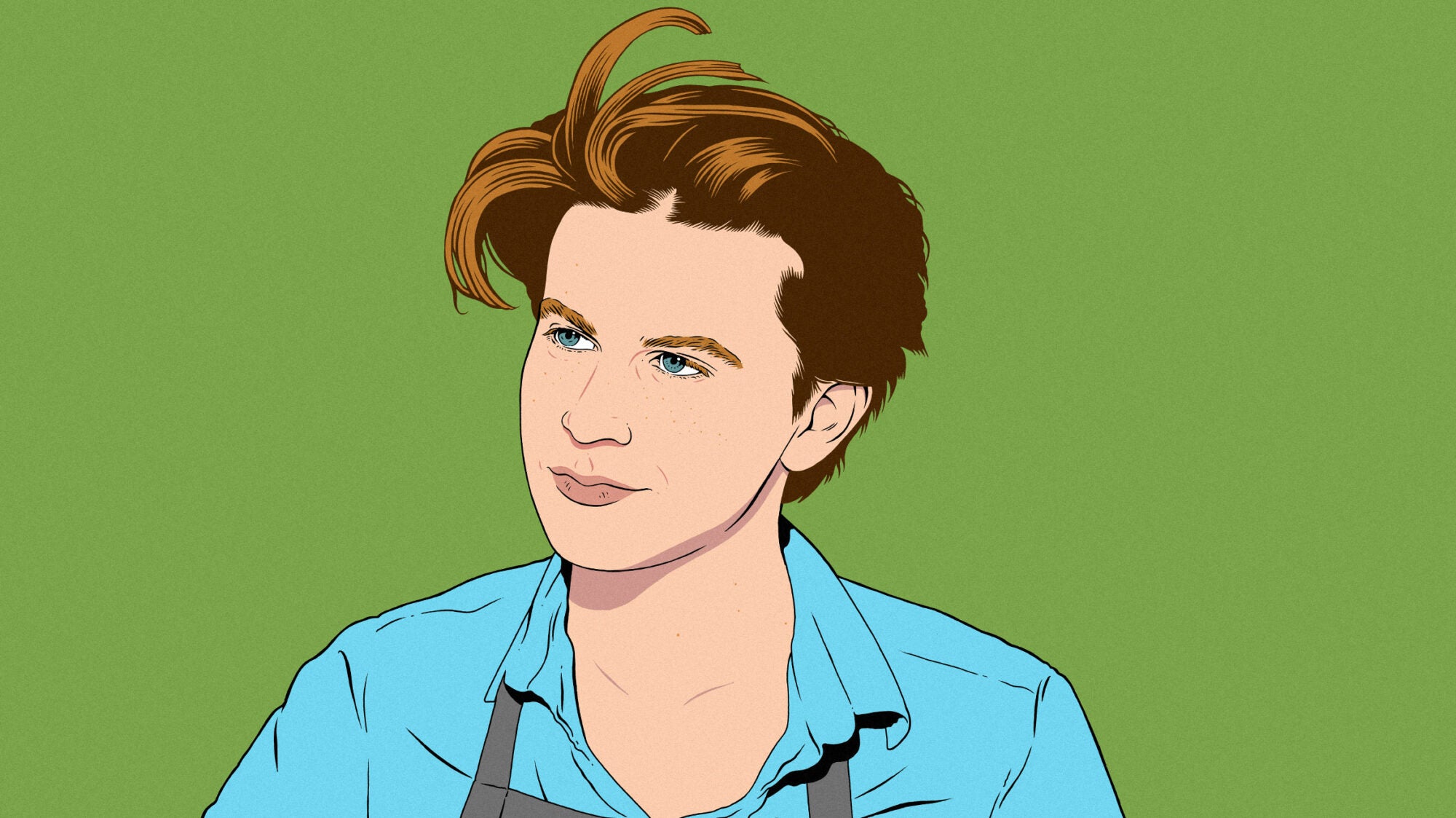
Flynn McGarry is only 27, but he’s been cooking seriously since he was nine years old, turning his family’s living room in California into a pop-up supper club and landing on the cover of the New York Times Magazine before he was old enough to drive. He came up through some of the world’s best kitchens, moved to New York City, and built a passionate following with Gem and Gem Wine before opening Cove, which has quickly become one of the more exciting tasting menu restaurants in the city. There’s also a documentary that captured his unconventional adolescence and put his story in front of millions of people—something we dig into, along with what it’s like to grow up entirely in public, and how all of it shapes the way he cooks today.
Also on the show, I speak with Chloé Grigri, who is behind some of Philadelphia’s most creative restaurants and wine bars, including The Good King Tavern, Le Caveau, Superfolie, and Supérette. Chloé joins us to talk through her Resy Top Five, where she shares the top five dining experiences that have shaped her career working in restaurants.
Subscribe to This Is TASTE: Apple Podcasts, Spotify, YouTube
Read the full transcript:
Matt Rodbard: Flynn McGarry, welcome to This Is TASTE. It’s been a while. Great to see you. Thanks for having me. So, Flynn, we’ll get to Cove. I had such a terrific meal there, and I actually talked about it on the show. But before we get to that, tell me — where have you been dining out recently in New York?
Flynn McGarry: I’ve become kind of a creature of habit a lot. You know, I only really have, like, one, maybe two nights a week to go out, so I kind of tend in these directions. I’ll go to King a lot. Yeah, it’s, like, close to me. It’s very — I know what I’m going in for. I know what I’m getting. I go to — mainly, honestly, on my days off, I eat Japanese food. Yeah, I kind of am in this rotation right now. I’ll go to Omen, Tory Shin. Oh, cool, a lot. Yeah, that’s sort of my, like, if I need a meal to sort of heal me, I’ll go there and just have this very, like, meditative experience. I go to Frenchette a lot, just as, like a, kind of, like classic. I live right down the street from Estela. I’ve been kind of trying to do this — I mean, Estela, obviously still an amazing restaurant — but these restaurants that have been around for a while, and kind of, like, starting to really frequent them in a way that, yeah, I think really, like, changes the experience. Like, I feel like, from the complete outside, you look at Estela and it’s this Michelin star, you know, whatever. But I go there for a Sunday lunch, like most weeks, and it’s like such a nice neighborhood restaurant, yeah? And I think it’s the thing where, like, finally, it can kind of be able to be seen like that all these years later. So yeah, I mean, I really just kind of like go to the same — I
Matt Rodbard: I love that sentiment — we talked about a lot on the show — to think about those restaurants like Estela that are around 5, 10 years, and of course you’ve just opened Cove. Everyone wants to go to buzzy restaurants. But you’re even saying support these.
Flynn McGarry: Well, I also am really bad at booking reservations. Okay, fair, fair — so I tend to go to places that I can get a reservation at, yeah, just kind of walk in. And that’s not to say that these places aren’t busy, but it’s that they’re not overly booked. And I think that that is, in New York definitely, how do you hit that thing? Because I think there is now a whole group of people like myself that’s like, I don’t want to deal with trying to — I have maybe one night a week that I can go to dinner. Yeah, if I can’t get a reservation on that night, I’m not going to go there. You know, like, and that’s me specifically.
But I do think about that a lot — like, I factor in ease of being able to go to the restaurant so much into my dining experience, too. Because there are sometimes that, like, there’s a new spot I really want to go, and I’m always down to go at five o’clock or 9:30, but I think if I — I don’t think I could ever book a reservation in New York currently, like, one month out, because — yeah, no idea.
Matt Rodbard: I’m the same way. It’s like, kind of not my instinct — trying to, like, make things spontaneous in a way. Let’s go back to talking about healing yourself. Like, is that what you’re healing yourself for? Is it just like the service, the repeated, you know, the work? I mean, you’re working 12, 14-hour days.
Flynn McGarry: I think there’s a sort of calm that I’ve always gotten from, like, going to certain restaurants. Every single time I go to Tory Shin, the first question is always like, “Do you want a cold beer?” Which is such a — it just sort of like resets you where it’s like — it’s not, you know, do you need this, do you need this, what do you want, what do you — it’s just, like, a very simple question, and then it’s just, I get — I just order the skewers that I want. And it’s healing in a way of like, it’s such a simple kind of hospitality that really just kind of allows me to sort of, like, focus. It’s a quiet restaurant, yeah.
Matt Rodbard: And for yakitori, you know, to have a quiet room is a little bit of a contradiction and a contrast from what we’re used to, maybe in like the East Village.
Flynn McGarry: I know. I feel like I’ve become kind of an old person in the way of — or maybe I’ve just had so many old people tell me that restaurants are too loud — but I do think if I want a meal that feels very sort of nurturing, I want to go somewhere that is quiet, yeah, versus — I love going to, like, loud, you know, fun restaurants too. But it’s very hard to have a sense of, like, kind of, like, resolve in a place that is, like, full of so much energy. And I think it’s a big thing in restaurants too — it’s like, your whole week is adrenaline, and then yeah, sort of day off. That’s like — I try to, like, really not have adrenaline on those days and really just try to, like, relax.
Matt Rodbard: It’s kind of like the idea when, like, the touring musician comes off tour after six weeks or six months, and, like, that’s the darkest period in a musician’s life. Like, many have written about this, yeah, and you’ve kind of articulated something that’s interesting for a chef with all that adrenaline. When you’re in those quiet moments, it’s challenging. And that’s where, like, maybe substances leak in a little bit, depression leaks in. I didn’t mean to go dark, but you tapped into something that’s really interesting about the adrenaline part. I mean, how do you unwind? And we talk about Tory Shin, but you’re, like, aware of it too.
Flynn McGarry: Yeah, I do a lot to unwind. I take a lot of baths. Yeah. I think a big thing for me is always that, like, you finish work, and — my — I almost look at it as, like, a competition. It’s like, how quickly can I go to sleep after work? Because I always think, like, the craziest thing is, at 11:30, I have the energy of someone at, you know, five o’clock, yeah, but if I stay up until three in the morning, I’m going to feel off the next day. So I try to really quickly just sort of, like, calm myself down, and then I have been bad at it since we’ve opened, because I’ve been very busy. But I play a lot of tennis, which I think has actually been a really interesting practice, of like, how to deal with adrenaline — because there is, like, an adrenaline in the sport, but there’s also so much focus that goes into it. And I also think that sort of having — how do you find other ways to feel adrenaline so you don’t just — you learn, okay, I can play a sport for an hour. This is how I decompress from that. How do I take that into the restaurant and really look at it? You know, I remember always, like, hearing all these chefs sort of talk about how it — you have to sort of be like an athlete completely, working in — like, I mean —
Matt Rodbard: Chang talks about it all the time, yeah? Like, he was an athlete, right? Yeah, as a professional, like, semi-pro golfer. Let’s talk about your tennis, by the way. Are you a 3.5, 4.0? Are we doing slice backhand, top spin, two-handed? What are we doing?
Flynn McGarry: I’m a two-handed, yeah, I would say 3.5, yeah. I played before we opened — I was on like, a three times a week — yeah. And then I’ve been off it for a while. I’m now trying to get back into it a lot. Yeah, it’s been — it was something that I, like, picked up — I used to play as a kid, and then I picked it back up, and it’s been such a, like, amazing thing to have on the side. Some weeks I’m like, I kind of would rather do this. Because, you know, I hadn’t had that for a very long time, of like, yeah, a thing that is just purely a hobby. Yeah, my hobby was cooking. And, yeah, you know, I do that for a living — reading cookbooks. And so it’s nice to have a hobby and be like, you know, there was a period where I could be bad at it, you know. And like, yeah, that’s its own sort of side journey, which I think is really helpful to have those things completely outside of the restaurants. You know, it’s even — at a certain point, people on my team, I’d be like, “Do you need me to prep? Or can I go play tennis?” — and go do it. Like, it makes everyone happier.
Matt Rodbard: We’ll talk about the structure of Cove — it’s a unique labor structure, which I really appreciate. Let’s talk about your documentary, Chef Flynn. You know, I loved it when it came out. I remember it was a while ago. And your story is so interesting — like, you know, such a young age, taking the subway downtown to downtown LA and, like, just, you know, all the stages, you know, at EMP and Maemo and Geranium. And what was — upon reflection — I’ve always wanted to ask you this, actually mentioned on a previous episode: what was it like having your adolescence captured in documentary form? And do you watch the film? Have you, like, watched it?
Flynn McGarry: I’ve watched it. I think the last time I watched it, honestly, was like two years ago. Now, I think being quite removed from it, it actually — I think it is a really cool thing to have that most people don’t have: this sort of picture of your adolescence. Yeah, you know, I honestly — that period of my life was moving so fast that I honestly don’t remember most of it actively. It’s not that I, like, you know, completely blurred it out, yeah, blocking it. But so much happened at such a pivotal time, and a time where your brain is actively developing, and, you know, everything new that I’m learning, I’m also doing something. And so I held in so much information from that period in time — the knowledge and, like, what I really think I remember from those years of my life is everything that I learned working in these kitchens and how to do all of that — that I really don’t remember all of the other stuff, yeah. Or, you know, it’s in there somewhere.
And so honestly, that’s kind of what has been nice when I kind of revisited it a little bit — to be like, I completely forgot I did that — like, the pop-ups at your home. Do you like — do you like — remember? I, like, vaguely remember those. But like, you know, which — they were rad. But yeah, it was like, I did two pop-ups at Atelier Crenn, yeah. And I, like, completely forgot about that until, like, you know, a year or so ago, that someone brought that up, and, like, I just did so much that was so different — every month was different in a different place.
And I think, you know, it is also really nice to have seen it through not like a parent’s eyes, or — you know, Cameron, who made the documentary. We’re still very close. They live around the corner from Gem Home. I see them like, yeah, three, four times a week. And to see it through someone else’s sort of completely, like, you know, non-biased eye, I think is — for something that I like. And, you know, other people might prefer it to be more, you know, familiar, collaborative, yeah, or something. But I like, sort of, seeing it from — like, I can detach a little bit and just look at it as, like, this is a picture of what I was doing. And honestly it’s like — I also think the nice thing now is, like, it’s funny, you know, like, I think, like, that’s the — that’s the, like, getting out of it where you’re like, there’s a weird-ass kid and, like, you know, some of these things that I’m doing and I’m so passionate about, it’s — it’s funny to, like, witness, like, how excited I was about these little things. And, you know, now — that, you know now — I do every day. Yeah, like —
Matt Rodbard: But like, you know, you look back and you’re focusing on things that are probably completely irrelevant now that you’re, like, a professional. When you were, yeah, 13 years old, doing a pop-up, you’re, like, thinking about X — about plating, or perhaps a technique that now you’re like, oh, man, I do it —
Flynn McGarry: Every day. Or, you know, or like, I would, like, fantasize over having a stainless steel table, you know — like things that, like, I think that’s what’s made me kind of laugh, is like, you know, it’s like, those things that I was so, like, over the moon about and, like, obsessive over — it’s like, like a restaurant supply table, you know? Like these very little things that I think are — I’m glad to — you know, it makes — it does also feel nice to be like, oh, I have all those things.
Matt Rodbard: I also think — and we talked about this years ago — like, your parents come off great, like, supportive of you. And you’re also not a rich kid, no. And that’s the other thing that I think a lot of people still assume — that you are some kind of, like, LA rich kid who got to go out and do these things, which — absolutely not, if you watch the documentary. Just know: your parents were, like, working-class entertainment people, right? Yeah, like — and there are working-class entertainment jobs.
Flynn McGarry: Well, that’s — that’s a thing that I just think the majority of people don’t understand, yeah, unless you, like, grow up in LA, that a working-class entertainment job exists. Yeah, they think of it as, you know, my parents are heads of Hollywood studios, which are very entertaining lawyers. Neither of them actually work in entertainment anymore, you know, like, but I do think that, you know, that was also something. I think it was a big lesson that I learned from the documentary: sometimes, no matter how clearly you show it, if someone has a — you know, they will justify their view on it whatsoever. And, you know, I feel like we had this thought as a family, you know, that was sort of like, oh, this documentary needs to come out and show that we’re not these spoiled rich people. And you know, I personally — the reason I did all these pop-ups was to pay — the reason we charged people was to pay for my going to work at these restaurants. You know, it wasn’t for our profit. It was no — because we couldn’t afford for me to go learn. But, you know, in the end, people will still justify their take kind of any which way. And you know, I still have that moniker on me this many years later, which is, to me, more of just a sign of people don’t understand how restaurants work.
Matt Rodbard: And I just wanted to bring it up just for listeners who don’t know you, because, like, it just shows your trajectory with Gem, Gem Home, and now with Cove — this was not stuff given to you. Like, Flynn, you’ve, like, worked really hard to get here. And I think, like, opening Gem — let’s talk about that a little bit — like, when you opened in New York, it’s such a young age. What are you, like, 20 when you opened? 19, 19. Again, you’re not a silver spoon — like, you had to, like, really hustle that place. And I went and had a couple really terrific meals at Gem, the original, and I loved it. What do you — upon reflection, like — what was that early restaurant like? And eventually you had to close it, yeah. What was that like?
Flynn McGarry: So, I mean, I think a lot of the progression of these restaurants that people maybe don’t realize as much — and you know, I honestly just don’t think people are necessarily that interested in from, like, an exterior point, which is why I’m not making it our, like, driving force. So a lot of these decisions that we made were based on the fact that all of the restaurants were a very small budget, yeah. You know, these are not these prolific restaurant budgets, yeah. You know, Gem opened with a very small budget in a space that was not designed to be this thing.
And I think it was definitely an interesting space, yeah, and, you know, in a neighborhood that has progressed so much since, and, you know, I was really happy to be a part of that. And I think, you know, I had one of our original investors kind of told me — they were like, you know, everyone put in a very small amount of money because they were all like, “This probably isn’t gonna work.” And they were all like, “We see this as, like, a place that can incubate,” you know, and that was the goal with original Gem — yeah, how do we find the cheapest rent possible? How do we spend the least amount on buildout? How do we kind of create this very low-stakes restaurant that we can experiment in and people can come, and hopefully it will work one day? And I think, kind of, what — you know, the big takeaway that I learned from that is, if you go into something with low stakes, it’s pretty hard to have it actually have this longevity.
Matt Rodbard: That’s really, really salient. But also the ambition is so high — you’re not doing a café, no — you’re doing progressive menus, yeah.
Flynn McGarry: And I think at the time, I definitely think, you know, that was sort of maybe the slightly naïve idea — was that, oh, this is my, you know, as a 19-year-old, I was like, “This is my restaurant. This is it.” And then, you know, you realize that, oh, we have — we’re literally in a half of a kitchen. There’s two people in the kitchen, like, we can only do so much here. And I think that sort of got beat over my head year after year of running that restaurant — it just got to a point where the amount of work that we were doing and what we were getting out of it was just never anywhere near the same, no. And so that’s kind of what led us to this sort of switch-around — that was like, you know, initially, it started with the finding the space with Gem Wine around the corner, which was literally just because I knew my apartment landlord had that, like, Chinatown sort of — like, I know, again —
Matt Rodbard: Like, kind of an instant hit, and it worked well, like, for the jump, and like, became — it is beloved. It was beloved, yeah.
Flynn McGarry: And I think that that was such a random thing that, like, I didn’t think was gonna happen to me. When I opened Gem Wine, the idea was that it was going to be the place that you could go have a drink before dinner at Gem. And it became that — that was the thing, and Gem was no longer the thing — which I think taught me a lot about New York. That’s like — anything new will pull attention. It won’t — you know, it’s not all tides rise, all ships. It was sort of like everything went there. And so then, after like a year of running that, and seeing a line down the block every day and a half-full tasting menu restaurant that was where we were putting all of our work into — that’s insane, buddy — and spending all of this time, you know, on the tasting menu, yeah, it made me really just be like, we need to rethink how we do things here.
And, you know, between years of even like our tasting menu clientele, being like, “I don’t want to come to this neighborhood to eat this menu.” And so I think there was a point where I was just sort of like, this doesn’t make sense, and we only had a couple years left on the lease, and I’d gotten very handy and able to do these renovations sort of on my own. That was sort of another passion that I got into — woodworking. And so personally, like, literally, myself and a friend did the full renovation of Gem to Gem Wine in like two weeks, and sort of let it see out its last couple years, at least full every night. And I think there was a moment towards the end there where I do really feel that it made sense — first time ever, honestly — that we were able to turn a profit in that space.
Matt Rodbard: So pause for a sec — so you weren’t turning a profit at Gem. We were breaking even, basically. Like, truly a business out of passion — you’re basically paying your bills. That’s crazy.
Flynn McGarry: And most of the time I was living off of these side projects, yeah, that I was doing. And that’s sort of what I mean — of, like, when you realize that it’s very difficult to create a sustainable relationship to a restaurant. I was doing all these campaigns on the side, I was doing, like we talked about, like a children’s book — I was doing all these side jobs to essentially afford to run this restaurant. And even with Gem Wine, it was like a small restaurant is very hard to — and that was kind of what led me to Cove, was, like, we just could never get over the threshold. Yeah, the threshold of New York kept rising of how much you have to do. And I feel like everyone can relate to this in terms of how much you have to make to live the same as a restaurant. Yeah, if New York gets more expensive, you have to be able to increase your sales. And if you have 20 seats, you can only increase your sales by so much. And so we were just always playing in this game that was like, if we did two more guests tonight, we would have been profitable.
Matt Rodbard: And then you have a snowstorm, and then you have a blackout, and then you have — and then just a website, yeah.
Flynn McGarry: And so there was just no baseline, and we never had a big, you know, bank account to start with. Like, it was just every single month was, oh, the HVAC broke — never mind. And so it was like, you know, almost nine years of that, and we’d gotten to the end of our lease. And that was sort of — I was like, I can’t keep doing this.
Matt Rodbard: The fact that you ran that space as Gem and Gem Wine for nine years — I think we forget that — long time. It’s a long time. And really it just shows how much promise Cove has. I mean, were you pretty unflappable during that time, or were you pretty stressed during that nine-year run?
Flynn McGarry: Friends of mine tell me that I was very stressed. I sort of — I remember very stressful periods, but I also remember, you know, there was so much joy from it, and, like, totally, so many amazing people that worked there, and it had such a great community, especially too once it was Gem Wine. And, you know, I’m — I really loved that period. And I think a lot of people come up to me and they’re like, “I miss it.” And, you know, “Why’d you go over to the West Side” or whatever. But I think it was my goal for honestly the last, probably starting four years ago — the sole goal has been, how can I make these businesses more reliable, more consistent? You know, where every month is not that we’re living in the danger zone? How can we have a little bit more time between the rough periods, because we’re always gonna have rough periods. How can we have a little bit more time between those where I can actually focus on what we’re doing in the restaurant instead of focus on stressing about how we’re gonna make it through the end of the month.
Matt Rodbard: Those extra guests. But then Gem Home comes into play, yeah — and that’s a totally different model, you know. How do you look at that business and how much of your own personality — you’re buying the products — is in there?
Flynn McGarry: I mean, it’s very, very personal — these are your business products that you stand behind and you love, yeah, and like, you know, it started out a lot — the majority of it was homewares. Honestly, we’ve had to pare back the homewares, because everything that we’ve been buying is from Europe, yeah, and everything is now tariffed to a point where we can’t sell it because it’s too expensive, yeah. So we’ve had to kind of draw back the homewares a little bit for the time being and focus on more of like it being a café and an event and space. And that was really the goal of Gem Home on the side — was seeing how successful we’ve been with events and how that is kind of — it’s always been the thing that works for restaurants, but I think now more and more it is the thing that you have to build your business around, being able to do these. And so that was — I wanted to build a space that we could host brands who were in the retail world because they felt that they were in this retail space, but we could — you could come and do a pop-up for the day, and then we could cook you a dinner. Yeah. So it was actually really both this venture into retail, but a venture into how do we kind of dig our feet deeper into these events —
Matt Rodbard: I mean, those buyouts too, like, you know, the — it’s a sliding scale too, so you can really — your margins can really increase.
Flynn McGarry: Yeah, and just, you know, I think being — how do you — that was my question. How do we create a space that can consistently be an event space? Because our problem at Cove is we book a month out. So if someone says, “Can I do a buyout tomorrow,” I have to call 100 people and cancel them, yeah. But that’s where Gem Home is a daytime business. So if you want to book a 20-person dinner tomorrow, we move the schedule around and we can do it.
Matt Rodbard: And so what about the products, like the food products you’re selling there? I mean, how are you buying those?
Flynn McGarry: So we have — it’s between me and we have a woman, Hannah, who works for me, who — she was a buyer at a — she was a server at original Gem, and then went to go be a produce buyer in LA at a grocery store. And so her and I collaborate a lot on the products that we’re selling there. A lot of it is products from farms that we work with, yeah, specifically — we wanted, you know, we’re picking them up from the farmer’s market. I really wanted the space to just — I mean, the idea was that what we sell is what we cook with, and what we sell is what we serve food on. And it made it really easy, honestly, to choose the items, because it was like, we would put a salad on the menu with these amazing dates from California. So we would sell the salad and we would also sell the dates, yeah. And that’s the thought process behind everything. It is, you know, the olive oil that we use in the dish, we also sell. And it was a way that I think now — I always really do believe that people, more and more so, if they love a restaurant, if they have a great experience, they want to bring that into their home in some way. And so what I think we’re trying to show with Gem Home is you can bring that home — in some of these we make some, you know, some of our own things — and the dates that we have, whatever, if you want to cook the version of what we’re doing at home. But also if you love the coffee cup that you’re drinking out of and you want that — we can take it that much further. Because I think that’s — that’s an area that in this sort of chefs going CPG, I think people forget a lot about, is that as much as I want to eat something from one of these restaurants that I love at home, if I just had IKEA plates, it’s not gonna feel the same.
Matt Rodbard: Oh, definitely. We eat with our eyes, and yeah, it’s part of it — the plates are absolutely essential. I mean, have you done your own CPGs?
Flynn McGarry: I can’t. No, we — I’m holding off on that, yeah, because, like, to me that is this world that it’s like — I’ve talked to people in it, it’s very difficult, yeah. It’s much easier to work with a ceramicist to make Cove plates and sell those than it is to make a line of conservas or whatever, all of those kinds of things. And, you know, I really love — I see it as I’m more of a curator, yeah, and less of a maker there. Because —
Matt Rodbard: There’s way less of you — like chefs with, like, aesthetics and, like, good eyes — than, like, chefs who can make cool CPG, yeah.
Flynn McGarry: I feel like that’s like your — and that’s even — that’s been my — I always say, like, my role at Gem Home is curating, yeah. We have a baker who’s amazing. We have, you know, people in the kitchen on the savory side who are really great at what they do. We have Hannah, who buys amazing things. I come in and kind of make sure that it all fits in a specific world. But there’s no world in which I want people to walk in there and it’s like everything is one synonymous brand.
Matt Rodbard: So Flynn, let’s talk about Cove. I really, again, love my meal there. I want to talk about the format. You’ve, like, rebuffed the tasting menu name or moniker. I see that in the service — it’s not really a tasting menu, traditionally. How do you describe how this meal unfolds in the eight courses, or the four courses, whatever you decide on?
Flynn McGarry: So it’s actually the time we’re going through a transition right now, going into spring. Just kind of something that I was excited to bring up, because we’ve been in this period of — we opened with this idea that was, to me, honestly, an experiment. I do believe there is value in set menus, in terms of, from an operation side, from a guest side, what we’re able to give you — from a, you know, these very sort of nerdy sides of how Resy works, how these systems work — that we have to — not too nerdy for here, man — but it’s just like, you know, as a guest, I have a million things to figure out how I can give you the best experience. And what we’ve just kind of come back to time and time again is that a version of a set menu is the best way to do that, from my perspective.
So when we opened, the way that I always saw it was that Cove was like going to a sushi restaurant — there’s the omakase counter and there’s à la carte. This is not a new concept. Everywhere in Europe offers these two experiences. It’s a thing that is not very common in New York. I think people really go one direction or the other. And, you know, it’s something that — after years of having just a tasting menu restaurant and years of having just an à la carte wine bar — I was like, how do we put these together and find some sort of middle ground? What we’ve kind of come to see is the bad word of a tasting menu, no matter what we call it, no matter what we do around it, scares people so badly. It either scares people so badly, or it attracts a very specific person.
Matt Rodbard: And people who aren’t going to come back like every single week. And it’s not even that they’re —
Flynn McGarry: Not going to come back every single week — they want a capital-T tasting menu. Got it. I see. And there are not that many restaurants now in New York that have what I would say, 10 years ago, how everyone had a tasting menu, which is just supposed to be a chef going, “These are the — this is the way I would like you to eat this menu.” A tasting menu now means you’re going to get the most expensive thing of everything, and that’s why you go to a tasting menu, yeah — is that you’re gonna get your luxury ingredients or whatever. And that’s never been what I’ve been incredibly passionate about. And so — it’s honestly now — we’ve been open for five months, I think roughly, yeah, five months. It’s something that every month, I kind of, at the end of the month, digest our numbers, our how-many-people-did-this, how-many-people-did-this. We added the four courses — you had. And so now we’re sort of actually, next week, launching this new way of doing it that I hope will bridge the gap a little bit. What we did see was four courses does not exist in the fear of a tasting menu.
Matt Rodbard: 100% agree. And I think I made that choice because of time, yeah — to drive, like, back home. And it wasn’t because of expense, because I would have loved to go on eight and, like, I could have afforded —
Flynn McGarry: The eight. Well, and so this is the other thing. It’s not about price either. It really isn’t. I think it’s about flexibility, for sure. And so now what we’re looking at is — which is a little bit what we were doing — you’ll get two menus. There’s the four course, which has, kind of like you came in, it has, you know, a vegetarian entrée, a fish entrée, and then the meat entrée will always be more expensive, because meat is extremely expensive, yeah. Even chicken. Everything. Yeah, everything. Meat blows my mind how expensive it is, yeah. And then we have the à la carte menu, which is — we do this kind of — we call it the sampler platter in the kitchen — that is, at the beginning of each season, it’s inspired by the kaiseki first course that’s supposed to show you what the season is. And so we’ve sort of figured out now that these four things that we do are our four appetizers on the à la carte menu. And it’s like, this is what you can — you can’t figure out until you actually go through it. And it’s like, become actually really cool to develop what I think really works as our format for the menu — is that on the four course, you get a little bit of all these things. And on the à la carte, there are those things, but they’re full-size dishes, yeah. And then you have the mid course, and then, obviously, entrées. And then on the à la carte, there’s a couple other dishes there that fill these gaps. So if you came in and you said, “We’re each gonna do a four course, and we’re going to add the tartare because we want to try that, and we’re going to add the tempura because that adds this sort of nice mid course between the custard and the entrée” — you could get up to an eight-course menu, but it’s on your own accord. Yeah. Yeah. And that’s sort of something that we’ve seen that’s been — without even — we weren’t even offering that initially. People would just come in off the street and say, “I’m gonna do the four course. Can we add the beets? Can we add this? Can we add this?” And I would go, “That’s the same price as the eight-course tasting menu, yeah.”
Matt Rodbard: And they’re like, fine. Like, they’re like, I don’t want the eight — it’s just that number eight is just not — not right now. It’s not, yeah. And I think —
Flynn McGarry: As both the chef but also the business owner, I have to, you know, look at that and go, okay, how can we make this work with our turn times, with our check average, all these things that we have to kind of consider. And so I do think that this can hopefully bridge the gap a little bit between — I think my hope is, how do we identify the people that want to go all in, and when we identify them, how do we give them the full experience?
Matt Rodbard: So you can block your time with that four course as the base. So that’s probably a big part of it — is to, like, block these tables correctly and make sure that if you’re starting with four and doing three supplements, that you can get in and out in that period of time. It probably speeds things up from the eight courses a little bit.
Flynn McGarry: It speeds things up a little bit. But it’s also this thing of, if you don’t want to get out in two hours or an hour and 45 — how do I not have to kick you out? Because I can’t kick you out if you’re doing a set menu right now — I have to serve you your last course. And that’s what I mean by talking about, like, all of these systems. And that’s why, you know, I love Resy — is that we can get really specific in how specific tables are designed for, like, long-term, four-course people and specific tables are designed for quicker turns. We can move everything around, yeah. And we can give a little bit more space over here. And we can, you know, and so that’s where we can use these two dining rooms too — between we have the kitchen room behind our kitchen and the main dining room.
Matt Rodbard: Very cool. They are very different energies in each room, yeah.
Flynn McGarry: And that was sort of always the idea — was that the one tucked in the back, we can give you some time, and then we also have, you know, where we do private events that we open up. Usually that is more of a place for, you know, eventually, maybe some more walk-ins and whatever. But where we can, really — if you’re wanting to keep going and have another round of cocktails and keep hanging out, we can move you there, which is such a luxury to have in New York, to be able to not put you out on the street, but move you to another part of —
Matt Rodbard: How do you describe the neighborhood? Because I was — I was struggling as a 25-year New Yorker. I was struggling to name this neighborhood. I mean, it’s technically called Hudson Square — is that right? Okay, I knew that word. But I mean, it’s not quite Tribeca. It’s not quite the West Village.
Flynn McGarry: It’s not the West Village, which is what attracted me to it, because — no — I didn’t want to be a West Village restaurant. No. I love Tribeca. I could not afford Tribeca, yeah. I didn’t want to be a Nomad restaurant. You know, I was trying — you got to be below 14, man, yeah, you’re not — you had to be downtown. And, but downtown, I went, okay, I can’t afford SoHo, yeah. And we, you know, found — you weren’t touching the East Village. I was not — I was not getting near the East Village, you know, like everywhere. And I wanted to leave the Lower East Side. And we got, you know, offered this opportunity in Hudson Square. And you know, to me, what was so exciting is that we were one of the first restaurants to open in this neighborhood. And now Daniel — who is going to be our neighbor a block away, oh, that’s cool — he’s opening, like, where Anne Brae was. They’re opening this 200-seat, you know, giant restaurant. And I think as the neighborhood develops, it can be really exciting — with a very long lease, you know, good. But I was really interested in being able to be somewhere that has no reflection of the space. And we’ve actually started to see that a lot, where people, you know, have been very, like, “I was a little confused walking up, and then the space obviously inside is so different than the outside.” And like, all of this was my intention, you know. I, like, went from being in a very sort of run-down building, and how we deal with those architectural, you know, signifiers and things like that, to now we’re in this glass office building. But my example always was like, you know, I love that walking into Le Bernardin from the outside — it’s just a random office building — and you go inside and you can do so much in great —
Matt Rodbard: Great comparison. I think with the art and just like with the room, really being a contrast of that, like, Midtown for Le Bernardin, and then, like, this kind of, yeah, like, the grill — you’re kind of a grittier section of Hudson, yeah, a little bit. I mean, it’s really — there’s like a Post Office Depot next door, yeah?
Flynn McGarry: But, you know, there’s also the building on the corner is the most expensive per square foot residential in New York, definitely. So it’s like, that’s the strange thing over there — it’s like, it’s very empty, still, yeah? And it feels that way at night. But I think that’s also something that’s kind of nice about it — it’s like, it’s quiet when you walk up to the restaurant.
Matt Rodbard: What New York — that’s why we love dining downtown in New York. Yeah, it’s like quiet blocks and you enter this bustling world. I think the grill was a great call, to like, yeah, under this —
Flynn McGarry: That was, like, all of my references, because I was like, how do we create this New York kind of restaurant that is not a New York restaurant, and we have to be in a building that feels kind of like you’re in New York.
Matt Rodbard: Well, this conversation has been really great. It’s been completely void of culinary talk, which I think is — it’s cool, because you’ve got a great story. But I really want to focus on food. And I know you’re switching the menu, and I know you had the fixed menu for winter. But I want to go through the winter. In the northeast and California, it was like a kind of a beautiful assembly of raw seafood and citrus — we’re kind of like, for me, those are like the main focus, yeah. But, like, I thought it was just technically, really, really strong. And just for our listeners who maybe don’t even know what Cove’s cooking is, because it is hard to talk about — I’ve tried — and this, I have to say, like, for the third time, really excellent restaurant. You got to go. Describe this early course.
Flynn McGarry: So, yeah, this is a course that we will always do. The name will obviously change as the season — we’re about to go into, you know — it’s just March, because I think March is such an interesting — but it’s based on — I spent almost a month in Japan just before we opened this restaurant last year. I never really deep-dived. And my favorite part of all these kaiseki menus was this beginning question-statement — it’s supposed to show you where you are, yeah. And I think I kind of went, how do we take that and not just serve the exact same thing? But how do we show where we are? And in, you know, our first version of that, when we opened in September, was everything from one farm that we were working with that we were really excited about. So the entire plate was everything coming from one farm. And it’s just, to me — it’s, what am I excited about? What do I want to show you? That’s what’s the best thing — which is also that thing of, like, you got to kind of hit people right from the beginning completely. And so it is, what is the best thing right now?
And the kind of joke of that course always is showing winter in the Northeast. We’re a restaurant in the Northeast. Everyone talks about, you know, ingredients in the Northeast. There are no ingredients right now. No, they’re buried under three feet of snow. There is amazing seafood right now. And I think something that I’ve gotten a lot more comfortable with over the years is: I can buy things from California in the winter, and it’s going to be better — the plane’s coming here anyway. But what we’d started to do, actually, was start to treat — instead of just like, what’s on Baldor, or whatever — we’ve started to treat, especially from bringing Hannah on who came from California, we’ve started to treat these farms in California the same way that we treat the farms here — that we’re buying from specific farms, you know, that have the citrus that I remember buying at the Santa Monica Farmers Market when I grew up. And you got the Wisers on your menu — got Wisers on the menu. Like, so it’s like — how do you — what about Chino Farms? Right now, they — it’s hard to get them over here. Those guys are great. We have a couple people that literally, like, will direct, you know, overnight stuff to us. And, you know, we live in the 21st century, like, yes.
But that’s where I’m like — all of our wine is coming from, you know, different countries. Like, the planes are coming. The planes are coming. That’s the way we got to realize, like, how cargo works. And that was a big thing of, like, in the winter, trying to show, like, these are amazing products coming from California. These are amazing farmers. We want to showcase them in the same — we don’t want to hide that we’re buying things from California. We actually want to say, “You should try this citrus. It’s amazing.” And so it was — I think probably when you came, it’s changed a little bit. But there is, you know, various types of citrus with some salsa macha that we make. There was, you know — but then, actually, that time I think you came, it started with this oyster, yeah, dude, that is a very, to me, very, you know, winter in New York — like, creamy, poach the oysters and chamomile oil.
There’s a chestnut purée, apple gelée, some horseradish, you know — like, that to me is that, like, that’s the height of winter: chestnuts and apples and those kinds of things. We had to — because none of those things are available anymore. And that’s what I mean, like, March — it’s like in that little bit of, like, the Japanese, like, all the micro seasons, yeah, March in New York is not even winter. It’s just — it’s pre-spring, yeah? And we used to call it like the ramps rampage, but it’s not even — that’s gonna happen in April, you know? So March is pre-spring. The root vegetables are not good anymore. You have sprouts from a greenhouse, and you have early spring coming from California. And so that’s like — we’re working on that platter right now: how do I show you, even though there’s snow on the ground, we’re not in winter actually, in terms of, like, winter ingredients, because the sunchokes are all soft and mushy, and the cabbage is gone.
The storage vegetables only go so far. And so I really also use it as a way with our kitchen team, who brings the course out, to get diners to maybe understand a little bit of where they are in the season. Is always, I think, a goal of the restaurant — to get you to understand. Hopefully someone leaves and realizes that March, this is what you can actually eat, and this is what’s good. And that even right now we’ve been dealing with — we had to move around the type of fish that we were doing, because, as much as you hear, “Oh, cold water is amazing for fishermen,” no one can fish when there’s 20-foot waves, yeah. And so we’re getting, you know, tuna from North Carolina right now, which is the East Coast, but that’s where they’re able to get stuff right now. And that sort of really far image of where are we right now in the season, I think, is really important, and the way that we do the dish, it’s able to change and fluctuate.
Matt Rodbard: So you’ll start with March, and then will you transition to a spring — a traditional — or not even traditional?
Flynn McGarry: I would say — there’s gonna be this March one that is what it will be — is a little bit of fish showcasing some of these first signs of spring from California. You know, we’re getting in these really nice spring onions from there, amazing baby artichokes, those kinds of things that, to me, are so quintessential spring there. All of these greens — like, I’m, like, dying to eat greens now, right? But then we’re getting pea shoots from a greenhouse in New Jersey, and we’re gonna start getting a little bit more from them. And as it goes on, the things from California will start to be replaced with more things that are, you know — we’ll do a thing with all the maple water when we start getting that in. And it’s a way that we can even — which is part of this idea in the Japanese dishes — it’s showing you the progression of the season too, where it can be something that’s at the end of its season and something that’s at the beginning, which I think is so rare, to be able to see that on one plate of food and actually understand that between the difference.
Matt Rodbard: I love it. I can’t wait to return. Flynn, on This Is TASTE we ask guests about their discerning taste. So to close this interview, here’s a little rapid-fire, fast-and-furious taste check. Are you ready? Yes. The best fruit?
Flynn McGarry: White nectarine. Amazing.
Matt Rodbard: The worst vegetable?
Flynn McGarry: Regular, like, crown broccoli.
Matt Rodbard: Oh yeah, horrible, yeah, yeah. Like the ones that are — there are much better versions of broccoli. We don’t need that one anymore. Fair. What is your typical breakfast?
Flynn McGarry: I eat a bun and cheese every morning from Gem Home.
Matt Rodbard: Oh yeah, that’s good one. You stop by in the morning?
Flynn McGarry: I live upstairs, actually. Oh, cool. It’s my way to work. I had one on the way here.
Matt Rodbard: Nice. The best dessert?
Flynn McGarry: Ice cream — little flavor. I’m a — or, I guess I would go further — I was a gelato, stracciatella. Gelato is my, like, kryptonite.
Matt Rodbard: Very nice. A restaurant you wish you could bring back from the dead?
Flynn McGarry: Chanterelle. Oh, love that. Tell me — what’s the connection to Chanterelle?
Matt Rodbard: Tell me — what’s the connection?
Flynn McGarry: It is a restaurant that I never went to, but it is a restaurant that every single person who has lived in New York for a long time has told me it would be my favorite restaurant. Have you met Dave and Karen Waltuck? I haven’t. It’s literally the reason I want to bring it back — so I could actually go — because it’s a restaurant that I’ve only heard, like, the most insane lore about. And there’s a little bit about it, you know — there’s, like, little cookbooks, a little bit here — and it’s a restaurant that I could not imagine existing in New York currently.
Matt Rodbard: I agree. You know, they still are selling some of the art from the restaurant — I’ve been seeing that. Yeah, it’s on their website. I was just looking at — I was thinking about Dave Waltuck recently. He’s actually the first chef I ever interviewed — 2004. Wow. Yeah. Incredible restaurant. I love that you brought that up. When you’re craving fast food, where are you going?
Flynn McGarry: Shake Shack. Nice. What’s the order?
Matt Rodbard: What’s the order?
Flynn McGarry: I just do a single patty, fries. Are you like a JFK Shake Shack guy?
Matt Rodbard: Are you like a JFK Shake Shack guy?
Flynn McGarry: I’m a JFK Shake Shack guy. There’s one right by Cove. Every once in a while I’ll, kind of — I’ll do like a midday runner. The thing I like about it is that it’s a small enough burger that it’s a snack.
Matt Rodbard: Your favorite city outside America to visit for food?
Flynn McGarry: I think Kyoto took the reins after going there for the last time. I’ve never been so happy eating.
Matt Rodbard: That’s really fascinating. I mean, it’s the city that has such history. It’s also been covered as being so over-touristed.
Flynn McGarry: It’s just — everything I ate was the best version of that I had ever had.
Matt Rodbard: Last one — your favorite sandwich?
Flynn McGarry: BLT. Oh, right. Have you served one in your restaurants?
Matt Rodbard: Have you served one in your restaurants?
Flynn McGarry: I have not, because it’s a very hard thing to serve in a restaurant, I think, yeah, unless you’re, like, locked in in the kitchen and you have — we don’t — we’ve never had enough griddle space. So it’s something that I reserve for my own time.
Matt Rodbard: Flynn McGarry, this has been a great conversation. Thank you so much for joining This Is TASTE.
Flynn McGarry: Yeah, thanks for having me.
Matt Rodbard: Chloé Grigri, welcome to This Is TASTE. How are you?
Chloé Grigri: I am living the dream.
Matt Rodbard: You’re at one of your restaurants right now. We’re recording this remotely. You’re not in our studio in New York. You’re in Philadelphia, correct?
Chloé Grigri: I am in Philadelphia. I am currently sitting in one of my wine bars, Le Caveau.
Matt Rodbard: I just want to go over your restaurant portfolio. So for our listeners, you know, we love Philly — it is one of our favorite cities, we’ve covered it extensively. Tell us a little bit about how you’re operating, where you’re operating?
Chloé Grigri: Yeah, I’ve been operating in Philadelphia for more than a decade at this point. I do have Philadelphia roots. My mother comes from Philadelphia. My father is the French Connection, which has kind of influenced everything that has transpired in my career. And yeah, so I operate now — I like to say three and a half, because look, Le Caveau is perched above the original restaurant, The Good King Tavern. But technically, it is technically four businesses, I would say. So it’s — look, I have The Good King Tavern. It is Superfolie, and it is Supérette as the newest addition.
Matt Rodbard: Tell me about what’s the thread that connects the four businesses?
Chloé Grigri: My own personal aging.
Matt Rodbard: I love that. Tell me about — so good — I feel —
Chloé Grigri: I feel like every time I open a new space, it represents where I am in my life, in a way. But obviously the French thread is apparent, and the love of wine is also apparent.
Matt Rodbard: Clearly, clearly all there. And with the menu and really, how — tell me about the Philadelphia diner. Why were these the right restaurants for them?
Chloé Grigri: That’s a great question. I feel like, when we first opened The Good King Tavern, which my father and I were both very much involved in — it was his first venture into the restaurant world as well — and we had, because we had lived in Philly for so long, we had kind of talked about the things that we love in the little neighborhood bistro in France, or, you know, the culture around food and wine that was so near and dear to us, and kind of feeling like there was opportunity in the Philadelphia market for something like that. When we opened The Good King Tavern in 2013, like, we had friends that were like, “Absolutely not. Nobody cares about wine. Like, everybody thinks that French food is white tablecloth. Like, you’re not going to be able to open a place that feels cool and relevant and sustainable.” And we did, in fact, manage to do exactly that.
Matt Rodbard: I would say that those haters were quite wrong, yeah. And this is kind of the movement of American food, or restaurants in America — you know, like, the wine bar style, the brasserie style, informed by France, but done with an American way. I mean, you’re so ahead of this wave, yeah? Apparently. I love it. I love it. And well, I — this is the Resy Top Five, and I love this segment. You’re well-traveled. You operate many restaurants in different formats, and really the goal here is we’re gonna go through your top five restaurants, or meals, or restaurant experiences that have informed your career, that have really inspired you to open restaurants, or even restaurants you just simply loved. Are you ready to do it?
Chloé Grigri: Let’s go for it. All right. Top Five. This was a really hard — this was a hard thing for me, because I think, you know, in the restaurant industry, we’re all moving so quickly. We’re so reactive, and like, one moment changes from the next, and we rarely take a second to actually, like, sit down and think about the things that affected our next decision, whether it be important or not. So actually sitting down and thinking about, you know, my love of food and wine and the things that have informed where I am in my career today was a really, a really fun little thing for me to do, going down memory lane.
Matt Rodbard: So fun. What’s your first one?
Chloé Grigri: So my first one — I’m going to take it, like, way back to when I was, like, 10, 11 years old. And my mom — one of these people who, like, saves postcards and, like, menus and, like, things like this from all walks of life. And so I reached out to her, and I was like, “Hey, we used to fly into Paris.” My family, my French family, is all based in the south of France, near Marseille and Aix. And so we would fly into Paris. I have two younger brothers, and the five of us would rent a car. We would drive south, and we would meet my cousins in Dijon, because they lived in Lyon.
And we would always stay at this little hotel. And I actually checked today, and they’re still operational, which is absolutely amazing. But it was like this little auberge in a tiny little village called Hôtel de la Poste, and we would stay there for a few days and visit with our cousins. And it was like very remote in the countryside, and they had a little restaurant on site. And so we would go out and do our things during the day and come back and we would have these, like, beautiful meals. And I have had many beautiful meals with family and friends in France, but these were especially special moments because they were just the five of us, without any of the rest of our family around. And it kind of felt like our own little secret getaway. And on one of these trips — this time, when I was about 10 or 11 — obviously you’re in the middle of wine country when you’re in Burgundy. And my dad has always been an avid appreciator of wine and wine culture. And he had set up some time to go, like, to a grower’s house and taste through some wines. And it was really low-key and not at all like an organized sort of tasting. I think the owners of the hotel had introduced us, and we went to this wine tasting. And, you know, my brothers are like, kicking rocks and climbing on barrels and doing whatever they want to do. And I was — my mom always talks about this moment, and I remember it — I was absolutely fascinated with this wine tasting. My dad was, like, going through, tasting everything with a winemaker, and I just kept asking all these questions, because I was like, “What do you mean? Like, what do you mean it smells like this, but it tastes like this? What do you mean it could taste like something that it absolutely is not?” And I was so curious, and I asked so many questions. And that experience really stuck with me to the point that, heading farther south, seeing the rest of my family — I don’t know how it came up, but somebody was basically like, “You know, Chloé, like, what do you want to create? What do you want to do? What do you want to do when you grow up?” And I just looked them dead in the face and I said, “I want to taste wine.” I love that story — 11 years old! And obviously I’ve been through — I went to college for political science. I thought I was going to be a lawyer. Like, I went through all different phases. But here I am today.
Matt Rodbard: Such a good memory. 11 years old, and but, but, you know, you’re in Burgundy, so, like, that’s a good place to kind of set your path.
Chloé Grigri: Absolutely. And, you know, I can’t tell you specifics of everything that was on the dinner table on a nightly basis in, you know, during our stay, but you can bet that it had something to do with duck and truffle and escargot and, you know, all the classics that you think of when you think of Burgundy.
Matt Rodbard: Give us your second restaurant.
Chloé Grigri: All right, my second — I have a lot of France in here.
Matt Rodbard: I would expect it. I mean, look at your restaurants, and look at your background, and —
Chloé Grigri: Come on. Yeah, I have a lot of France. So I feel like this is a little bit more of a grouping, because The Good King Tavern had been in existence for something like eight years before Le Caveau opened. And we opened Le Caveau upstairs, once we acquired the building that both of these spaces live in. And we opened in November 2019, so we opened, and it was really a function of several trips that I had taken to Paris and the Loire, which was kind of an unexplored region in France for me at the time — to go to all the Salon des Vins de Loire, which is the big wine fair that happens for trade, for public, but also for the trade. And I had gone for a couple of years in a row. And the first year I was with a bunch of other wine professionals — wine women, actually, in Philly — who were a little bit more well-established than I was at the time, and they were like, “You have to go open something like this in Philly. Like, there is only one person who’s going to do it, and it’s you, and you got to do it.” So ultimately, we opened in November 2019, and obviously we closed those doors pretty quickly after the fact when the pandemic hit. But we did manage to sneak out a James Beard nod in those early days, which was pretty amazing. And a lot of that inspiration came specifically from little wine bars in Paris. We’re going to talk about Septime, because it’s just the — it’s the OG bar à vins. It’s the first bar à vins that I walked into in France when they opened, feeling like, “Oh my god. This is like everything I want. I feel like wrapped up in a hug. This is perfection.” I think I tasted, like, a wine from the Auvergne — like, a skin-contact wine from the Auvergne — and I was like, “What?” And moving, you know, across the years and through these salons, I experienced other wine bars kind of just tucked away — in Angers there is Le Cercle Rouge, and then in Saumur, there is a place called La Tonnelle, where everybody kind of goes after La Dive Bouteille, and there’s like crêpe stands all set up outside, and people are shucking oysters. And they’re really, really spaces that are focused on wine, and then the food is kind of this complement to whatever you have in your glass. And so when we opened Le Caveau, that was precisely my philosophy: like, how do we get people in the door for, frankly, just the wine? And then everything else can kind of just trickle in and play second fiddle to the real star of the show.
Matt Rodbard: Let me ask you — what a great setup. Like, how do you speak to a diner who maybe isn’t a connoisseur of wine, maybe doesn’t have the highest experience level with wine, but you know, you’ve got this wine-centric restaurant? So I think I see this as an opportunity — I see it as a bit of a challenge, but it must happen a bit, definitely.
Chloé Grigri: Yeah, I mean, you know, I think it is the name of the game in hospitality to be able to read your audience, you know, read the person who you’re speaking to. And it’s really, to me, it’s more about a human connection and being able to meet people where they are. Like, there are plenty of people who come into Le Caveau and maybe their date, or maybe their friend, is like, “Hey, I heard about this wine bar, and I really like wine.” And they’re like, “I don’t drink wine ever, and I don’t care.” And they can have a draft Negroni, or they can sip on some mezcal, and they can kind of just relax and enjoy the space in a way that isn’t all about the wine. So I think it’s really about creating — or offering options to people and creating a safe space for all levels of interest in wine, or none at all, really.
Matt Rodbard: That’s well said. What’s your third restaurant experience?
Chloé Grigri: Okay, my third — this is kind of just like a favorite meal of mine. I’m trying to think of when it was. It must have been, like, 2019 — maybe the summer of 2019. But there was this little restaurant that opened in Aix. And I don’t know how much you know about Aix, but Aix is, like, you know — they now call it the little Paris of France. It’s where all the Parisians go on vacation in the summertime. It’s very beautiful. But to be honest, like, growing up, I don’t have very many restaurant experiences, because we were always eating with family. And my family was always like, you know, “I can do everything better at home, so just stay here.” And we had heard through the grapevine about a place that had opened in Aix called Sauvage. It has since — it was kind of short-lived. It did earn a Michelin star just after we had actually visited, which was a cool phenomenon. And it was a chef that had a lot of experience in Paris, but his roots were in Aix, and he opened this, like, little hole-in-the-wall tasting menu situation where he was going to the market every day, getting fresh ingredients.
The menu was changing constantly. And two call-outs in how special this experience was — and we were a Franco-American table, like, there were French people and Americans and me, obviously, who splits the difference — but there was a, like, all-glass cave where they had their wine selection, and basically you could just walk in and choose bottles and bring them back to the table, and they would tell you about them if you wanted them to, and also not if you didn’t want them to. They would just open the bottle for you, you know. And then the second, really fun thing was that he had his mother doing all of the desserts — who had absolutely no restaurant experience and had never been doing fine dining desserts in her life — and she was doing these beautiful fine dining desserts and serving tables in this hole-in-the-wall, super-special restaurant. Obviously, the chef was super present as well, touching tables and interacting with everyone in the room. And when he closed his restaurant, I remember reading an article — I think it’s still operating as, like, maybe more of a daytime situation. But when he closed his restaurant, he wrote that there was an impossibility to, you know, being able to do things at a level that he wanted to, and also have a family and be present at home. And it was a really raw and real explanation for his decision to kind of switch gears after getting a Michelin star. And, you know, just — it’s kind of a cherry on top of the whole thing, wow.
Matt Rodbard: I mean, that — that move is very unique to hear about. And I love Aix personally — it’s a great little town. And I mean, you’ve done three in France. So we’re on number four now — are we moving out of France? Or —
Chloé Grigri: Listen, we’re moving away. I didn’t think that we were moving away. We are!
Matt Rodbard: Where are we going?
Chloé Grigri: We’re going to Mexico City next. And I feel like a lot of what I do and what I try to do is, you know, create something that feels really authentic and really quality in a way that is approachable and casual enough to do more than one time in a week. And a lot of the things that I’ve done in more recent years — Superfolie in particular, Supérette as well — they have been — well, I guess we’ll talk about Superfolie for a second. But it is primarily a bar, and it has a really tight menu that complements it. It’s the kind of space where you can sort of build a dinner, or completely stop in and just have a drink and a snack. We don’t take reservations. It’s like a jewel-box space — really small, really intimate, super dark. And a lot of what went into that space, across myself and my husband, who is my partner — there were influences from Mexico City. Obviously there have been influences everywhere. And wine also plays a big role in that concept as well. But in particular, we’re going to talk about Bosforo, which was a little mezcal bar in CDMX. You had to, like — they have like a carpet in front of the front door, and you had to, like, lift this, like, heavy fabric. And you walked into this extremely dimly lit bar with, like, mezcal on tap, and like, millions of mezcals. At this point, I was definitely intrigued by mezcal, because it felt like a spirit that I could wrap my brain around in the same way that I could wrap my brain around wine. And they were serving, like, crispy fried crickets and, like, little bar snacks that were super eclectic. The second floor just had, like, cushions on the floor, and everybody was just sitting there with different little clay cups of mezcal. And it was just this perfect bar — like, bar-bar-bar experience. And I feel like we’ve spent, like, years trying to find a space that felt that original. And it definitely had a strong influence in what we tried to accomplish at Superfolie — obviously, for a Philadelphia market, which is not quite the same vibe.
Matt Rodbard: Different clientele, but I think we’re all humans, and to have that kind of intimacy and warmth is something that is universal. And I just love the way you painted the picture of that carpet in front. And it seems like that’s the kind of spaces you want — unique spaces that people will tell their friend about. Your version of the carpet, yeah.
Chloé Grigri: And something that — I don’t know how to explain it. This is specific to Bosforo, but like — something that feels edgy and maybe unfamiliar, but in a way that feels comfortable. Got it. That makes a lot of sense — kind of pushing the envelope in a way that is, I don’t know, subtle and magnetic.
Matt Rodbard: Well said, really, really. This has been so enjoyable. Let’s wrap it up with your fifth and final restaurant that has informed your career. And I know, I know Chloé, that you have many more — I just, like, know you have, like, probably 20 more, but we only have five. So what’s the last one?
Chloé Grigri: Of course, of course. I think we’re gonna fast forward a little bit, because Supérette is the new sweetheart in the group. And again, I talked about how I feel like my restaurants have aged with me. I now have a two-year-old at home. You know, while I’m a night owl, it’s a little bit trickier to be up at all hours of the night, right? And so this is the first concept that really stretches the beginning to late afternoon into, like, a strong kind of happy hour vibe. And there is a place in Marseille — so we’re going to go south. I know we’re going back to France — but there’s a place in Marseille called L’Épicerie du Lidl, and it is a little, like, market-all-day space. They actually have a little restaurant right across the street that’s open in the evening hours for dinner only. And this space is just — it’s like quasi-market. You get really specialized goods, whether they be house-made or local. Obviously we can’t mimic the exact same thing here in Philadelphia, but we do a dang good job at getting as much of it as we can in the States. And they also have, like, little tables outside and little tables inside that feel very casual, and you can go and have a great little mid-afternoon snack or full-fledged meal and drink some great wine and have some, like, really fun kind of spritzy cocktails. And at this point, actually, when we had checked this space out, Supérette was already in the works. And so walking into this space and kind of being like, “Oh my god, yes — this is exactly what we want to bring to Philly” — was an exceptional, exceptional moment in time.
Matt Rodbard: Well, I so enjoyed catching up with you about these five restaurants. Again, you’re welcome back on the show to talk more and talk more about the future of your group. It’s really inspiring. Thank you. Thank you so much for joining This Is TASTE.
Chloé Grigri: Thank you so much.