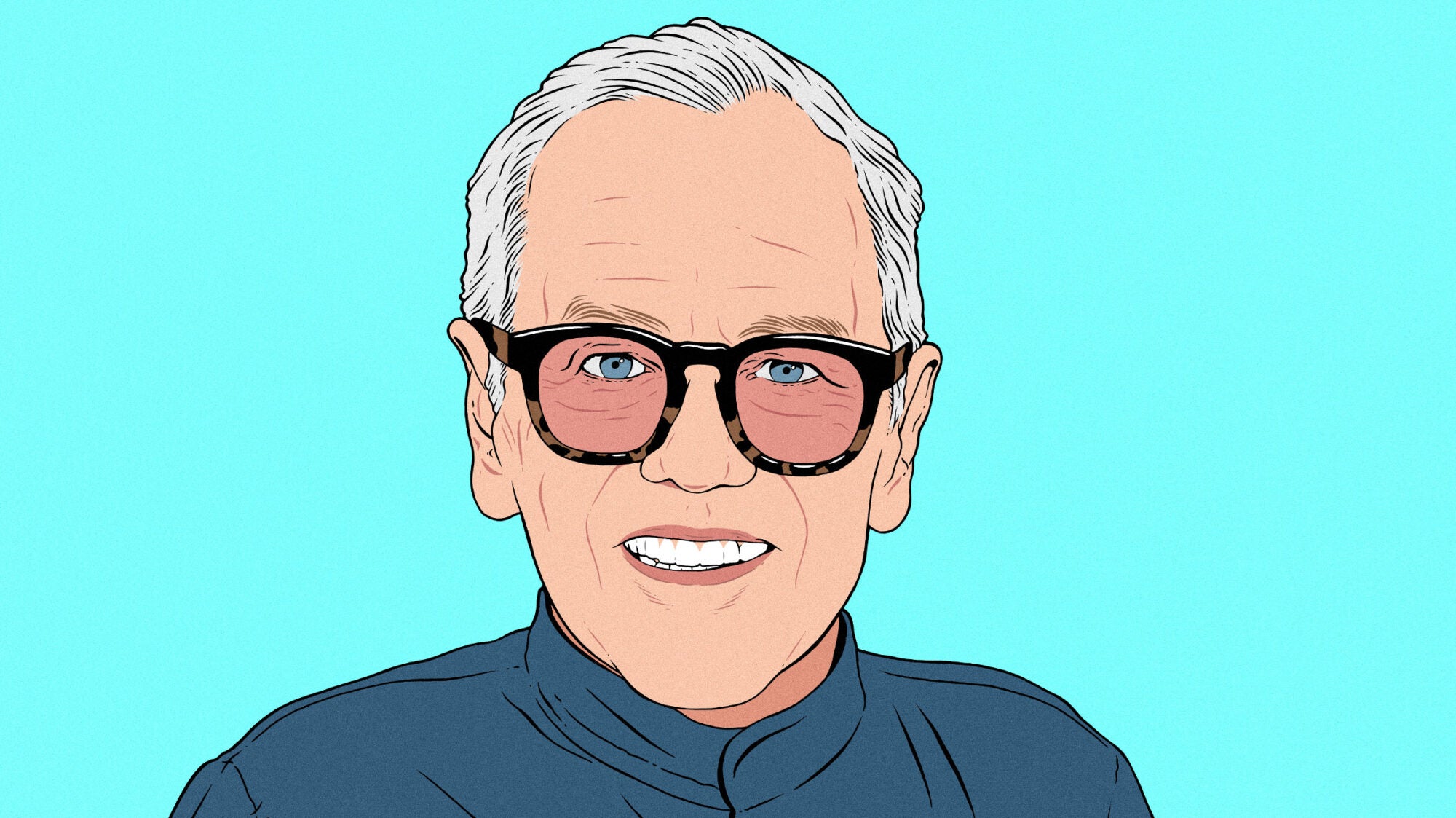
Wolfgang Puck arrived in Los Angeles in 1975 with French technique and Austrian instincts, and he became the chef at Ma Maison in West Hollywood—a restaurant so exclusive the phone number wasn’t listed—where Orson Welles ate lunch every day and a generation of Hollywood royalty witnessed the birth of California cuisine. Then in 1982, after a falling out with the owner, he opened Spago on the Sunset Strip with a wood-burning oven, a funky dining room, and a smoked salmon pizza that changed everything. What followed was two James Beard Awards for Outstanding Chef and 32 years of feeding the most famous people on the planet at the Academy Awards Governors Ball. We talk about all of it—the early years, the big swings, and what it feels like to be America’s first celebrity chef.
Subscribe to This Is TASTE: Apple Podcasts, Spotify, YouTube
Read the full transcript:
Matt Rodbard: This Is TASTE. I’m your host, Matt Rodbard. Wolfgang Puck arrived in Los Angeles in 1975 with French technique and Austrian instincts, and became the chef of Ma Maison in West Hollywood—so exclusive, the phone number wasn’t listed—where Orson Welles ate lunch every day, and a generation of Hollywood royalty witnessed the birth of California cuisine. Then, in 1982, after a falling out with the owner, he opened Spago on the Sunset Strip with a wood-burning oven, a funky dining room, and a smoked salmon pizza that changed everything. What followed was two James Beard Awards for Outstanding Chef and 32 years feeding the most famous people on the planet at the Academy Awards Governors Ball. On this memorable episode, we talk about it all: the early years, the big swings, and what it feels like to be America’s first celebrity chef. I hope you enjoy this episode.
Wolfgang Puck, welcome to This Is TASTE. So great to have you in the studio.
Wolfgang Puck: Thank you for having me.
Matt: I have so many questions. This is going to be a great conversation about the history of California cuisine, your time in Las Vegas, the Oscars Governors Ball—which you’ve done 32 years now. I gave you a few more, but 32. I want to ask you, you’re back in New York. Where do you like to dine out when you’re here?
Wolfgang: I generally go to restaurants owned by friends, by chefs. Like, I love Le Bernardin. Eric Ripert is a good friend of mine, and my son Byron actually worked there one summer when he went to Cornell. I see Daniel Boulud often when I come here. Last night, we went to this great bar for drinks and food—Sip and Guzzle.
Matt: Sip and Guzzle! Really fun name—and what’s your review?
Wolfgang: I think most of the things are very inventive. It’s great these days to have a place where you go out for cocktails and have a dinner menu too, and just nosh on it. A little bit this, a little bit that, not really a big plate in front of you—everything to share. I think that’s really the point now, how young people like to go out. There was nobody in there my age at that bar.
Matt: Except for you and a few others—the Gen Z’s were there!
Wolfgang: Yes. And I think the chef or owner worked with Grant at Alinea in Chicago, so you could see the food really came from there. It’s a great experience. The bar is very dimly lit and everything looks like a dive bar, but with a very upscale contrast.
Matt: I’ve heard great things. Well, we’ve got a lot to cover. I want to ask you—you moved to the United States in 1973 at the age of 24. How the hell did you end up in Indianapolis?
Wolfgang: I’m a big fan of auto racing—Formula One. At that time, Formula One wasn’t really in the United States, but I used to live in Monaco and we had the Formula One race there in May. When I came to New York, I was brought over by Jean Desnoyers to be chef at a restaurant called La Goulue. But I didn’t want to cook bistro food at that time, because I had worked at Maxim’s—a three-star restaurant—Baumanière—a three-star restaurant—and the Hôtel de Paris—a two-star. So I said, I don’t want to cook steak frites. Then somebody offered me a job in Indianapolis. I knew about the Indy 500, and I thought: Indianapolis, that’s where I’m going. Meanwhile, I had spent all my money in New York—I was there about four months—and then I took the Greyhound bus to Indianapolis. And I said, oh shit. I thought it was going to be like Monaco or something.
Matt: You thought the prestigious auto race in America would mean it was a luxury destination!
Wolfgang: No, no—I liked it. The people are really nice in the Midwest. But on Sundays, everything was closed. You couldn’t get any liquor, you couldn’t get any wine. You had to go to the Hilton Hotel to maybe get a steak and a glass of red wine.
Matt: But you spent some time there?
Wolfgang: I spent a year there. It was really great, actually—in a French restaurant called La Tour, very traditional French food. What was interesting to me was, we had New York steak on the menu, and that was probably the most popular dish. But most of the people wanted it well done. I always tried to do it medium-rare or medium, still pink inside, and they would send it back. I had an Irish guy on the grill and he said, “No, you have to cook it well done.” When they sent my steak back, he put it in a microwave for a few minutes.
Matt: That’s really funny. I grew up in the Midwest, so it sounds like some of my memories from the ’80s. Did you make friends in Indianapolis?
Wolfgang: Oh, yeah. I had a lot of girlfriends. You know, I must have been different because I was a foreigner. You’re 24, you’re going out on the town. The girls were really nice. The food wasn’t interesting in Indianapolis, but the girls were very interesting indeed.
Matt: As a Midwesterner, I take that as a compliment. Okay, we’ve got to talk about Los Angeles. You were recruited to work at Ma Maison—which you didn’t technically open, it had been open—but you really made it Ma Maison. History books will show this is one of the most influential restaurants in Los Angeles. A real movement came out of this restaurant.
Wolfgang: So when I went to Los Angeles, I ran into a guy named Scott Miller who I used to work with in Indianapolis. I was working for a company called Ara at Davis—they had restaurants in Chicago, like the 95th in Chicago; they had restaurants in Indianapolis, Los Angeles, San Francisco. They sent me to LA to work there. But I always wanted to open my own restaurant, so I was looking for a second job. I worked downtown from three to 11, and through Scott, I ended up at Ma Maison. I went there, Patrick hired me, and when I looked at what they were cooking, I said, no wonder they have no business—the food was terrible. Only later on did I learn how bad it really was.
Matt: Gene Kelly was an early investor, right? Five thousand dollars?
Wolfgang: Yes, and there was a little of Rosenblum, who owned the ramps. Some people had invested money, but nobody wanted to go there for dinner because the food was so bad. So I changed that, made good food, and then the chef quit. Patrick begged me to take over the place. My first paycheck bounced—I went to the bank a block away to cash it and they said, “Sorry, there’s no money in the account.” So I went back to Patrick, and he said, “Don’t worry, I’ll pay you on Saturday night in cash.”
Matt: One of those deals that is still, to this day, a known fact about restaurants.
Wolfgang: At that time, we did maybe 25 dinners and 20 lunches. Money was really tight. But then I cooked good food and people started to come, more and more.
Matt: That is the most humble understatement, because what you’re doing is you’re inventing a style of cuisine. You’re literally bringing a new style to California. Describe what you’re cooking at Ma Maison.
Wolfgang: At the beginning, I really cooked what I learned in France—like when I worked at Baumanière, we made the loup de mer in puff pastry with a lobster sauce and beurre blanc. And I made a duck in two courses, similar to what was done at La Tour d’Argent, because Patrick’s uncle owned La Tour d’Argent. Then, little by little over the years, I started to change. I found a farm in Rancho Santa Fe—the Chino Farm—where they grew vegetables as good as you could get in France. When I worked at Baumanière, the owner, Mr. Thuilier, had six gardeners bringing the best tomatoes, green beans, snow peas, strawberries, melons—everything was super tasty. But in LA, I went to the big produce market downtown and the carrots were all two feet long and the zucchini weighed a pound. Nothing special. Then I found the Chino Farm, and that changed my life in California. I used to go once a week down to Rancho Santa Fe—about a two-hour drive. And on Sundays, the son of the owner would come up with his station wagon and bring us vegetables and strawberries and white corn and melons and tomatoes—he had like ten varieties of tomatoes.
Matt: We got to go to Chino a couple of years back and interview the family, walk the fields. You really put them on the map. They put you on the map, too. I’m thinking about this period in time—you’re going down to Chino Farms in San Diego. You’ve got Michael McCarty, who’s got farmers all over California, putting them on his menus. You’ve got Alice Waters up north doing the same. Kind of in tandem, the three of you are creating new American cuisine.
Wolfgang: After five years at Ma Maison, I said, I want to be on my own. I don’t want to ask Patrick for a raise anymore. I was still worried about leaving, because we had all these famous customers—at lunchtime, we had artists like David Hockney and Jasper Johns and Roy Lichtenstein, who would walk across the street for lunch. And we had Orson Welles come, and Jack Lemmon, and Elizabeth Taylor. You name it.
Matt: Was Orson Welles a good tipper?
Wolfgang: I don’t take tips—I’m a chef. He had people with him who paid for the check. He was a good talker. I used to sit with him. I’d open a bottle of champagne because he loved champagne. I remember one time he wanted consommé—from a can—and I told him, “No, no, don’t use canned consommé. I’ll make it for you.” I used to make consommé especially for him.
Matt: Orson, famous champagne lover.
Wolfgang: I used to open a good bottle, and Patrick was always upset. He’d say, “He’s not going to pay for the champagne. We’re paying for it.” I said, “It’s Orson Welles. He’s a legend.” And then when I found the space up on Sunset Boulevard, I told Patrick, “Okay, let’s start a restaurant management company, go 50/50.” He looked at me and said, “Wolfgang, I’m always going to own 51%.” And I said, “Yes, me too.” And then I said, “Okay, I’m quitting. I’ll give you three months’ notice, and that’s it.”
Matt: In that moment, you’re out.
Wolfgang: Yeah. And then I left Ma Maison—that was in 1981. At that time, I already had the property secured up on Sunset Boulevard where Spago would become. And the name actually came from Giorgio Moroder, you know—the famous musician who did all the music for Donna Summer.
Matt: Giorgio gave you this word. Yeah.
Wolfgang: Giorgio said, “Okay, I’ll give you the money, but let’s call it Spago.” I said, “Why are we calling it Spago?” He said, “I want to write a musical called Spago.” I said, “Okay, I don’t care about the name—as long as you give me the money.” Is it Italian? Does it mean anything? It means slang for spaghetti. It also means, when you see a string with no beginning and no end—poetically. I liked that. But in the end, Giorgio and I couldn’t come to an agreement because he wanted 60% and offered me 40.
Matt: What’s up with these guys, Wolfgang? They didn’t think the chef mattered. At that time, there was no celebrity chef. You were going to be the first. So there was no reason to give you more money—you were just a guy in the kitchen.
Wolfgang: He said, “The cook is not important.” They thought the manager or the deal was more important. So I said no again. At that time, I had a cooking school—a lot of lawyers, dentists, doctors used to come to my cooking classes. It was all participation, with eight little kitchens with stoves, always enough wine. They were cooking and drinking at the same time. And I announced: I’m looking for money to open my own restaurant. Bring out that second bottle of wine, get those investors.
A few of them got friends together. I got a loan for $60,000 from the bank—a friend cosigned it because I didn’t have much at the time. And in January of ’82, we opened Spago.
When I opened Spago, I said, I want a restaurant that’s really a blueprint of our city, with different influences from different cultures and with local ingredients. We had Little Tokyo. I was the first chef, actually, who went to the fish market—I had a friend who had a Japanese restaurant, and I used to go with him to the fish market at sunrise. There was no chef in LA who went to the fish market at that time. I went and I saw the tuna and all the different fish available for sashimi and everything. I said, I’m going to put tuna sashimi on the menu. I always thought the Chinese were better with duck than any restaurant in Europe. I made a duck like the Chinese, but with a plum sauce—fresh plums. I made a warm oyster with a salsa underneath, breaded with finely ground almond meal. I used the different cultures of the city. I designed the menu myself—painted it with crayons, with pastels. And I said, what are we going to call it? We’re not a French restaurant, we’re not an Italian restaurant. So I called it California cuisine.
Matt: Did you realize you were branding something?
Wolfgang: A lot of things—you don’t realize at first what you’re doing. You’re doing it out of necessity, or because you believe in it. I just said, okay, I want to be different. I don’t want another leather-bound menu.
Matt: And you opened everywhere. We’re sick of that.
Wolfgang: I went to the fish market, bought fresh fish. I put grilled tuna on the menu—I only cooked it on one side, and left the other side raw. People would lift it up and say, “Oh my God, it’s not cooked.” We got beautiful king salmon from the Columbia River, and I cooked it pink in the inside. And some people would cut a piece and say, “The fish is not cooked—send it back.”
Matt: So where does the idea come to take that beautiful salmon and make it a pizza—no tomato sauce, no cheese?
Wolfgang: When I opened, I had worked in the South of France, in Provence, at a place called Chez Guy—and I helped this guy, who became a friend, make pizzas there. But I was working at Baumanière on my day off just to get a free meal, so I could take a girl there for dinner. At Chez Guy in Salon-de-Provence—about 20 kilometers from Les Baux—I used to help make pizza there, more Italian style. When I built the pizza oven in LA, there was no such thing as a wood-burning pizza oven. I went to a place called Licorice Pizza—I said, I want the pizza, and they said, no, it’s a record store.
I said, I don’t want to make Italian-style pizza. There are enough cheap pizzas out there. So instead of pepperoni, I made a duck sausage—I boned the duck leg, made it like a sausage meat, cooked it really slow, then sliced it really thin. Duck sausage pizza with shiitake mushrooms, some grilled onions, and a little fontina and mozzarella.
Matt: The best pizza cheese is fontina.
Wolfgang: Not by itself alone—fontina has a very good nutty, rich flavor, and the fat content, especially if it’s a little bit older, can be very fatty on its own. But it has the most flavor. You have to make a mixture. My mixture at the beginning: mozzarella, a little aged fontina, and a fresh goat cheese from Laura Chenel from Sonoma—at that time, something totally new. I made a warm goat cheese salad.
Matt: Laura Chenel’s cheese—Alice Waters was using it too.
Wolfgang: I met her once at a dinner up at the Jordan Winery, and she brought me the cheese. She said, “Wolfgang, you should try my cheese—I know you worked in Provence, and I learned how to make cheese there too.” She brought me her cheese, and I said, “Oh my God, this is so good.” I used that for my pizza. And I remember one day we did a private party at Marvin Davis‘s house, and Barbara Davis was upstairs—she sent me a note about the Marciana pizza. I called it the Marciana pizza because my friends from Guess Jeans used to come every day to eat—sun-dried tomatoes, fresh basil, cheese, a little olive oil on the bottom, no tomato sauce. And she said, “Oh my God—there’s goat cheese on it. What is this white cheese?” So it was basically mozzarella, fontina, Parmesan, and goat cheese—four cheeses, no tomato sauce. For certain dishes, I used a little pesto underneath instead of olive oil. I made a Santa Barbara shrimp pizza—just blanched the shrimp for 30 seconds in boiling water, took off the shell, put them on the pizza almost raw. Even when you put it back in the oven, it just barely cooked. It was really delicious. I remember Linda Evans coming three times a week—a glass of red wine and my duck sausage pizza.
Matt: So people made Spago such a huge success—way above what you ever dreamed. Was it the goat cheese? Obviously the first response was: this doesn’t taste like regular cheese. But as it sinks in, it’s unique—umami, aged, a little animal. Was that drawing them in?
Wolfgang: I think we had the first restaurant with an open kitchen. There was no such thing as an open kitchen. My kitchen was right in the middle of the dining room. When you walked in, to the left was the bar; right in front of you was the kitchen. They saw me working, I used to wave to them, say hello. I had my old customers from Ma Maison come already—I remember one time Billy Wilder came with Gregory Peck, Sidney Poitier, and Joan Collins. A table of four—their wives and everything, maybe ten people—right in the middle of the dining room. And there was a writer from the Hollywood Reporter, George Christy, at a table close by. The next day he wrote: “Spago is the new place to go. The food is fantastic. The clientele—you see everybody, the who’s who of Hollywood.” It started out like a brush fire. Everybody said, “You’ll see, in six months you’ll be like the other restaurants.” Well, ten years later—same. Today we are 44 years old, and it’s still the same.
Matt: Was there something about the location, the room, the agencies nearby?
Wolfgang: Nobody was nearby really. But we had agents like CAA—Michael Ovitz used to come with his clients. He was the first one to put me on TV. When I came out with my second cookbook—a Random House book—I gave it to his wife Judy for her birthday. He was there with Michael Eisner and Jane. He looks at the cookbook and says, “How come I don’t know about this?” I said, “Mr. Ovitz, you run CAA and Michael Eisner runs Disney—how should you know about my little cookbook?” He says, “Where are you promoting it?” I said, I did AM Los Angeles, a morning show in Seattle, one in Chicago. He says, “No—you need national TV.” My PR person from Random House had tried to get me on Good Morning America and the Today show, and they didn’t want me. “We have Julia Child already. We don’t need Wolfgang.” He said, “What? They’re crazy.” He called the vice president of ABC, came out to LA a week later, had dinner at Spago—and made him sign a contract on a napkin that Wolfgang Puck would be on Good Morning America once a month.
Matt: The birth of Wolfgang the celebrity chef. And you were the first restaurant chef really on television.
Wolfgang: They had Julia Child and Jacques Pépin—but they were not restaurant chefs.
Matt: Not restaurant chefs, no.
Wolfgang: And I still remember—I used to have lunch at Le Cirque when I finished my Good Morning America segment, walking across Central Park. A few times, Robert Morton, who was the producer of the David Letterman show, would say, “Wolfgang, I just saw you on GMA—somebody cancelled. You want to do our show tonight?” I said, “Yes, for sure.” I’d grab half a chicken from whoever was running the kitchen at Le Cirque at the time, walk it over to the Ed Sullivan Theater, and start doing the late-night show. Little by little. And then around 2000, I started doing some things with the Food Network—Emeril was already a big presence there.
Matt: You were still Wolfgang Puck, and you and Dave had a lot of fun on those segments. You can check them out on YouTube.
Wolfgang: I still remember one time I brought a white truffle—it has such an intense smell, and some people don’t like it—and I made a chicken dish with it. I gave the white truffle to David Letterman to smell. He smelled it and said, “What does it smell like?” And I said, “It smells like sex.” He looked at me and said, “Where have you been?” It ended up on the Best of Letterman.
Matt: Wolfgang, in the course of about five years in the 1980s and early ’90s, you appeared on Family Feud, Who’s the Boss?, and Tales from the Crypt. Do you have a favorite memory from those shows?
Wolfgang: I still remember when I did the show with Tony Danza—I got so nervous, I forgot my line. I was playing myself, going to a fish market or something, and all of a sudden I blanked out in English. And one time I did a movie called The Muse—I think that was in the ’90s—and I was next to Sharon Stone and Andie MacDowell. All of a sudden I was thinking about Sharon Stone in Basic Instinct and I blanked out again. I said, that’s why I stay in the kitchen.
Matt: What was it like working with Albert Brooks?
Wolfgang: Albert Brooks is really funny but really nice. He made me feel comfortable. When I forgot my lines, he just said, “Okay, we’re gonna redo it.”
Matt: And Good Morning America—you made a chocolate soufflé on live TV.
Wolfgang: I made a chocolate soufflé on live TV. I had to put it in the oven at exactly the right time so that after four minutes of television, I could take it out and it was perfectly cooked. Everybody was nervous, especially the producer. But we did it. I was there with David Hartman—he was like six foot five. I looked up at him and got so nervous.
Matt: Do you still do live TV?
Wolfgang: Yeah, sure. I just did Good Morning America yesterday, actually. I don’t come to New York as often anymore, because now we have restaurants all over—from London to Budapest and Istanbul, the Middle East, Singapore, China.
Matt: I’ve had a couple of native LA chefs on the show, and they’ve all said they miss the original Spago on Sunset. There’s something about that space.
Wolfgang: Because it was something totally new at that time. It was a little campy. We didn’t have a lot of money to build it. The kitchen was right in the middle. It was simple food—the kind you could eat every day—but of the best quality. The vegetables from the Chino Farm, the strawberries, the white corn risotto—they had the best flavor. Best quality, simply prepared, and the restaurant was fun.
Matt: Can we talk a little bit about working with Sherry Yard?
Wolfgang: For sure. Nancy Silverton was our pastry chef originally, and Mark Peel was the chef at Spago—her late husband. May he rest in peace. When Nancy left, Sherry was working up at the Compton Place in San Francisco, I believe. She came to work at the old Spago and then the new Spago. She’s an incredible chef—great taste. What I liked about Sherry: she’s a pastry chef who understood that it has to taste delicious. It didn’t have to be complicated, didn’t have to be a showpiece. She made pastry that was really, really good. I even sent her to Austria, so she could get a little taste of where I came from.
Matt: The alumni of Spago—it goes on and on and on. You’ve got all those restaurants running around the world. But of course, every year come February, come March, you’ve got the Governors Ball. I was given this year’s menu yesterday—and it’s really crazy how many dishes you serve. Do people really eat at the Governors Ball?
Wolfgang: Everybody is hungry. When you go to the Academy Awards, the women and men all have to do their hair, do makeup, leave their home at three or four o’clock—depending on where they live—to get their seats at the theater by five. Most of the people have had maybe a cup of tea and toast in the morning, and they haven’t eaten. By ten o’clock at night, everybody is hungry. I said, you know, they were vegans maybe before they started the day—but when they came out of the theater and they smelled the chicken pot pie with black truffles, they said, “Give me that.” I remember Barbra Streisand ate three of them. Smaller portions, obviously.
The Governors Ball has evolved—in the old days, it was a formal sit-down dinner. Now it’s a party. We have small buffets in the dining room. This year we’re going to have a station with five Japanese chefs. A Peking duck station. Our chef from CUT in London, Elliot—he’s making fish and chips and a Beef Wellington. Our chef from Spago in Budapest is coming and making something more on the Hungarian side. Plus everything we already do. So there are a lot of choices. People can mingle. We pass around a lot of small plates—tortellini with mushrooms, Hunan eggplant, vegetable risotto, so many different things.
Matt: What about the beef situation?
Wolfgang: We have the tomahawk from Snake River Farms at the carving station. And we have Miyazaki beef—which I made famous, because before, “Kobe beef” was the term everyone used. I tasted the Miyazaki beef from the southern island of Japan, and when CNN and everyone reported that Wolfgang is using Miyazaki beef for the Governors Ball, all of a sudden they became famous for their beef. They always had great beef—some of the best in the world. We’ve used their beef now for the last ten years. Last year I actually went to visit them, because you hear these crazy stories about Wagyu beef—that they massage the cows, give them beer. I said, I want to see what they actually do. They feed them rice hay and barley and add some minerals—but it’s more about genetics. No beer, no massages. Nothing. They’re just very careful about disease prevention. When we went into the stable, you had to put on an overall, like going into a fancy lab. And we couldn’t go see the bulls up close—you had to look at them through a window.
Matt: I have to ask—is Leo eating at the Governors Ball buffet?
Wolfgang: DiCaprio is really a good eater, actually. I like him a lot. I’ve had him at the restaurant a few times—he loves CUT, loves our New York steak from Snake River Farms. Tom Cruise also—yeah. They all eat really well. I remember when the cast of The Brutalist came—one bottle after another. I told them I’m going to do a movie called One Dish After Another. Del Toro and champagne. Have you seen that movie? It’s amazing. I think Sean Penn did an amazing job as a supporting actor—he really played that role. DiCaprio did a great job. All of them were very believable. And hopefully it wins, because last year—I remember when Anora won, I didn’t even know about it. When I found out they’d won for best director, best picture, all these awards, I had them in the dining room. I said, “Come with me to the kitchen, you can eat quietly.” The director, Sean Baker—all of them came. I had 60 cooks doing dishes and they all applauded. It was really something. And I remember when Joaquin Phoenix won—he’s vegan. He said, “I don’t know where to eat.” I said, “Come with me to the kitchen.” We fed him there, and he said, “This is the best vegan food I’ve ever had in my life.”
Matt: The genius of being part of the Governors Ball is you’re introducing these important people to your food. And they’re also, like, extremely nervous and probably hungry first.
Wolfgang: I think nobody wants to make a fool of themselves. I don’t think they drink a lot during the ceremony—but maybe late night, yeah. Madonna has a party late night. I’ve been once, only. But by then I’m tired. You serve 1,500 people, and the pressure to do it right—I don’t want to go out at three in the morning to a party. I said enough hellos already to these people. And honestly, I don’t think they actually want to see me at that point. They might want to see a good-looking guy or a good-looking girl instead of me hanging around them.
Matt: Going back over 32 years—is there a year when you’re like, this was the craziest one?
Wolfgang: The hardest one was actually the first dinner at Hollywood and Highland—the Dolby Theater. The weather was bad, they had a lot of electric heaters—and then all of a sudden, everything stopped. No electricity. We still had to serve at least 600, 700 customers, and everything stops. I panicked. I said, “Okay—bring out the little burners.” We started slicing the New York steaks and putting them in a lot of butter to cook them somehow.
Matt: Save it—get the Sterno going, roast them that way.
Wolfgang: The problem was, we had an engineer there, but the security was so tight that they didn’t let him come look. My partner at the time, Carl Schuster, I said, “Carl—go find this engineer. We need electricity or we’re going to stop service.” About 15 minutes later, Carl came up to the kitchen, flipped the switch back on, and everything was fine. In the dining room, they had the safety lights on—nobody actually knew what was happening. But for me, that was the longest 15 minutes of my life.
Matt: I’m sure no one even knew. So this year is your 32nd. Are you going to keep doing it?
Wolfgang: We’ll keep doing it. I know what the people like. We make a lot of new things, but at the end of the day, people love their chicken pot pie, the macaroni and cheese, good pasta. The fish and chips became very popular. And obviously, all the vegan and vegetarian dishes.
Matt: We haven’t even talked about the pastries—you’ve got a gelato station, the chocolates—
Wolfgang: We make 3,000 chocolate Oscars, which we spray with gold. And we have a station for Austrian desserts I love. Last year we started the apple strudel—we cook it to order. This year we’re going to do the same with warm chocolate cakes. We make the individual molten cakes right there, brush them with a little fondant and lemon juice, or a little chocolate—fresh out of the oven. It smells so good.
Matt: The pro move when you go to an event like this is: go to the desserts first. Do you have people doing that?
Wolfgang: I had a customer—he’s been gone for a long time now—Luther Vandross. He used to come to the restaurant all the time. He always started with dessert—ordered two desserts. I said, “Why do you start with dessert?” He said, “I love dessert so much that I’m always worried by the time dessert comes, I’m so full I can’t eat it anymore. So I start with dessert.”
Matt: I have a new appreciation for Luther Vandross. I already loved him.
Wolfgang: He’s a great singer—and he loved sweets.
Matt: Okay, last question on the Governors Ball—how do you get a ticket or an invitation?
Wolfgang: The best thing is: make a great movie. Star in it, make the music, produce it—figure out a way. They don’t have podcasts at the Oscars yet.
Matt: We can’t quite get in there. And the Golden Globes—there’s no Golden Globes ball.
Wolfgang: Hotel food—big hotels serving banquets. It’s in hot boxes, it sits there for hours. It’s like eating in a fast food place. But at the Governors Ball—we get the best ingredients. From the Miyazaki beef to Snake River Farms beef. If I have black bass on the menu, but I can get amazing rockfish from the Santa Barbara Island instead—when it’s fresh, it’s as good as any fish in the world. We use whatever’s fresh that week.
Matt: Wolfgang, on This Is TASTE we ask guests about their discerning taste. To close this interview, a little rapid-fire taste check. Are you ready?
Wolfgang: I was born ready.
Matt: The best fruit?
Wolfgang: Any fruit that’s ripened on the tree or the bush. For me, a Mara des Bois strawberry—I can’t wait to get them. I still remember going to the pineapple fields on Maui—there are very few left. Cut a fresh, ripe pineapple, already nice and yellow—the fragrance is so amazing. And I still remember in Austria, picking wild strawberries in the forest. It’s a memory. Most hotel fruit baskets, you cannot eat any of it. Maybe the banana.
Matt: Maybe the banana was always the safest option.
Wolfgang: The worst vegetables are the ones grown on factory farms. They sit around too long and they have generally no flavor. The monoculture farms—after a while, the soil is depleted of all the minerals that make things taste delicious.
Matt: And in 1975, you found the Chino Farm—and it’s been lights out.
Wolfgang: If you get white corn, or carrots, or artichokes—they taste really good. When farmers have passion, they love what they do. They know how to cultivate—they know not to do everything the same way every year.
Matt: What’s the best dessert?
Wolfgang: I can have chocolate—probably my favorite. I love caramel just as much. I love a great fruit dessert, like a great apple strudel with marzipan. Ice cream is one of my favorites. I love a lot of desserts. When I go to Spago, the first thing I do when I get to the kitchen is go to the dessert station and taste the ice creams. I still remember when Sherry Yard made a raspberry sorbet with chocolate chips. As you let it melt in your mouth, you first get the flavor of the raspberries, and then as the chocolate chips warm and start to melt, you finish with chocolate. The most perfect sorbet. You have to eat it slowly—let it melt in your mouth. Don’t swallow it and forget about it.
Matt: A restaurant you wish you could bring back from the dead?
Wolfgang: When I look at New York, maybe Lüchow’s. Because Lüchow’s made such a big impression. I still remember a restaurant like Maxwell’s Plum. Really iconic restaurants of the ’70s—and in a way, it’s sad to see them go. That’s what I say about our own restaurants: Spago is open 44 years. CUT is open over 20 years. Chinois, 43 years. Longevity. And I’m very excited because now my son Byron is working with me. He worked in some of the best restaurants in Europe—from Guy Savoy to the Roca brothers to Steirereck to Baumanière, where I used to work 50 years ago.
Matt: Byron putting on some miles—and he’s going to take over your business.
Wolfgang: He went to Cornell, so he has a better education than me. I left school when I was 14. I’m very excited that we can continue our family business. My brother runs our cafes at the airports. My wife Gelila works with me on branding. We are really a family who runs it together. And to see your kid be so passionate about the same thing you’re passionate about—that brings me so much joy.
Matt: I love that. You can see it in your face—you’re really proud. A couple more. When you’re craving fast food—and I know you do once in a while—where are you going?
Wolfgang: If I had to choose one: In-N-Out Burger. I have a good story. When I met my wife Gelila, it was Valentine’s Day—maybe 2001 or 2002. I said, I have to take her out. We were going to Palm Springs. Eric Ripert had a restaurant at La Quinta—I ordered flowers and a bottle of champagne on the table. But I was leaving LA late, there was a lot of traffic, and we got into an argument because there was an In-N-Out Burger on the way and Gelila said, “Let’s stop—I’m so hungry.” I said, “We have dinner waiting and Eric’s been cooking all day.” We passed it by ten miles, got into a big argument, and finally I said, “Okay, let’s go back.” We went through the drive-through. She ordered her burger, and she asked what I wanted. I said, “I want my burger with Dijon mustard—and a glass of red wine.” There was no glass of red wine.
My kids still love it. My wife still loves it. We actually went to a memorial service for Wallis Annenberg recently—what an amazing woman—and her favorite things were Pink’s hot dogs and In-N-Out. I had an In-N-Out that Sunday afternoon—the one wrapped in the iceberg lettuce instead of the bun. I said, you know, it is good. But when I like to eat, I like to sit down at a table with a knife and fork and half a glass of wine. Fast food: they cook it fast, you eat it even faster. It’s not my style. But among all the fast food options, I think it’s the best one.
Matt: You’ve made your point clear. Last one: your favorite sandwich?
Wolfgang: My favorite sandwich was our lobster club. We made a lobster club sandwich when we opened Postrio in San Francisco in ’89 or ’90—probably the first lobster club in America. Really good tomatoes from the farm, great bacon, and the lobster lightly smoked with a little bourbon. Really rich-tasting. On some really good country bread. A perfect sandwich—expensive, but really delicious. And it was copied many, many times. But I also love a simple one: a grilled cheese. Take some really good bread, put the cheese in it, add sliced black truffles, wrap it in plastic wrap, let it sit overnight in the refrigerator. Then you put it on the griddle—or in the oven, or in a pan—and you get the flavor and the smell of the black truffle. Only three ingredients, but it tastes amazing.
Matt: Wolfgang Puck, thank you so much for joining This Is TASTE.
Wolfgang: Thank you.