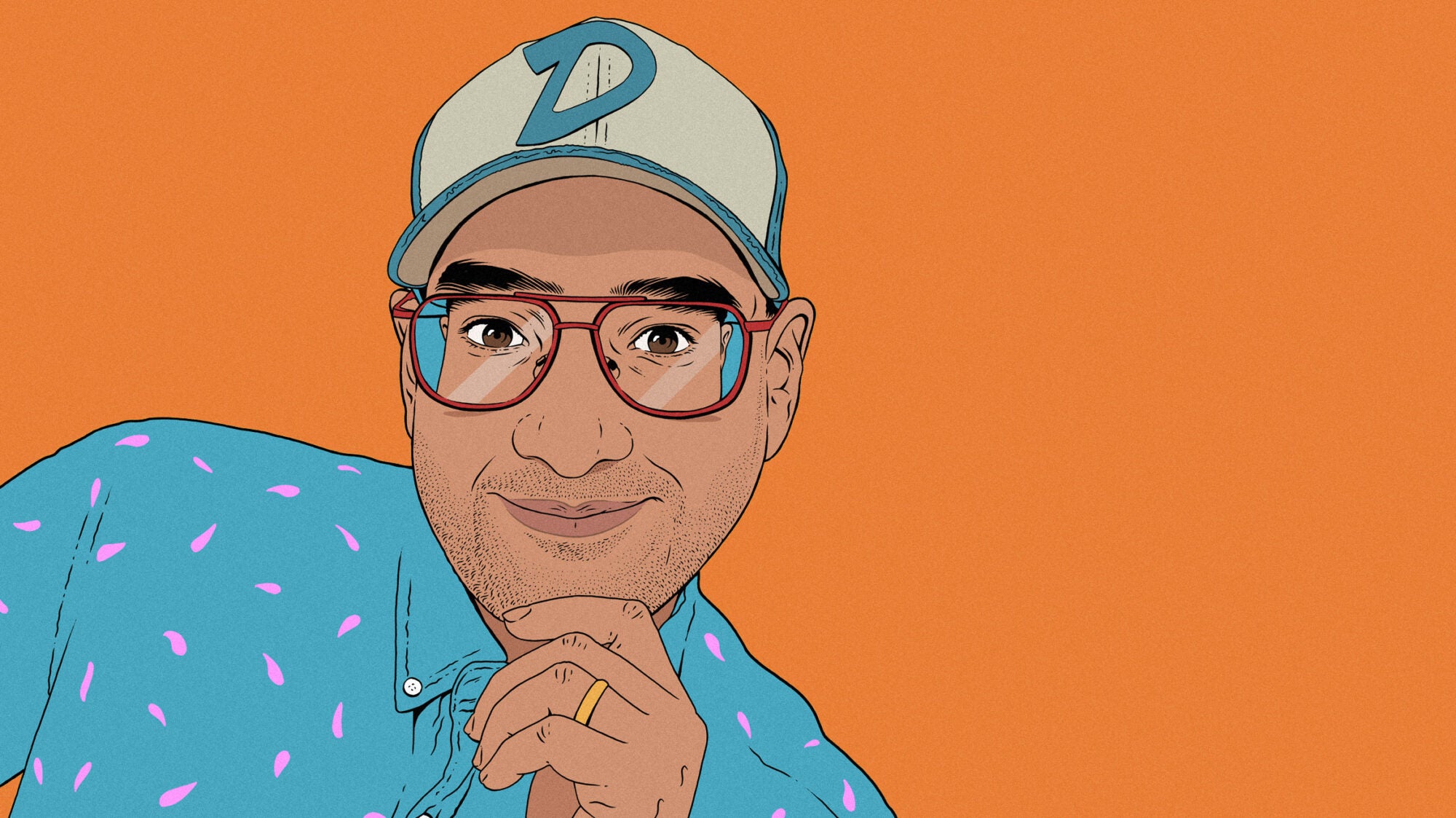
Ham El-Waylly is a chef, recipe developer, and video creator based in New York City. His New Orleans–style seafood restaurant Strange Delight is a Brooklyn favorite, but his wonderful new debut cookbook is decidedly for the home cooks. Today on the show, we talk about how the book draws from his fine-dining background and third-culture childhood—growing up with Bolivian-Egyptian parents in Doha, Qatar—with lots of hot takes about cooking tools, cross-culture cooking, wrestling, and more.
Also on the show Matt has a great conversation with Paula Houde, Executive Director of The Trotter Project. We talk about her time working alongside the legendary chef, and some great scholarship opportunities for culinary arts, hospitality, and agricultural students. Applications are open now.. Applications are open now.
Subscribe to This Is TASTE: Apple Podcasts, Spotify, YouTube
Read the full transcript:
Aliza Abarbanel: Ham El-Waylly, welcome back to This Is TASTE. Thank you for coming back on the podcast.
Ham El-Waylly: Thank you for having me. I’m excited to be here.
Aliza Abarbanel: I’m really excited to get to chat again and talk all about your great new book, Hello, Home Cooking. Before we start — you always have the best graphic tee collection of anyone I know. If someone’s listening, could you describe what you’re wearing today?
Ham El-Waylly: Today I have a graphic tee from an AEW wrestler called Timeless Toni Storm. I really like her visual style — she borrows from a lot of vintage looks, she has this Marilyn Monroe thing going on. So I’ve got a graphic tee of her in roller skates by a diner called the Timeless Café.
Aliza Abarbanel: And it says “Slop Tarts Baked Fresh Daily.” I love this. And I have to be honest — I’ve never seen AEW, so I didn’t even know it was wrestler merch. The vibe of it alone is so good.
Ham El-Waylly: Thank you. This is the rival — AEW. We don’t like WWE.
Aliza Abarbanel: Oh my God. I said the wrong thing. I’m really outing myself as a non-wrestling person. And our producer is also into wrestling, so I have a lot to learn. You do actually have a whole essay in your book about growing up watching wrestling?
Ham El-Waylly: I do. Wrestling was very popular in the ’90s, and I was very, very into it. It took over culture for a big part of my childhood, and it really formed a lot of how I viewed the world. There are a lot of larger-than-life characters in wrestling. My favorite wrestlers weren’t the most popular ones or the largest ones — it was the ones who told the biggest stories, the ones who made me feel the most. And no one embodies that more than Mick Foley. He’s a Long Island guy. He just looks like a regular guy — he’s not especially roided up, he’s not ripped. His signature was that he put his body through everything to entertain the crowd. He used bravery, tenacity, and just his general passion to succeed. That’s something I related to a lot, because I wasn’t a big sports guy, I wasn’t necessarily the smartest guy, but I definitely had a lot of passion. Wrestling kind of gave me the motivation to focus, try hard, and keep pushing for what you’re passionate about. If you work hard enough, you can eventually get there.
Aliza Abarbanel: The wrestling way of life. I love that. And you were a kid growing up watching this in Doha — it must have been an interesting way to be thinking about American culture through the wrestling lens.
Ham El-Waylly: It really was. I felt very plugged into American pop culture, because a lot of it was exported there. I grew up watching a lot of the same things that people here grew up watching — Family Matters, The Fresh Prince of Bel-Air, Seinfeld, wrestling. So when I moved here and started hanging out with people my age, I understood all the references and a lot of the pop culture they were talking about. It made my transition into American life a lot easier.
Aliza Abarbanel: Another thing you write about in the book is the American culture you got to experience through Johnny Rockets — sneaking out of school to go there.
Ham El-Waylly: Johnny Rockets was my favorite, favorite place. I loved just how it looked — my ideal diner. In my head, it was right out of the movies, right out of Pulp Fiction or A Goofy Movie. These were movies I loved growing up. So it was really cool to go to a place that looked like those scenes. It was the only diner in Doha, and they had exactly what I was looking for. I’d get the same thing every time: pancakes, cheese omelet, breakfast potatoes, turkey bacon. That was my go-to. I’d be there alone, I’d be there with friends — it didn’t matter. At least once a week, I found my way into a Johnny Rockets.
Aliza Abarbanel: Did the staff grow to know you over the years?
Ham El-Waylly: They did. I even tried to get a job there, but they didn’t hire me.
Aliza Abarbanel: They were like, “This kid clearly likes to spend too much time here. If we hire him, he’s just going to eat all the turkey bacon.”
Ham El-Waylly: Exactly. They did not hire me.
Aliza Abarbanel: Well, look at you now. You can go to Johnny Rockets whenever you want. So I want to drill into the idea behind this book. You’re such an experienced chef — there are probably so many different versions of a cookbook you could have written. What’s the ethos of Hello, Home Cooking, and how did you land on it?
Ham El-Waylly: It’s very much in the title. I wanted a book that people didn’t feel intimidated to cook out of. I wanted people to flip through it, find things they were interested in, and then look at the ingredient list and not feel scared. That was a big part of this book. So I researched supermarkets around me to see what ingredients people actually had access to. When I went to visit my dad in New Jersey, I went to the ShopRite in his neighborhood to see what was available. There are a lot of ingredients I loved using that I have the privilege of finding easily in Manhattan — close to a farmers market, I have access to hyper-seasonal things at their peak. I took that out of my cooking deliberately. I didn’t allow myself to use those things. And it’s amazing what you can make out of your local grocery store. I didn’t feel limited at all. It was a fun exercise, and I’m really happy with the delicious and interesting things that came out of it.
Aliza Abarbanel: “Delicious and interesting” are two words I’d definitely use to describe the recipes, because they’re all things that sound really familiar or comforting, but then the technique or the combinations are also super out there in a really fun, freaky-positive kind of way.
Ham El-Waylly: Freaky complimentary. I’ll take that.
Aliza Abarbanel: I think one clear theme in the book is the variety of cuisines you grew up eating and how they all make sense nestled next to each other or playing with each other. Can you speak to what some of those influences were growing up, and how they show up in your cooking today?
Ham El-Waylly: I’m very proud of how I grew up. My mom was Bolivian, my dad is Egyptian. They met in D.C. while going to school, got married there, and then moved to Doha, Qatar, where I was born, where my sister was born, where I lived most of my life until I was 19 and moved here. Doha in the ’90s was a very special place — a really big melting pot. At my school, there were something like 30 different nationalities. In any given week, I’d be at a Lebanese friend’s house eating kibbeh or shish barak, at a Filipino friend’s house having lumpia and pancit, at a Somali friend’s house having sugo. And it wasn’t just home cooking — there was incredible street food. The best shawarma I’ve ever had in my life is still there. There was great Turkish food, great Iranian food, and strong restaurant communities serving the communities from Nepal, India, Pakistan, and Bangladesh. I just had access to such a wide variety of cuisine that was completely normalized to me. I wasn’t thinking, “This is a fancy novelty from somewhere exotic.” It was just my day-to-day life. That normalization of all these different flavors and techniques really formed the base of how I cook today.
Aliza Abarbanel: It’s such a delicious way to grow up. And now being in New York, where we have so many different people and you’re raising your own kid in this similar melting pot, it makes total sense that you’re having so much fun honoring the traditions of these foods while also messing around with them. You do write about “disrespecting” Italian cuisine a couple of times in the book — but it’s coming from a place of love. You’re just putting tofu in a lasagna.
Ham El-Waylly: Exactly. People get very protective, and rightfully so, of tradition and how food is made. But when I trade out ingredients, it’s not meant to be offensive. A lot of people claim that if you’re putting tofu somewhere it “doesn’t belong,” you’re diluting the culture. But we have access to more ingredients than we’ve ever had before. When Europe came across the tomato overnight, tomatoes suddenly went into everything. Culture is something that changes and morphs with time — tradition isn’t static. And my personal experience with culture and tradition has already passed through so many lenses. The Egyptian food I grew up with was made by my Bolivian mother, with ingredients from Doha. So it’s already changed. I did grow up eating molokhia, but it was done a little differently — and that’s my normal.
It’s a lot easier to cook like this when you have your own book and can explain yourself, because on the internet you’re forced to clip things down to a minute and a half, hit the reels, get the views — and you lose a lot of context. I was really happy to have a forum where I could explain myself. It feels very Slumdog Millionaire: how did you end up here, with this recipe? And then you hear the story, and it all makes sense. So there are a bunch of recipes in the book that may seem weird at first glance, but I’m hoping that when you read the head note, it makes perfect sense given the context of how I experienced it growing up, the ingredients I have access to now, and the techniques I’ve learned along the way. When you combine all those things, you end up with something interesting and novel.
Aliza Abarbanel: Having that space to provide context is so great. And then to have it live in this whole book, with these essays where you’re writing about moments in your life or how you view the world — it gives a really complete picture of who Ham is as a human, in addition to being a recipe developer.
Ham El-Waylly: Thank you. I think cooking is extremely personal. You’re taking time, skill, and money out of yourself to create something to feed and nourish other people. It’s important to know where that comes from.
Aliza Abarbanel: A lot of cultures have this idea of “hand taste” — the idea that the person making the food is imbuing some essence into it, and that even if someone makes the same recipe exactly, it will taste a little different because of the physical matter of who that person is. The older I get and the more I eat other people’s food, the more I believe in that quality.
Ham El-Waylly: I completely agree. When you’re making something and you’re really focused on it, really dialed in with the intention of serving it to other people with love and care, you are putting a piece of yourself into it. It’s a big part of the joy of cooking — putting yourself into this thing and seeing other people experience it.
Aliza Abarbanel: I want to talk about the development process for the book, because you have so many different kinds of recipes. How did you approach narrowing down what would be in it, and then fleshing them out to make sure they all worked?
Ham El-Waylly: Everyone told me when I started working on this book: do not do it in order. Don’t think of a chapter and then fill that chapter. That was the best advice I got. Instead, I looked at old family pictures to get into the headspace of young Ham — the things I grew up eating and, more importantly, how I felt eating them. There were a lot of things I just wished I could eat again. So I started with that. I made things like my mom’s cheese empanadas. Those are a very clear memory for me, because my mom always made them when she was missing home, and she was always really excited to share them with us. Even though her family couldn’t be there with her, we were her family — so it was nice to share that piece of herself with us. You can’t fully relive that memory, because that time has passed, but you can experience a snippet of it by recreating the cheese empanada. Once that dam had broken, it just rolled on from there.
Aliza Abarbanel: You also have some of your mom’s recipes in the book that came directly from what you call the Madonna notebook. Can you say more about that?
Ham El-Waylly: My mom loved collecting recipes — from her community, from newspapers, wherever she found something interesting. She’d always write it down or take a clipping and put it somewhere safe. She’d write recipes down everywhere, but only a handful made it into this one special notebook. It’s blue-lined on the inside, and the cover is a watercolor of Madonna singing in red lingerie.
Aliza Abarbanel: I have to say — when I first read about it in the book, I thought you meant the blessed Madonna, like the mother of Jesus Christ. When I realized it was Madonna the pop superstar, I really wanted to hang out with your mom. Did she watercolor it herself?
Ham El-Waylly: No, she bought it like that. The spine had started to give out, so she got electrical tape — and then you’d just see layers of electrical tape on the spine, because each layer would eventually wear out and she’d put a new one on top. It’s probably one of my most prized possessions. When we moved out of Doha, it happened really suddenly, so we didn’t get a chance to take a lot of our belongings. I’m really grateful to have that piece of my personal family history. It was something I was scared to open for the longest time, because I wasn’t ready to deal with the flood of emotions I knew would sweep over me. During the pandemic, I finally sat down and started flipping through it — and the first thing I noticed was that it was in three languages, because my mom spoke three languages. She would hop from English to Portuguese to Spanish in the span of a few pages. So I started with the English ones, then the Spanish, and then I just sat there with the Portuguese ones, looking up the words I didn’t know. That got the ball rolling for the whole book — just opening it and reliving those memories brought me mentally to a place I hadn’t been in a very long time.
Aliza Abarbanel: I can see how impactful that must have been. There are two recipes in the dessert section that you published essentially as-is, right? Did you think about modifying them?
Ham El-Waylly: I didn’t want to. Those recipes are from a completely different time, when social media didn’t matter — it was just about what’s easy, what makes a delicious cake, what ingredients are affordable and easy to find. Which is, incidentally, the premise of the whole book. I wanted to give people a time capsule. My mom would label recipes she really liked with “good” and two underlines — just to remember, “Okay, this one’s really good, let’s go straight to this for a special occasion.” So I picked my two favorite “good” recipes and put them in the book. They’re a banana bread and a lemon loaf cake. Classics. Delicious classics that I looked forward to having anytime I saw them on our kitchen table.
Aliza Abarbanel: I love that. What was the hardest recipe to perfect that made it into the book?
Ham El-Waylly: The beijinho Swiss roll. Not because the actual recipe was difficult to develop — the hard part was achieving the specific experience and feeling I wanted someone to get when they took their first bite. Beijinho means something very specific to me. It evokes a Brazilian gathering, a churrasqueira — people are happy, there’s meat grilling, there are pots of feijão on the stove, farofa in bowls. It brings me to a very specific time and place.
Beijinhos are a kind of truffle, the oft-overlooked cousin to the brigadeiro. Where a brigadeiro is condensed milk cooked down with cocoa and rolled in chocolate sprinkles, a beijinho is the same condensed milk fudge without any chocolate, but rolled in coconut with a clove pressed into it. The clove perfumes the whole thing. There are times I ate it whole and forgot to pull the clove out. The worst. Ruins your day. So I wanted the experience of eating this Swiss roll to feel like that first beijinho you bite into. The first time we nailed it, it transported me immediately. Because of that, it’s one of my favorite recipes in the book.
Aliza Abarbanel: Something I realized when I was going through the recipes is that I should be cooking with tea. I drink so much tea at home and I basically never cook with it. You have a broccoli chamomile soup — how did you even come up with that?
Ham El-Waylly: A lot of the flavor combinations in this book are rooted in tradition and things I grew up eating, but there are also combinations I learned in fine dining kitchens. That one specifically comes from WD~50. They paired tea with zucchini, and I thought about how the floral notes of chamomile could bring up qualities you didn’t think a vegetable had. When you get really nice fresh zucchini and pair it with chamomile, it highlights something you didn’t realize was there. So I started experimenting with teas and other vegetables. I love cooking down green vegetables in tea — it brings out really fun notes you wouldn’t have otherwise. And beans cooked in tea are fantastic. It adds this tannic depth of flavor that plays really well against how a bean can be almost mushroom-y.
Aliza Abarbanel: What tea should I use for my beans?
Ham El-Waylly: For beans, I really like a hojicha, because of that nutty undertone. Hojicha and beans is such a great combo.
Aliza Abarbanel: I think I was at dinner at your house once and you served rice that had been cooked in barley tea. It was throwing me for a loop because I knew it wasn’t barley, but it had that nutty whole-grain flavor.
Ham El-Waylly: Korean barley tea is something I always have in my fridge — one of my favorite things to drink. It’s refreshing but also genuinely tasty, which is rare. A lot of really flavorful drinks don’t actually quench your thirst. It’s great for braising meats, great for beans, great for mushrooms. But rice — you said it exactly right. It makes the rice taste like barley while keeping the texture of rice. The best of both worlds.
Aliza Abarbanel: I’m glad you mentioned beans, because your bean technique really threw me for a loop. I cook beans at home probably once a week, and I’m always simmering them with every aromatic thing in the fridge. What you write about doing is cooking the beans simply with a bay leaf and salt, then frying off onion and garlic separately, mashing a little bit of the cooked beans back in at the end, and stirring all that bright, golden-fried goodness in at the finish. The idea of adding my sautéed aromatics at the end so more of the flavor stays intact — why have I never thought of this before? I was genuinely upset about all the times I’ve been trying to make garlicky beans and wasn’t getting there.
Ham El-Waylly: That is classic Brazilian household cooking. That’s how my mom made beans thousands of times. It’s similar to a tadka, or what many other cultures do — you frizzle something and finish whatever you’re cooking with it. It just brings a vibrancy of flavor that often gets lost when things simmer together for a long time. I want that punchy garlic, that frizzled onion, front and center. And I love a thick, stew-y bean — you don’t need to over-reduce or add thickeners. Beans are the thickener. I love when they burst and their insides thicken the broth. That’s a very consistent way to get there.
Aliza Abarbanel: “I want my bean sauce thick” — that’s going to be a great graphic for you.
Ham El-Waylly: I can see it now.
Aliza Abarbanel: Another lesson that surprised me: you write about only using one knife at a time. When most people think about great chefs, they imagine the full knife roll. So what’s your go-to knife right now, and why is it your tried and true?
Ham El-Waylly: I’ve been using the same knife for a few years. It’s one I always wanted when I was a line cook but was priced out of. When I could finally get it, I did — it’s the Ninox G type. Ninox is a very boutique Japanese knife maker. Beautiful, perfectly balanced blades, very high-quality carbon steel that they set and mold under sub-zero temperatures. No one makes knives quite like they do. Their signature is wild handles — white buffalo horn, things that skyrocket the price. I didn’t get a fancy handle. I just got their lowest-end G type with a regular handle. But as soon as I started cutting with it, I couldn’t really use any other knife. The weight was perfect. I like a thin blade so I can see my cuts — that’s more specific to Japanese knives. Western knives tend to have thicker bolsters and that curve at the base for the rocking motion. I’m not a rocker. I do more of a Japanese-style slice. So the knife not only fits my hand perfectly, but how it’s formed works for how I like to cut.
One thing to keep in mind: if you’re going to invest in a higher-end knife, you also have to be comfortable sharpening it on a whetstone. The two go hand in hand. It doesn’t matter how fancy your knife is — it’s going to get dull, and you need to know how to sharpen it.
Aliza Abarbanel: So you don’t think you need a serrated blade or anything else — you just use the one?
Ham El-Waylly: For really crusty bread I’ll reach for a serrated, but otherwise I’m using that one knife. You can do everything with it. I have other knives — if I’m feeling like a fancy boy and breaking down a chicken, I’ll grab my honesuki. But most of the time, just cooking at home for myself, I’m using that one knife. It’s hard to part ways with. It just feels so good.
Aliza Abarbanel: Do you watch Culinary Class Wars?
Ham El-Waylly: I don’t — you might be the second or third person to bring it up to me.
Aliza Abarbanel: You and Sola should absolutely watch it. The chefs are incredible — the skill, the technique, the challenges. I won’t go into it now because I think you should watch it and then we can geek out. But there’s one chef in the new season who is this incredible Chinese cuisine specialist, and she uses her one big classic cleaver for everything — for the most delicate, intricate work. She’s so cool. The chefs go by nicknames until they win the competition and can use their real name. Her nickname is Witch with a Wok.
Ham El-Waylly: It is amazing when you walk through Chinatown and see how good people can get with what looks like this big, heavy, unwieldy cleaver. You can flatten dumplings, you can slice scallions — you can do so much. Whatever tool you have, if you’re comfortable with it and practice enough, you can excel.
Aliza Abarbanel: That’s the real takeaway. And that’s the benefit of thinking about home cooking — hopefully people will make these recipes over and over again and just get better and better at them. When you were developing a home cooking book, or just cooking at home more, were there fine dining lessons you brought into that arena?
Ham El-Waylly: Definitely. A lot of it has to do with organization — how can you make your life easier as you’re cooking? Everyone has talked mise en place to death, so it’s not just that. The biggest fine dining lesson I carry over is knowing the limits of fat, salt, and — something I’ve had to really articulate while developing home cooking recipes — what a proper sear looks like. A lot of home cooks under-sear. They don’t get their pan hot enough, or they’re using a nonstick pan, and they pull things off before they’re really there. People are so scared of burning their food. But you can get things really, really dark and get the maximum flavor out of them. Brassicas like cabbage and broccoli with a little char? That’s activating layers of sugar and adding layers of flavor. When I’m cooking a steak, I want a thick, deep crust — that’s not just about texture, it’s about flavor. I like to flip my steaks multiple times because I’m building layer after layer of Maillard on the surface, which just punches up the flavor. Steak is expensive. You want to get the most out of it.
Aliza Abarbanel: And that’s the benefit of having photos alongside the recipes — you can see what you’re actually looking for. The photos in the book are so beautiful. I love how every section has a title page with a grid of every recipe in the chapter. It’s almost like — I hate to say it’s like looking at a great Instagram feed, because it’s obviously so much better. But it does have that quality of the NYT Cooking feed where you wonder, “Which dish do I want to make?” What was the vision for how the photos would exist in the book?
Ham El-Waylly: That was definitely a collaboration with Laura Murray, Chris Cristiano, and Sola. The four of us, just in our tiny apartment, banging it out. I was really happy with how the grid chapter openers worked out, because they were so hard to execute. You don’t think about it — you just flip the page and go, “Oh, that’s cool, there are all the dishes in the chapter.” But it was essentially an entire other photo shoot. We had to shoot every dish twice: once for the beauty shot in the chapter, and once for the grid. We’d have to restructure each dish so it would read as a solo image, and in our backyard, Laura and Chris set up this big backdrop setup — basically a green screen but with different colors representing each chapter — and we’d plate and shoot from there. We were plating and doing everything twice, and we fit it all in about eight days. There were multiple points where we all looked at each other asking, “Is this going to be worth it?” But I’m really happy with how it came out. Definitely worth it.
Aliza Abarbanel: That’s so much more work than I thought it was. But it paid off — as a reader, it’s such a satisfying way to look at things. Honestly, it could be a great poster. Like a periodic table of recipes.
Ham El-Waylly: That’s a good idea. You’re full of merch ideas. Chris is listening to this like, please — no more design projects.
Aliza Abarbanel: I want to talk about the book promo, because you’ve been doing these videos on Instagram that are unhinged in the absolute best way. What’s the vision behind those?
Ham El-Waylly: Whenever you’re about to sell a book, everyone gives you the same spiel: make X recipe videos, go on morning shows, go on podcasts. There’s a planned checklist that every author gets. I’ll do those things — and yes, you need to go on the TASTE podcast, obviously — but the cookbook market right now is extremely competitive. It’s really saturated. Clarkson Potter bought something like 50 cookbooks over the summer, so you’re competing with a lot. I wanted to do something different, something that would stand out. My North Star was: do I find this funny? Am I having fun making this?
The first one is a riff on The Office — the original BBC version by Ricky Gervais and Stephen Merchant, which is one of my favorite shows of all time. I know it by heart, top to bottom, including the Christmas specials. I’d always wanted to do my own version of David Brent — it’s been sitting in the back of my mind for years since I first watched it. So I knew that’s where I wanted to start. And then we got a little more unhinged from there. Sola is a huge I Love Lucy fan — we’ve watched a lot of it together — and she wanted to reference the gag we ended up doing in the second episode, where the cakes get progressively larger. That was a really fun gag. It’s like, I don’t know what will work, but neither does anyone else. So I’m down to try whatever, as long as I find it fun. Maybe people will have fun with me, see that I’m funny, check out the cookbook. It’s about trying different approaches.
Aliza Abarbanel: Nobody else is shooting British-accent scripted sketch videos to promote their cookbook. As far as I’ve seen, you might be starting a trend.
Ham El-Waylly: I may be. I’d love to see more skit-based cookbook promotion. That’s what the people have been asking for.
Aliza Abarbanel: More wigs, more accents, more I Love Lucy gags. We’re manifesting it. Okay, to close — I want to play a rapid-fire game. Favorites round. Your favorite cookbook right now?
Ham El-Waylly: Lokma by Norma Rodrígues. Such a good one.
Aliza Abarbanel: Most-used kitchen tool that’s not a knife?
Ham El-Waylly: Fish spatula. It’s great for searing, flipping, pancakes — it has this tapered edge that makes it really easy to slide under things. I mostly cook on our griddle, and it’s just the perfect tool for that.
Aliza Abarbanel: Side note — I’ve been lusting after those heavy chef’s presses, the stainless steel ones. Are they actually worth it?
Ham El-Waylly: Yes, 100%. Going back to what we were saying about searing — it improves your sear by fivefold. You’re putting enough pressure on whatever you’re cooking to make sure it’s flat against the hot surface, so you get a really even sear. Strong recommend on the presses.
Aliza Abarbanel: Could I just get a rock, or do I need the real thing?
Ham El-Waylly: I don’t know how this turned into a chef’s press commercial, but — what’s nice about them is they’re weighted perfectly. Not so heavy that they crush your food, and the vents allow steam to escape so you’re not steaming it. Get the real thing.
Aliza Abarbanel: Fair. What do you consider the best chip flavor?
Ham El-Waylly: Utz jalapeño. It’s the only chip I’ve found that actually has some heat. I’m also partial to Zapp’s — really any Zapp’s. You can’t go wrong with Zapp’s.
Aliza Abarbanel: A spot in the East Village that deserves more love?
Ham El-Waylly: Hen House. Great Lebanese spot.
Aliza Abarbanel: Something you grew up eating in Doha that you wish was more widely available here?
Ham El-Waylly: It is technically available — but I feel like most of them are not very good. It’s my favorite food. It’s the last thing I would want to eat before I die: chicken shawarma. A really, really good chicken shawarma spot is still tough to find. Turkish style, Lebanese style — it really doesn’t matter. I just want a great one.
Aliza Abarbanel: Your favorite wrestler?
Ham El-Waylly: Timeless Toni Storm.
Aliza Abarbanel: Your go-to movie snack?
Ham El-Waylly: I love a Nacho Cheese Bugle.
Aliza Abarbanel: Wait — really? I’ve never heard anyone in my life say they like Bugles.
Ham El-Waylly: What? They’re corny, they’re cheesy, you can put them on your fingers and eat them.
Aliza Abarbanel: That’s true. You can alternate them with raspberries and just go to town. Okay, finally — three ingredients that are always in your fridge?
Ham El-Waylly: Always got labneh, always got Land O’Lakes American cheese, and always got Caramelo flour tortillas. They’re great separately, they’re great together. Quesadilla dipped in labneh. It’s a great snack.
Aliza Abarbanel: I’ll be thinking about that snack for the rest of the day. Ham, thank you so much for coming on the show. This has been so fun.
Ham El-Waylly: Thank you so much for having me.
Matt Rodbard: Paula Houde, welcome to This Is TASTE. So great to speak with you.
Paula Houde: Wonderful to be here. Thanks for having me.
Matt Rodbard: I’m excited to chat about the Trotter Project — the nonprofit that really came out of the life and legacy of Charlie Trotter. You’ve done incredible work with scholarships and raising money to support young culinary professionals. But before we get to all of that: you worked alongside Charlie Trotter. We’ve talked about him a lot on the show — I was just chatting with Marcus Samuelsson about him recently, and we published a terrific piece about his cookbooks. But we rarely get to speak with someone who actually knew Charlie and worked with him day to day. Tell me about the restaurant when you worked there. What was it like, and what was it like working with Charlie?
Paula Houde: I was there in the late ’90s and early 2000s. Every crew of alumni who came through always says it was the best time when they were there — but I have to say, we kind of win that one. I started out as just a hostess and quickly figured out that wasn’t all I was going to do. To be clear, I was front-of-house only. I think Charlie had me expedite once for about a half hour and was like, “Get out of the kitchen.” I could manage a dining room with no problem, but trying to figure out everything happening in the kitchen was beyond my capabilities. Back then, though, he did have all of us try the different positions. It was pretty cool, because it made everyone appreciate what everyone else was doing and the impact each position had on the dining experience.
I was at the restaurant pretty much nonstop — I handled reservations during the day, worked the front door all night, helped book all the private parties. I loved pretty much every minute of it. There were good days and bad days, like any job. But working next to Charlie was one of the highlights of my life. He was always pushing, and the bar was always set a bit higher each day. If you liked that kind of environment, it worked.
Matt Rodbard: Let’s unpack that, because I think it’s really interesting. The documentary aired, and there was a lot of positivity — and definitely some negativity. So we have to acknowledge that. You’ve laid it out very clearly: if you wanted that environment, you worked there. Looking at Charlie’s career through that lens, and through the piece we wrote — it was obvious that he gave a lot, but required a lot. Focusing specifically on the culinary side: he was pushing boundaries in a way that I don’t think we can fully state the importance of. What’s your impression of Charlie as an innovator of American cuisine?
Paula Houde: It’s hard to put into words. Honestly, when we were there during that time — when he was really at his peak — I don’t think any of us quite understood the impact of what was happening and the difference it could make. Every day was different. There was never the same service twice. From first seating to second seating, things could dramatically change. And to be in that and watch it happen in real time — we were all just focused on: what do we do to make this happen? There was no time to stop and contemplate. Sometimes I think it was fun for Charlie to watch us go, “Holy crap, what do we do now?” But nine times out of ten, we always figured it out. And yes, there were people who didn’t understand what we were doing — and I had to call those people and invite them back and say, “We’re sorry you had a rough experience.”
Matt Rodbard: What do you mean by that exactly — when you say they didn’t have a great experience?
Paula Houde: Not everybody likes innovative food. Not everybody enjoys that kind of experience. And remember, this was pre-internet — we didn’t have anything like OpenTable where you could note people’s allergies or preferences in advance. Sometimes the menu was entirely driven by what was in season, and people were either on board with that or they weren’t. If somebody didn’t eat a dish, it would get back to the kitchen, and Charlie would want to know why. He’d turn around on a dime and say, “Okay — what will they eat? Let’s find out.” Part of my job was making sure that if somebody left unsatisfied, we figured out why. We couldn’t make everyone happy all the time, but we sure tried. A lot of times we turned people around, and they’d leave going, “Okay, I get it now.” That was kind of a rewarding part of the job. And it didn’t happen very often.
Matt Rodbard: Give us a sense of the cuisine itself, because the innovation shouldn’t be understated. He was writing new menus every single day — no two services the same. When you talk about difficulty in the cuisine, what do you remember?
Paula Houde: People would come in without giving us much advance information — allergies, preferences, aversions — and sometimes the menu was curated entirely around what was in season, and people were either opposed to that or not. If somebody didn’t like a dish, the worst thing that could happen is clearing their plate and having Charlie ask, “Why didn’t they eat it?” So you’d turn around on a dime — “Let’s find out what they will eat.” And on the flip side, the positive side: sometimes a guest would order a bottle of wine from God knows where that cost God knows what, and Charlie would design an entire menu off the cuff for that table. To watch that happen with the product he had in-house — the ability to accommodate any allergy, dairy or no dairy, a full vegan menu alongside a full red meat menu at the same table at the same time — I mean, that’s almost impossible. But he did it.
Matt Rodbard: Give me what aspect of Charlie Trotter as a chef isn’t talked about enough. We’ve had the documentary, we’ve had profiles both during his lifetime and since his death. But give us some real insight into him as a person.
Paula Houde: I think his desire to show the world that mediocrity wasn’t okay — and his ability to bring out the best in everyone. I could talk for hours. He would see potential in people. I had a unique perspective because I talked to most of our guests before they even arrived at the restaurant, so I knew a lot about them. This was pre-internet, when you couldn’t just Google someone. Chefs would come from all over the world. A particular group came in from Ireland once — they had saved for two years to eat at the restaurant. Charlie figured that out. Not only did he take care of their dinner that night, he invited them to come work in the kitchen the next day. He sat them down again. That generosity gets overlooked a lot.
He did some very kind things for me personally. He was a very kind person, and his ability to catch people in a vulnerable state and draw out the better of them was really uncanny. You mentioned your conversation with Marcus Samuelsson — what Charlie could see in Marcus and communicate to him is something that gets lost in the broader narrative. People like Norman Van Aken and Carrie Nahabedian, chefs who worked alongside him when he was young — his ability to communicate himself to them, and the letters and notes that have come out since his death — what he wrote to people is just mind-blowing.
Matt Rodbard: He’s a prolific writer, and if he were alive during the Substack era, there’s no doubt he’d have been putting out 1,000 words every day. You’re referencing my conversation with Marcus — we talked about how Charlie came into Marcus’s restaurant Aquavit in the ’90s, had the meal, and then went to Marcus with notes on how to improve. In some cases that could land badly, but Marcus embraced it and embraced that culture of improvement. In retrospect, it seems that Charlie’s drive for perfection — and the physical intensity of the job, and this passion for mentorship — was sometimes misunderstood.
Paula Houde: I totally agree. And it’s one of the things the Trotter Project has really gone back to. We’ve been around for 12 years now, and we’ve gone through several iterations — things we’ve done successfully and some not so successfully — trying to reach people. We’ve come back to really honoring the mentorship and scholarship that Charlie embodied. Some of what he started 25 years ago forms the real foundation of what the Trotter Project is about. And as you said, not all of it was received correctly — some by fault of his own, some by fault of misinformation out there.
Matt Rodbard: We’re not going to give him a pass. He definitely had a temper, and that was obvious. But I do believe that overall he just wanted to mentor people — and his genius in crystallizing a new American cuisine, using products from around the world alongside local farmers from the Midwest, was profound.
Paula Houde: Absolutely. One of his biggest collaborators when we started the vegetarian menu was Farmer Lee Jones from Chef’s Garden — and he’s a huge part of what we do as well. A few years ago, we launched a scholarship in Lee’s honor, because sustainable agriculture and doing things correctly in the food supply ties so closely into what ends up on our plates. That’s been a big part of reaching out to old friends of Chef Trotter’s.
Matt Rodbard: Lee Jones is a legend. We have to ask about Ray Harris — he’s featured in the documentary, and I’ve been trying to reach him through many channels. Ray Harris, if you’re listening to this, I’ve tried reaching you through people, through LinkedIn, through email — I would love to have you on the show. Ray Harris dined at Charlie Trotter’s at a frequency that today you couldn’t compare. He lived in New York and would fly in on weekends to dine. What’s your take on Ray?
Paula Houde: He’s one of the kindest, most generous people you’ve ever met. I hate to use the term “fixture,” but we just always knew Ray was coming. He was part of the foundation, basically. He became close personal friends with Charlie — they traveled the world together and made a friendship and a bond that I don’t think anyone could touch. He sent the staff beautiful gifts at Christmastime. We loved when he came in. He was kind, generous, always willing to talk to anybody, never overstayed his welcome. And he was fun.
Matt Rodbard: How many times do you think he dined at the restaurant?
Paula Houde: Hundreds of times. Hundreds. He wasn’t there every week, but he was there consistently. For any big events, he was always there — and his wife came in a lot as well. They were just wonderful people.
Matt Rodbard: I want to talk about the scholarships. You’ve launched applications for this year — we’re linking to them in the show notes. Anyone in the industry listening, there’s a wonderful opportunity here. Tell us about the scholarships that are open: what they are, who they support, and what you’re looking for in applicants.
Paula Houde: We have three different scholarships. The Charlie Trotter Pursuit of Excellence Scholarship is geared toward culinary, baking, and pastry students. The Homaro Cantu Scholarship — named after our founding president — is geared toward hospitality management. And then we have the Farmer Lee Jones Scholarship, which covers agricultural sciences and food science.
I do need to make a small caveat, because we’ve had some confusion: that last one is not veterinary or animal husbandry. It’s really geared toward students focused on agricultural studies for food sustainability, farming, and things of that nature — not livestock management. Each scholarship is up to $10,000. We’ve been dividing awards because we’ve had a lot of applicants, and we’re constantly raising funds to support this. The Trotter family themselves — Charlie’s sister, and Dylan Trotter — have been absolutely part of this from the beginning. We’ve been very fortunate to have their support across all 12 years we’ve been doing this.
Matt Rodbard: Amazing. And that application is in the show notes. Speaking of Dylan — I’ve been in touch with him while working on that piece, and he hasn’t been on the podcast yet, but one day. What’s your take on the future of the Charlie Trotter space in Chicago? The space is still there, and there’s been a lot of interest…
Paula Houde: Dylan keeps things under wraps, and I respect that. I actually spoke with him this morning — I’m going to see him at the end of this month. His main goal is to reopen the space on a full-time basis, but he likes to keep things close until he’s ready to announce them. Just like his father. He’s been doing some great pop-ups — he’s got one coming up at the end of this month with some wonderful chefs from Nashville — and I know he wants to reopen the space. I just don’t want to speak for him.
Matt Rodbard: Of course. We’ll go right to Dylan when the time is right. But the space is the space — this is the iconic townhouse dining room that we know.
Paula Houde: It’s pretty incredible. We did an alumni dinner in August — front-of-house and kitchen folks from the old days — and it was absolutely special. Dylan had put so much work into making the restaurant look as fresh and new as possible. The spaces are pretty much untouched from when the restaurant was open, aside from the necessary upkeep — carpets, painting. But being back in that space, seeing a full dining room again — we all looked at each other like, “I can’t believe we’re doing this.” It was very surreal.
Matt Rodbard: It’s so special. I hope to make it to Chicago to check out the space. Paula Houde, thank you so much for joining This Is TASTE.
Paula Houde: Thank you so much. This was wonderful.