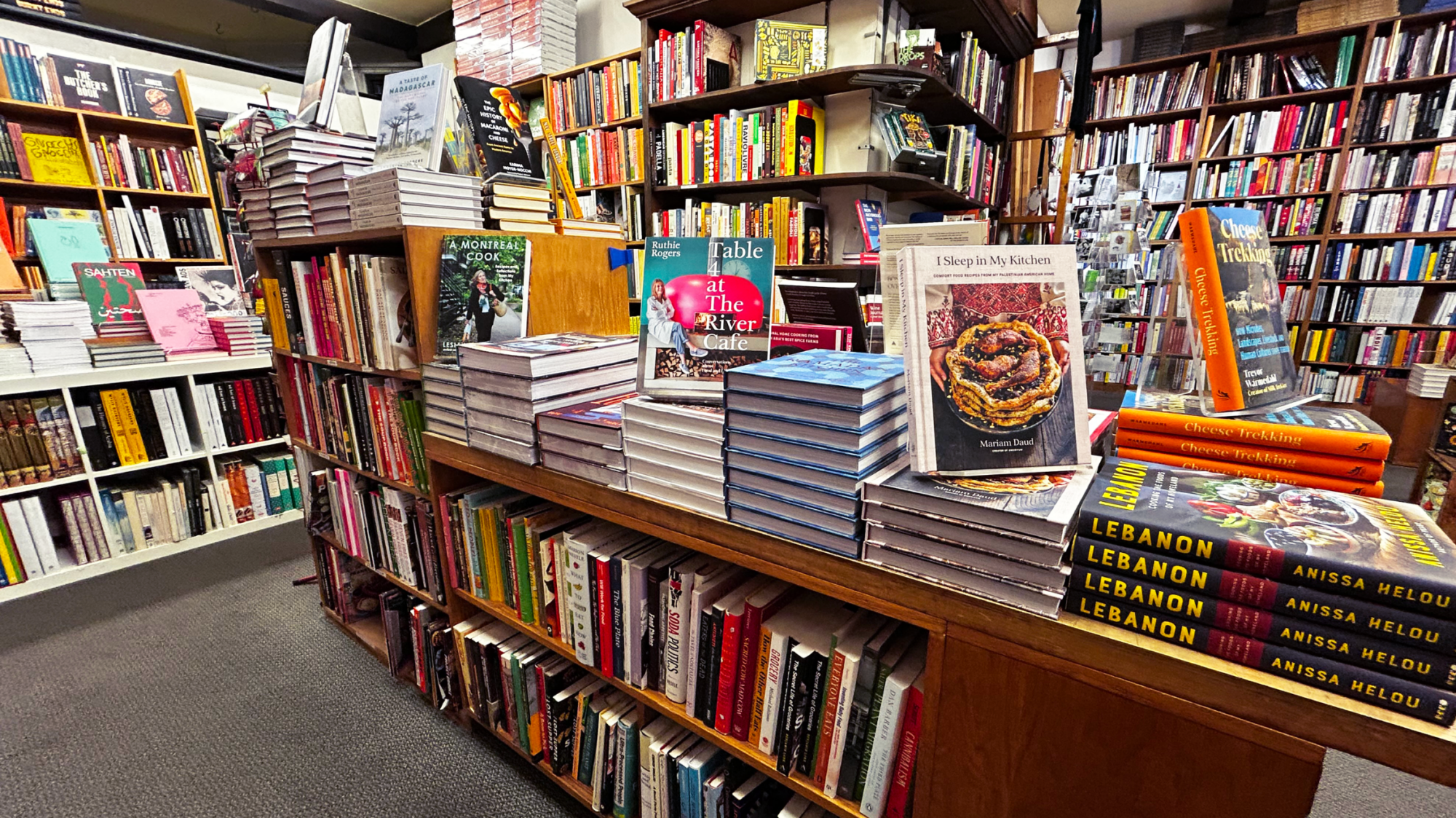
Not too long ago, the physical cookbook seemed to be heading toward the same fate as the compact disc. What happened was just the opposite.
In October 2011, Julia Child’s Mastering the Art of French Cooking became available in a buzzy new format: the e-book. The release was years in the making, the New York Times reported, with Judith Jones, the Knopf editor who originally acquired the iconic book, insisting on keeping the original two-column format, requiring the production staff to type the entire book by hand to create this digital reproduction.
In an article titled “Cookbook Revolution,” the Chicago Tribune’s Jennifer Day wrote that there was “no need to page through the book searching for cross-referenced recipes; just touch the text, and let your e-book reader find it for you.”
Writing in a column for Slate the following year, L. V. Anderson confidently predicted that the extinction of cookbooks was nigh. “I’m not only certain of the imminent demise of the print cookbook—I’m fine with it. That’s because print cookbooks offer nothing that apps, e-books, and websites can’t, despite print enthusiasts’ efforts to recast them as objets d’art.”
In her flame-throwing piece, Anderson made an “anything you can do I can do better”–style argument, focusing on quality of recipes, readability, and aesthetics—and arguing that each already was or would soon be improved on e-readers, websites, and apps. Fifteen years later, the cookbook is very much alive, despite the premature obituaries. In fact, it’s thriving.
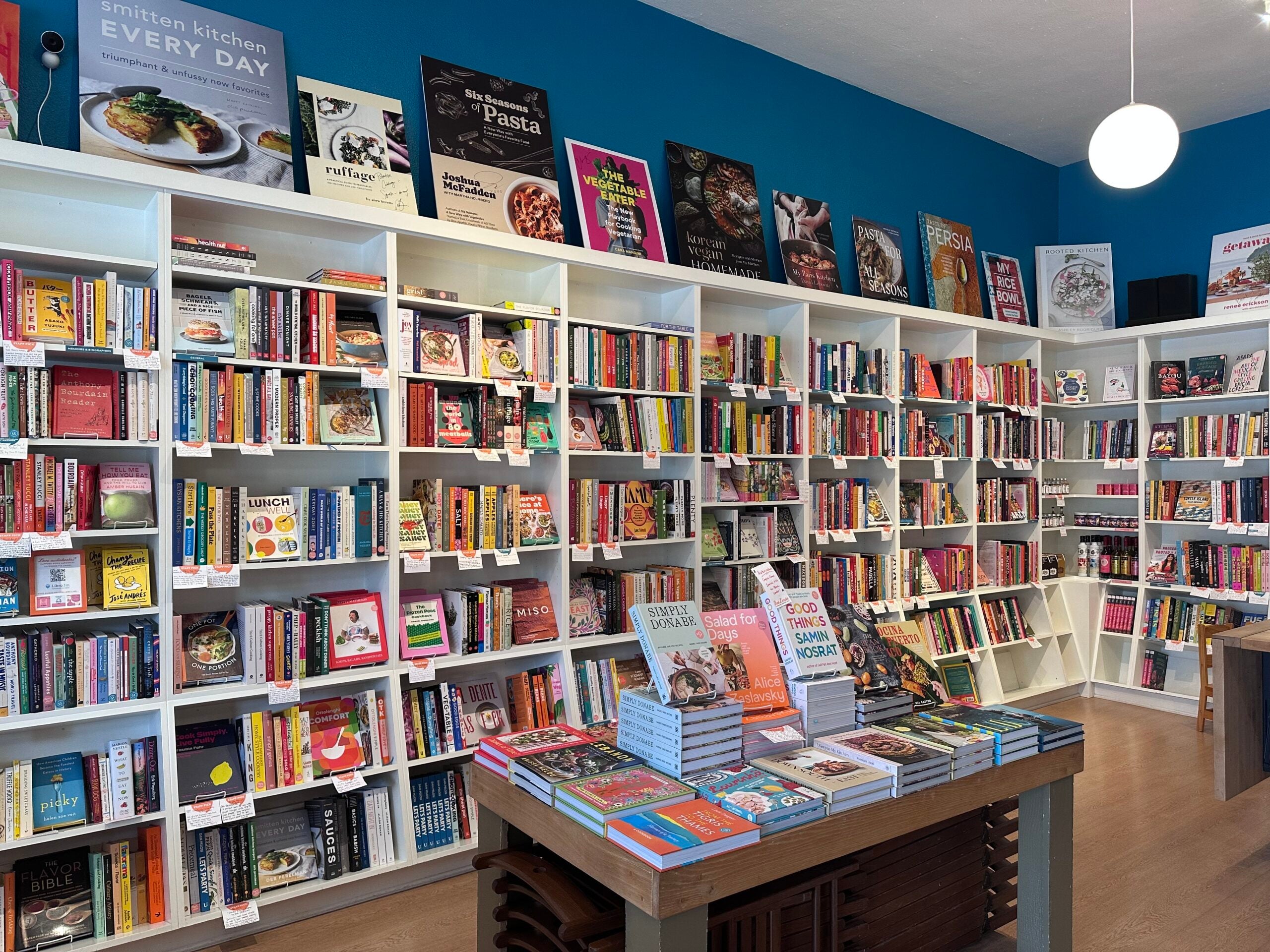
Book Larder in Seattle. Top: Kitchen Arts and Letters in New York City.
Since Anderson’s confident—and at the time hardly radical—prediction, cookbook sales have grown 8 percent year over year from 2010 to 2020, according to point-of-sale data tracking service BookScan, with the growth driven largely by physical books. The COVID-19 pandemic created significant bumps in sales. In 2025, baking book sales were up 80 percent over the year prior, despite an ever-growing list of alternatives for recipes and recipe-adjacent content. Cookbooks continue to sell.
How did this happen? Faced with what looked like an existential threat, publishers did not retreat from print. Instead they leaned into what the digital world couldn’t replicate: the tactile pleasure of a beautiful object, a cohesive world of recipes and stories, and the trust that comes from careful testing and editing.
“I remember that so clearly. It was a key moment,” Jennifer Sit, editorial director at Clarkson Potter, says of that turn-of-the-decade panic around the impact of e-books. “What we did is really double down on the quality and the production values of books. Our books are ones that you really want to own and have as a physical object—a beautiful thing that you want in your home—that also is full of great recipes, of course.”
It turns out that the physical cookbook is something that simply couldn’t be represented in e-ink. “The design, the photography, the writing, the paper, the size of the book, the production—it all comes together to create an object where each book is a world you step into,” Sit says. “What drives me as an editor is that each cookbook is a world that we create together.” (TASTE is part of the Crown Publishing Group, home to Clarkson Potter, although it is editorially independent.)
“You may never cook a recipe from that book on your coffee table, but it’s a marker of participation in a conversation about food, about culture and what you subscribe to.”
Building these designed worlds isn’t just a way to differentiate physical books from e-books. Aesthetics have become especially important in this social media age, when visuals are tied to personality and brand.
“We’re all on our phones, looking at TikTok and Instagram and digesting things visually. Cookbooks have followed that,” says Melanie Tortoroli, an executive editor and vice president at W. W. Norton. “We spend more time than ever thinking about the look of a book: the colors, the photography, the styling, what plates to use, which backgrounds to set up, what kind of a scene we want to create for the reader.”
Sit echoes this sentiment: “Audiences have increasingly desired more visual content,” she explains, adding, “Most of our cookbooks have an accompanying photo for every recipe, and sometimes process shots and QR code links to supportive video content for techniques.”
Sally Ekus is a senior literary agent at Jean V. Naggar Literary Agency, where she spearheads the Ekus Group, a boutique division specializing in cookbook and lifestyle titles. She has also observed the evolution in cookbook visuals. She says that two decades ago, proposals would rarely mention the “look and feel” of a book. Then a “vision” section became commonplace, providing space for a would-be author to offer thoughts on design. Eventually mood boards appeared with examples and inspiration. “Now many proposals going out our door are fully designed [to] evoke the feeling that somebody wants their book to have.… ‘This is an extension of my social media, or my blog, or my community, or my products, or my restaurant, or whatever my brand is.’”
This extensive focus on turning cookbooks into highly visual products is a way of differentiating physical books from their digital alternatives, but it’s also a way to connect with audiences that are now often built in the digital sphere through something tangible and real.
Few people have watched the relationship between cookbooks and food media evolve as closely as Ekus. Her mother, Lisa Ekus, founded the original agency group in 1982 as a culinary publicity firm where she helped media-train figures like Emeril Lagasse and Padma Lakshmi and helped launch the emerging category of culinary media.
As chefs became celebrities, audiences became potential customers for their cookbooks. I remember, as a kid, lining up for a book signing of Lagasse’s There’s a Chef in My Family! when it was released in 2004. I was excited to hold a physical object from the chef I had watched on TV. Anderson’s predicted demise of the industry in 2012 may not have accounted for the number of food personalities that would soon explode onto the scene. (Anderson did not respond to a request for comment.)
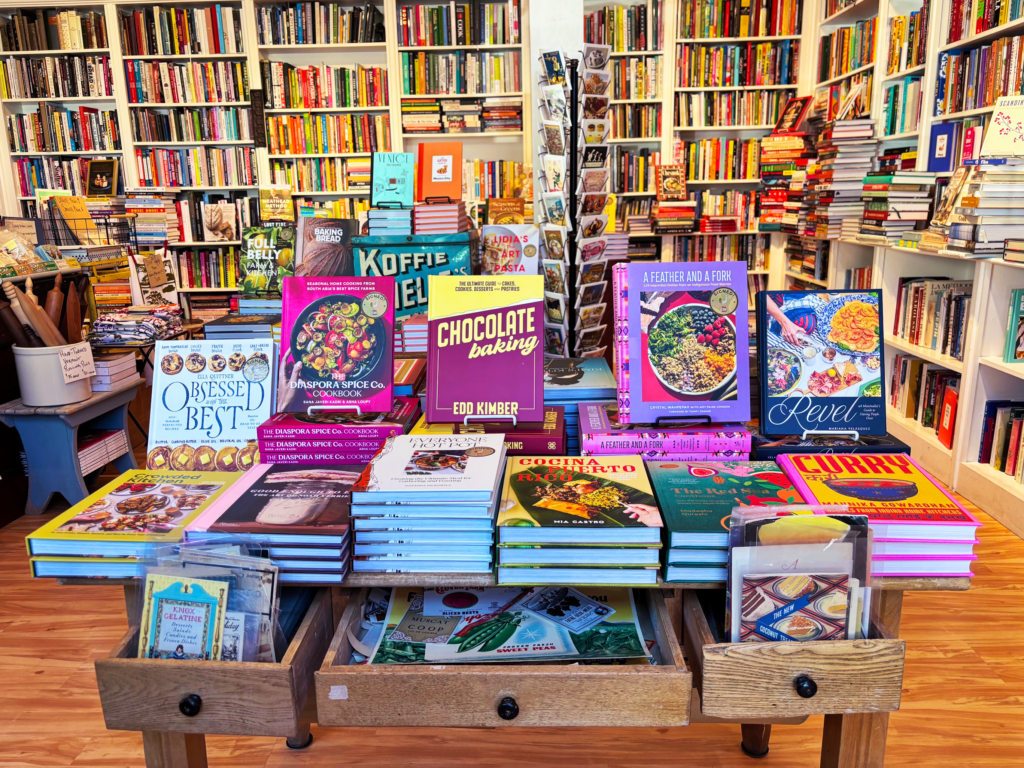
Omnivore Books on Food in San Francisco.
In the past decade, platforms like YouTube, Instagram, and TikTok have dramatically expanded who can build an audience around food. It’s no longer just traditional figures like Child or Lagasse drawing in expansive audiences with TV shows but countless creators working across these social media platforms and through popular Substack newsletters.
In 2022, HarperCollins reported that 35 percent of its cookbook acquisitions came from digital talent—and it’s hard to imagine that number hasn’t increased since then.
Just as Lagasse’s book allowed a seven-year-old me to hold on to a physical piece of that beloved “Bam!” flair, today cookbooks continue to offer readers a way to deepen a parasocial relationship—to step into a favorite creator’s world. “It’s like having a calling card” from your favorite creator in physical form, Ekus explains. “You may never cook a recipe from that book on your coffee table, but it’s a marker of participation in a conversation about food, about culture and what you subscribe to.”
I find this true of my own cookbook collection, which has expanded beyond the Lagasse canon. Some cookbooks are tucked away in piles near the kitchen, but others sit out on display. On a credenza in my living room are plants and matchbooks from favorite restaurants, a ceramic incense holder from a Mexico City market, and a leaning tower of New York magazine issues. And there are cookbooks: Eric Kim’s Korean American, Khushbu Shah’s Amrikan, Tenderheart by the fabulous Hetty Lui McKinnon, and I Am From Here by Vishwesh Bhatt. These books are not just manuals I reference for culinary inspiration. They aren’t purely decorative signifiers of taste and identity. They are worlds I want to step into, symbols of participation in the multidimensional ways our food stories play out today.
Notably, the digital media ecosystems that once seemed poised to replace cookbooks have instead helped grow them. Eric Kim, for example, writes for NYT Cooking, a source for recipes far more accessible than purchasing and flipping through the pages of a book, yet his book sits on my shelf nonetheless. Sally McKenney shares multiple free recipe videos a week to her more than one million Instagram followers, but Sit points to Clarkson Potter cookbook, Sally’s Baking 101, as one of the imprint’s strongest-selling titles since its release in September 2025.
“We have authors who are creators and come from that world where they’re serving up recipes online. But what we’ve found is that their audience still wants a physical cookbook,” Sit says.
Cookbooks have increasingly become extensions of the personalities and communities that form around food online. But social media doesn’t just help publishers market a cookbook—it has changed who is offered the opportunity to write them in the first place.
“It used to be that you had to be the expert on X cuisine, and you would write in a very detached third-person voice, and you would try to be as ‘authentic’ and authoritative as you could be. I think recent years have shown that nothing is authentic and everything is filtered through a personal lens,” Tortoroli says. Now cookbooks are frequently drawing on an author’s personal stories. “They’re saying, ‘Here’s my version of it.’ I think it’s an exciting way to think about who can cook and what stories deserve to be told.”
“You can get a bunch of recipes online, so the book needs to offer some sort of other experience,” Ekus says. “And for me and our agency, it’s often storytelling and writing. If somebody sends me a proposal that I get sucked into and my inbox fades into the background… that’s the making for a great book, in my opinion.”
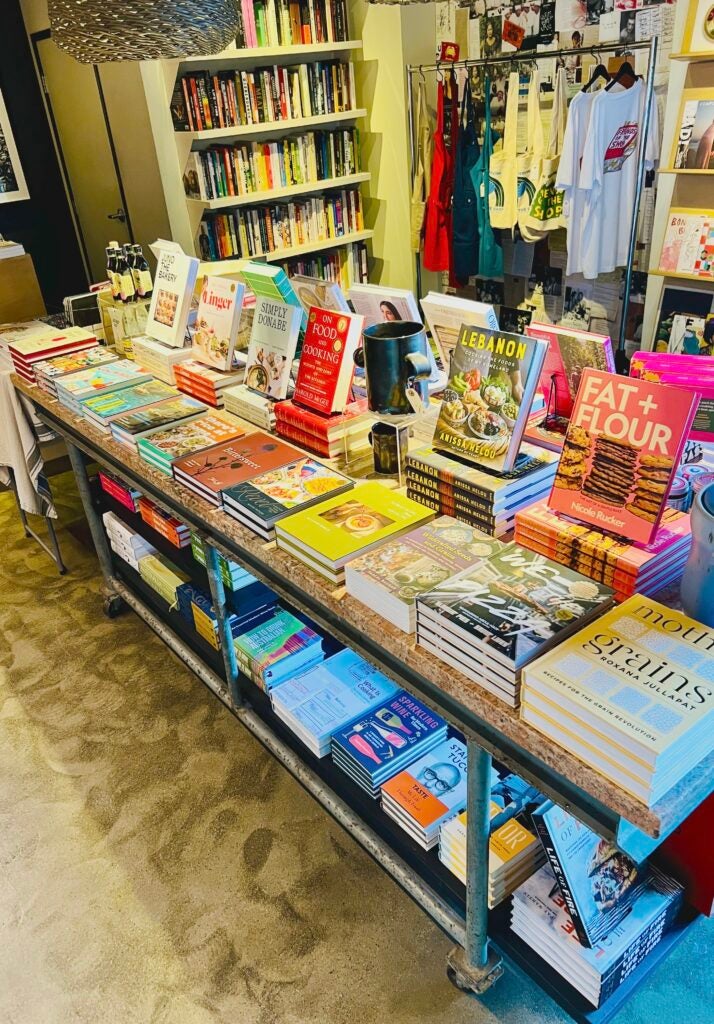
Now Serving in Los Angeles.
Booksellers see this dynamic play out in real time. “I love how cookbooks tell the story of everything, just through food,” says Celia Sack, who owns Omnivore Books on Food, a culinary-focused bookstore in San Francisco. Often that story is a personal one from a media personality, but it could also be of a time, a place, or a community. Sack sells plenty of personality-driven cookbooks, but she also finds customers excited by the opportunity to learn about a new technique or culture. She points to Burma Superstar, a book from a local Burmese restaurant with the same name, as a prime example of this. “I think the armchair travel of cooking different cuisines keeps people excited. They want to learn new tricks,” Sack says.
Sack saw both sides of this equation play out with Samin Nosrat’s best-selling 2017 release, Salt Fat Acid Heat. There was a first wave of customers eager to buy the book for insight on this culinary idea and Nosrat’s scientific approach. “After the Netflix show came out, there was a whole new group of people coming in and getting excited about it. They fell in love with her personality,” she says.
Visuals, personality, and story might be part of that special sauce that helps cookbooks thrive and draws audiences to them, but recipes and technique remain what grounds them. “It’s my job to make sure that the recipes are still working and that people will want to cook from them,” says Tortoroli. “If I want to publish a personal story or a memoir, I would just do that in a different form,” she adds. “Part of the reason people buy books is the story, but they also know this is a recipe that has been tested, it’s been copyedited, and it reads well.”
Sit emphasizes that a book like Sally’s Baking 101 doesn’t just sell well because of McKenney’s platform with a million followers (though it doesn’t hurt). “That built-in audience may be the first group that goes to their book, but what makes these books have long legs beyond that is that the books are really good. They…have strong recipes that work, killer packages, great titles, awesome covers. They’re working on multiple fronts,” Sit says. “That’s what you want: for them to have this evergreen life. And that takes having a very high-quality book.”
That focus on quality and trust may be more important than ever as the cookbook industry faces its latest threat: AI slop and rage-bait videos, an inundation of careless content spread through the same social media platforms that gave so many deserving voices a shot.
“People still want high-quality products at a time when there’s a lot of lower-quality, unvetted material out in the world,” says Sit. “It feels even more important to go to the sources you trust with material that has gone through a rigorous editorial process and been vetted in multiple ways.” There are publishers cutting corners and AI copycats taking up space on Amazon. But most audiences still value the trust gained through an editorial process and beauty from the human touch—or so we must hope.
Back when publishers fretted about the e-book revolution, Sit remembers attending an industry panel hosted by Publishers Weekly. “There was a conversation [imagining] a world where you buy recipes the way you buy songs on iTunes.” Today the comparison to a now-dead technology proves the speed of change, but it was a time when worried publishers were “looking at other industries and seeing what might apply to cookbooks.”
Ultimately what helped cookbooks survive wasn’t copying some other technology but leaning in—leaning into the tactile experience, to the stunning visuals, to the world-widening stories, to the trust and authority of people who care deeply about quality and experience. It’s something we can all learn from: an indulgence in beauty and narrative, grounded in utility and trust.
Sack also found a comparison in the world of music. “When you get one recipe online, that’s fine. If I want to make sticky toffee pudding, I’ll go online and look at that. But it’s like downloading one song instead of the entire album,” she says. The album—the cookbook—is “someone’s whole gestalt”: a collection of photos and stories and recipes, a new world you can step into, a total that is greater than the sum of its parts.