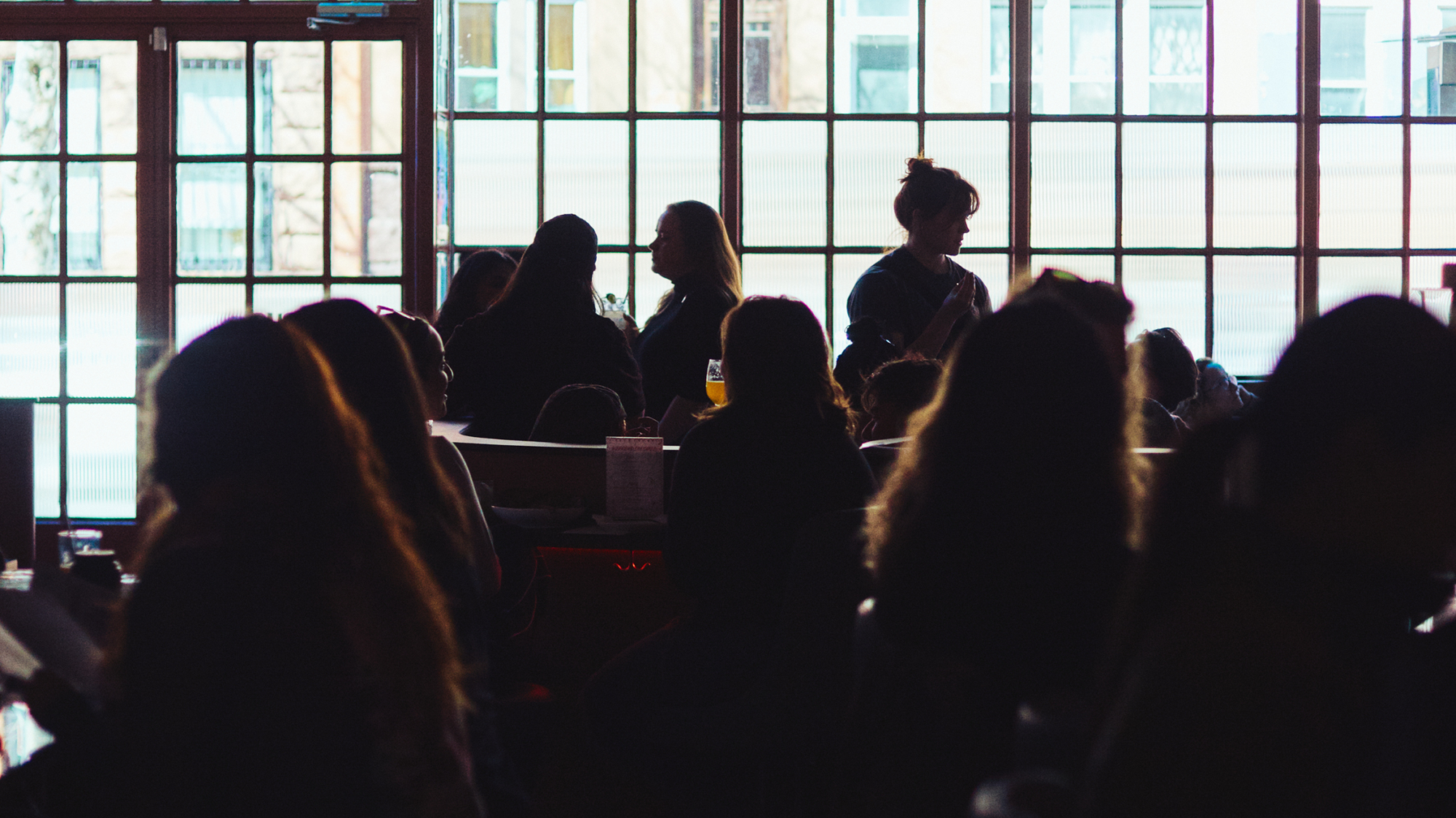
Ye olde pubs, taverns, and beer halls aren’t the only places to catch the big game anymore.
The 2026 FIFA World Cup, whose matches are set to begin on June 11, is the biggest sporting event to ever hit North America. Over 5 million tickets have already been sold for the 104 matches taking place across the United States, Canada, and Mexico over the course of the monthlong tournament. If you’re not packed into a stadium, the typical spot to catch a soccer match with a crowd would be a dark European-style pub or a dingy dive illuminated only by the glare of TV screens, where the floor is sticky from spilled beer and the air hangs thick with the smell of oil from the deep fryer in the back. But lately the genre has been expanding to reflect the reality of fandoms themselves—with new, inviting spaces bringing better lighting, offering better food, and catering to a new kind of community.
Josh Borock, one of the partners behind the new football-focused sports bar Socceria, is a longtime soccer fan who’s frequented Irish pubs, German beer halls, and standard American taverns in New York himself. These were usually the places playing international soccer matches, even in the mornings and afternoons. But, he says, “I never really found a place that I felt was kind of—I hate to say—as beautiful as the beautiful game.” He started to think “there was a different way to watch it.”
Socceria is aiming to open in Greenpoint, Brooklyn, in time for the World Cup. It promises to be an intentionally designed space that pairs the requisite big screens with even bigger windows that flood the room with natural light. “We started to look to Spain, Portugal, Brazil, the Caribbean, and Mexico for design,” Borock continues. “Why can’t it feel a little bit more tropical? Because that’s where so many people who play football are from.”
And with chef Giovanni Cervantes and Tania Apolinar (the duo behind the mega-popular Taqueria Ramirez, recently named a James Beard Awards finalist) on board, the menu is full Mexican cantina, with all kinds of garnachas, including crispy chicken tinga quesadillas, sopes campechanos with their thick, fried masa tortillas holding a meaty mix of asada and chorizo, and tlacoyos stuffed with nopales. Of course, they’re paired with classic cantina cocktails like margaritas and micheladas. “It goes hand in hand with this kind of place,” Apolinar says, especially because fútbol is so big for Mexicans and Latinos in general.
Though sports have always been popular with the mainstream, fandoms have truly diversified over the course of the last few years, according to Dylan Hales, cofounder of One4One, a swanky new sports club and lounge that opened in New York City last fall. “Different age groups, men, women—just a lot broader of a spectrum of folks that are interested.”
A broader spectrum of people watching brings with it a broader spectrum of tastes. And sports bars, part of a hospitality category that has been steadily growing alongside general sports viewership, are paying close attention.
“There is something obviously really nice about enjoying a little bit more of a put-together space with a thoughtful cocktail program and a nice food menu,” says Hales.
At one4one, guests can order freshly shucked oysters, truffle fries, shrimp cocktail, and a classic martini while watching the matches from the art-deco-inspired bar upstairs or from more intimate sectional sofas in the lounge downstairs.
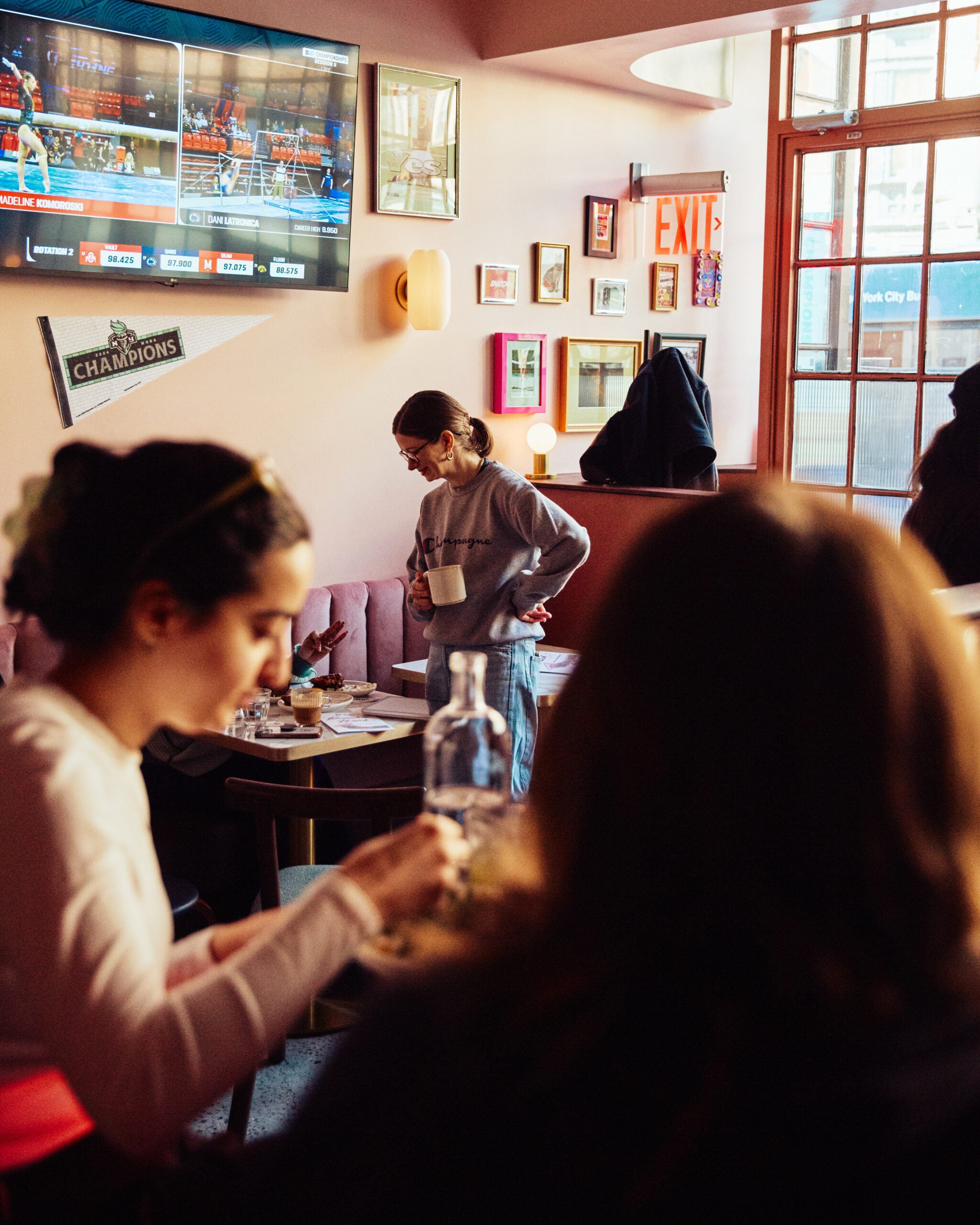
Clinton Hill’s Athena Keke’s
In cities like New York, London, and specifically Toronto, where just about half the population are immigrants, it only makes sense to have places that create a sense of comfort and familiarity for these communities. Sports, in many cultures, are akin to religion, and even members of the diaspora who don’t cop stadium tickets need places for worship.
“We get a lot of the local Japanese sports crowd,” says Jeffrey Chu, owner of Toronto’s baseball-themed Tebasaki Wing House. The izakaya and sports bar—which draws other local sports fans as well as recreational sports teams (including a Japanese Canadian soccer team whose jersey Tebasaki sponsors)—is decked out in Blue Jays merch and other baseball gear, part of manager Yo Ono’s personal collection on display. In addition to Japanese-style wings tossed in kombu salt and yuzu kosho lemon pepper, Tebasaki serves classic izakaya staples like takoyaki, chashu, and ramen, which can all be washed down with bottles of sake and Sapporo on tap.
Further downtown, fans of Thai boxing and mixed martial arts (MMA) flock to Muay Thai Bar and Restaurant, where they can order a crying tiger picanha, get a cold pint of Singha beer, and catch their favorite fighters kicking, striking, and blocking their way to amateur and championship titles. For restaurateur Thanyaporn Tinthanasan and her chef husband, Inchai Tabun, the goal wasn’t merely to have a viewing venue but a place to experience Thai culture through food and this once-niche combat sport, which is slowly gaining mainstream traction.
Like Muay Thai Bar and Restaurant, this rising class of sports bar often caters to growing fandoms. Staying true to its mantra (“Showing all sports. For all people”), one4one hosts March Madness and Super Bowl watch parties, but it also screens Formula 1 Grand Prix races, PGA tournaments like the Masters, and even sailing. And then, of course, there’s the booming world of women’s sports.
“I’ve definitely heard someone go, ‘Wait, there’s women’s hockey?’ before,” recounts AL Murray, who runs women’s sports bar Athena Keke’s with her life partner, Clau Capriles. But she’s glad that their sports bar in Clinton Hill, Brooklyn, named after their beloved cat, has provided customers with what she calls “expanding-your-horizon moments.”
More than anything, she’s grateful to have opened a place where women, queer people, and neighborhood folks can “enjoy the space and the company and not feel weird.” In 2025, the WNBA smashed league viewership records on ESPN, with over a million people on average tuning in for each game during the regular season. By the network’s estimates, women’s soccer is also set to be one of the world’s top five most-watched sports by 2030. Capriles, who comes from Bolivia, intentionally chose to include Bolivian food like cuñapes and salchipapa alongside “Baltimore fries” dusted with Old Bay Seasoning, as a tribute to Murray’s roots, to reflect what home, comfort, and family mean to them as a couple—and what they want to contribute to the neighborhood.
“Times like these, when it feels really hard to be yourself and to feel hopeful,” says Murray, “it’s when we need spaces like this and community the most.”
While food, drinks, design, and vibes are all important, what truly makes a good sports bar is its ability to bring people together. “I do think that there’s been a shift in behavior and how people go out, how people mingle, how people socialize,” says Ronnie Flynn, Hales’s one4one cofounder. Maybe it’s generational—influenced by things like late-stage social media, the post-pandemic world, and decreased interest in drinking alcohol. The hospitality world in general is simply trying to figure out how to ride the tide of changes, “exploring different ways to get people together,” according to Flynn. “For us, sports was the vehicle.”
Ono of Tebasaki fondly remembers last year’s Blue Jays playoff run as a true demonstration of what sports bars are all about. “It was so busy, and these people didn’t know each other, but they became friends,” she recalls. “They’re total strangers, but they hugged each other and cheered for the same team and high-fived each other.”
Apolinar hopes the same will be true for Socceria—that it can be a space where everyone, especially Latino fans, can feel welcome and support their teams loudly and proudly. With many recreational youth and adult leagues playing soccer in nearby parks, Borock (whose three kids all play soccer) also hopes to be a clubhouse of sorts where these groups, friends, and families can celebrate wins, find consolation during losses, and just hang out.
“Soccer, to us, is not trendy. This is something that has been around forever. We love it,” he says. “We’re not jumping on any bandwagon. But, you know, we want to give people a new way of taking it all in.”