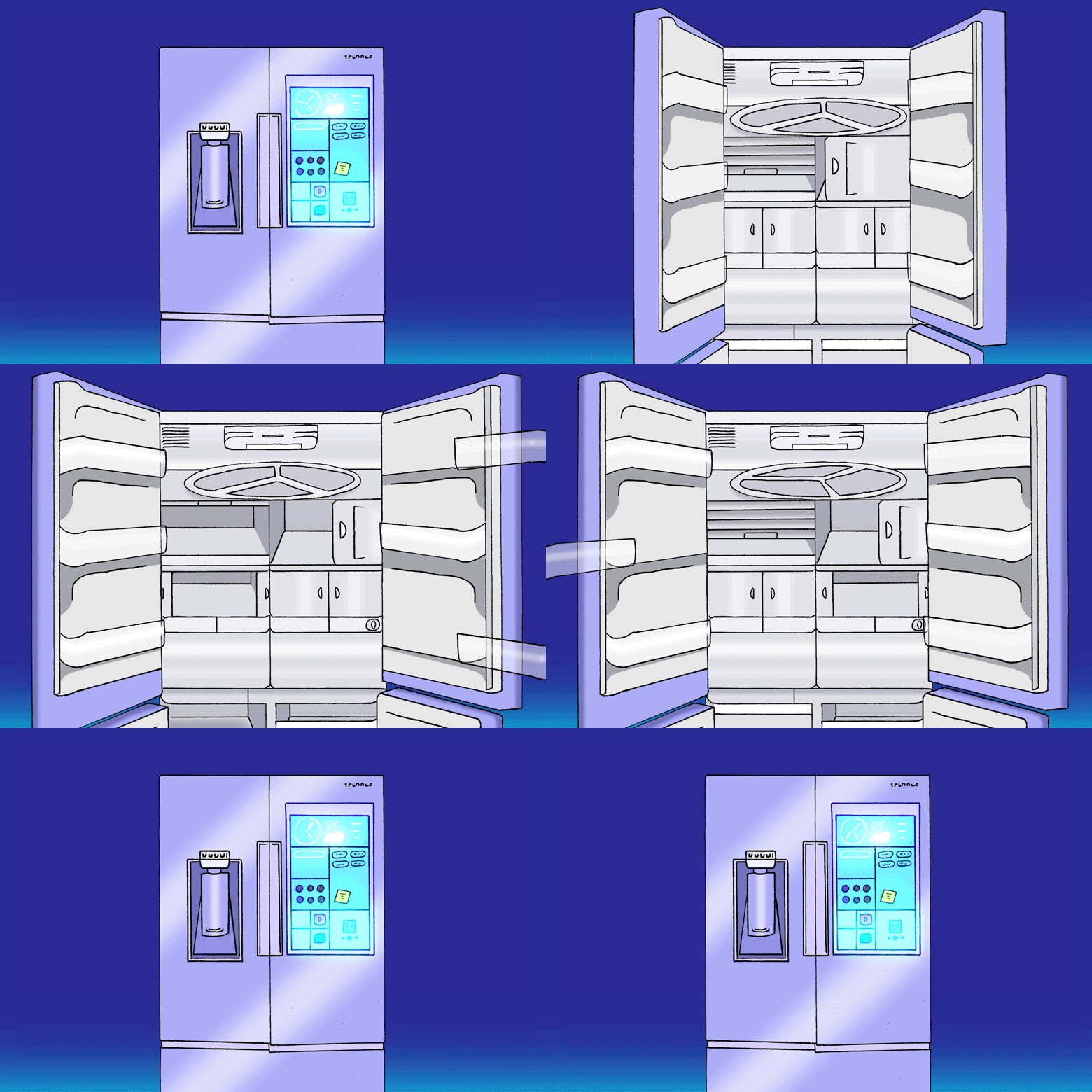
Consumers ask more than ever of refrigerators, and manufacturers keep enabling.
When I moved into a new house in June, I inherited a three-year-old, bottom-mount Fisher & Paykel refrigerator. It beeps in protest when I leave either of its doors open too long. It has quick-freeze and bottle-chill functions, which I admittedly have yet to use, though I find plenty of time to complain about its lack of a dedicated cheese drawer. The freezer comprises a series of sliding drawers, including a shallow one for ice cube trays, though all lack sufficient depth to store my typical backlog of artisanal sourdough loaves. The fridge door’s adjustable shelves blessedly fit a gallon of milk, but they lack high enough guardrails to house my absurdly large collection of condiments and pickles. Their spillover occupies most of the top shelf, nudging out space I intended for canned sparkling water, ready-to-drink cocktails, indie ginger beer, and coconut yogurt.
This is the fifth fridge I’ve had in as many years, none of which I purchased. Aside from a 2016 custom GE French door refrigerator that had a built-in ice maker and filtered water dispenser in the house I lived in four years ago, this is the newest and most tricked out. But lately I’ve been longing for the blank slate of that 15-year-old white box from Frigidaire in the apartment I rented in 2023. Am I the problem, with my bulk buying and condiment hoarding? Or have modern refrigerators lost the plot?
“We use our refrigerators every day, so we’re butting up against their limitations constantly,” said Rachel Wharton, a writer covering large kitchen appliances for Wirecutter, the product recommendation service from the New York Times. “I’m not 100-percent sure fridge designers could make the perfect fridge.”
Refrigerators have come a long way since Americans first met the icebox in the 1860s, which consisted of an insulated cabinet housing a chunk of ice that had to be replaced weekly, according to the Smithsonian National Museum of American History. Now among “the most complex appliances” in our homes, according to Wharton, they manage precise temperature and humidity levels in multiple zones to keep food fresh longer. Some dispense filtered water (with a built-in flavor infuser) and make ice cubes, or even spheres. Some feature modular storage configurations like sliding foldable shelves and a panel on the main door that opens to a small compartment, allowing consumers to grab drinks or condiments without opening the whole fridge.
Others have built-in air filters that deodorize interiors or stainless-steel finishes that resist fingerprints. The newest crop of fridges are “smart” enough to enable remote monitoring and maintenance reminders and to recognize our voices so they can display our personal calendars and shopping lists or calibrate temperatures to our liking. They let us peep at our inventory without opening the door, upload photo galleries, and even watch cooking videos on built-in touch screens. But Wharton hasn’t found widespread consumer interest in smart fridges through her reporting.
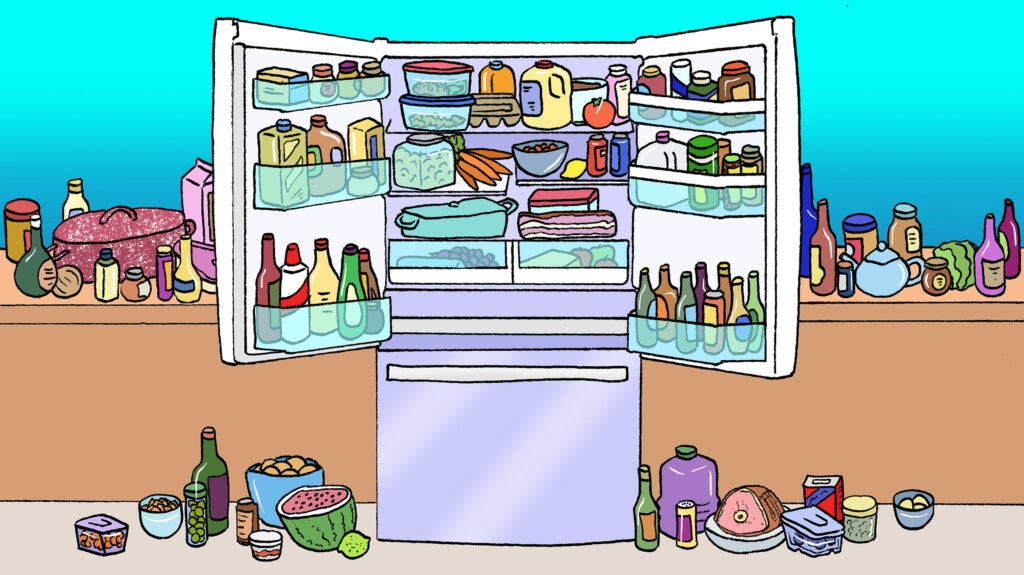
Recently I snapped a photo of my chaotic fridge interior (hooray for those day-bright LEDs) and posted it to Instagram along with the question “Is anyone happy with the layout of their fridge?” Out of the two dozen replies in my DMs, only two respondents praised their refrigerator and freezer layouts—and one of them owned an aging Whirlpool fridge.
“The people who sold our house put in one of those fridges [people use] to do the fridgescaping s**t,” complained Marie Tran-McCaslin, a general surgeon in Fresno, California, who owns a three-year-old counter-depth Dacor French door fridge. Tran-McCaslin was referring to the TikTok-famous trend of decorating the inside of one’s fridge like any other room in the home. Think arranging asparagus in a pretty, tinted-glass vase by flickering LED candlelight, or displaying ceramic sculptures and framed art alongside fluted bowls of oranges and fancy pitchers of milk and juice.
“I really think it exists for looks,” she added. “I can’t reach the top shelf. Where do I put my 800 sauces for cooking, and why does my Tillamook ice cream barely fit into the freezer drawer?”
A handful of respondents said they purchased and installed their own turntables to help with organization. One fashioned cardboard dividers for her condiment collection to separate hot sauces from mayonnaise and mustard; another reported using one of the humidity-controlled produce drawers to store her outsize collection of preserves. Two people confessed to buying backup mini fridges just for beverages.
“We use our refrigerators every day, so we’re butting up against their limitations constantly.”
Rory Gorman, a chef based in Belfast, suggested I descend into the algorithmic rabbit hole of fridges from the 1950s and ’60s, with their turntable-style metal shelving and removable glass-doored compartments, which he longingly referred to as “chef porn.” (I’d eventually learn that if manufacturers had kept using these materials, refrigerators would be unaffordable for most consumers and woefully inefficient by today’s energy standards.)
I asked Dean Brindle, head of product development at LG Electronics, to explain the storage satisfaction disconnect.
“Food storage is deeply personal and constantly changing,” he replied. “Families with toddlers have different needs from someone living alone.”
It turns out that fridge manufacturers spend a lot of time trying to satisfy the nuanced demands of the widest possible cross-section of people. They do this via focus groups, in-market surveys, direct product reviews, by scraping the web for user reviews and comments, and by compiling usage data and behaviors from smart products and in-home observation.
Consumers also ask a lot more of their refrigerators than they did a decade ago. We now expect them to take an active role in keeping fresh food longer, supporting meal planning, and reducing food waste—tendencies that have only grown since the COVID-19 pandemic as more people cook at home regularly, Brindle said. We buy more food in bulk and freeze it for longer periods. And we’re “obsessed” with beverages, Wharton said.
We also want chic fridges that “seamlessly blend into the kitchen landscape and align with our personal style,” said Andy Spanyer, executive director of refrigeration product management at GE Appliances. Part of that stems from influencer culture, although fridge aesthetics started factoring heavily into design during the 1950s.
“A lot of people are either influencers or trying to be, so now our fridges and freezers need to look nicer, primarily for social media, or perhaps even star in it, à la fridgescaping,” Wharton added. Fortunately, the better interior lighting also helps us find stuff.
We now expect them to take an active role in keeping fresh food longer, supporting meal planning, and reducing food waste.
Occasionally, consumer demands seem to contradict one another. Since filtered water and ice dispensers have become standard features in newer models, a 2022 survey found that 44 percent of consumers said they’d rather not see them on their fridge’s exterior, according to the Association of Home Appliance Manufacturers. GE responded by installing removable filtered water pitchers that automatically refill themselves in the doors of Profile French door refrigerators—at the expense of several inches of precious storage space.
At other times, we don’t meet our end of the bargain. LG prioritizes adjustable shelving, like foldable and slidable shelves that tuck away to create more height for storing tall and awkward items, bins and shelves with adjustable heights, door-in-door configurations for quick access to the most frequently used items, and sliding freezer drawers so it’s easier to see what we have. They’re more modular and flexible than the built-in turntables of the ’50s chef porn fridges, Brindle told me. The problem is that customers don’t always take advantage of said workability.
“Sometimes user reviews note that certain configurations didn’t fit their exact needs—despite the flexibility built into these models, like sliding shelves and extra-tall door bins, which often address the majority of real-world use cases,” he said, referring to relentless entreaties for taller storage spaces.
The answer to our myriad storage frustrations might lie in challenging our own tendency to hoard, perhaps by purchasing smaller counter-depth fridges if, or more likely when, we have any say in the matter. (Refrigerators also don’t last as long as they used to, owing partly to the toll complex systems take in order to support their ever more sophisticated features.) Wirecutter surveys find that consumers’ happiness levels off fairly quickly beyond 20 cubic feet of fridge space.
“With a smaller fridge, you’re less likely to have so many condiments that you don’t know where they are because you can’t fit them,” Wharton said. I flinched at the thought of the half a dozen miniature jars of expired Bonne Maman advent calendar jam and Bubbies spicy sauerkraut languishing in the back of my fridge.
Wharton is also a huge proponent of purchasing and installing our own lazy Susans (she owns two, in fact) as we work through our self-control shortcomings, which the modern fridge maker has perhaps enabled for far too long. In the process, we might even regain appreciation for this appliance that, for all its real and perceived flaws, still makes life far easier.
“Fridges can be irritating, and they don’t work perfectly for our many desires,” she said. “However, it is pretty awesome that they keep our food cold, and we don’t even have to carry in big blocks of ice as our forefathers and mothers did.”