
As worries emerge about the future of what has become known as the world’s best cinnamon, growers are deciding the fight ought to be an international one.
Ala’amoe Keolanui has some recommendations for cooking with the cinnamon she processes at OK Farms in Hilo, Hawai’i: “sprinkled on plantains or swirled in coffee.” Its flavor is the pinnacle of warmth, as if orange blossoms, Red Hots, and vanilla pods latched on to one another and grew into the 40 Cinnamomum verum trees that are the root of her spice. Of course, in reality, the origins of Keolanui’s cinnamon, grown on her family-run farm, are much more botanically sound. “Our Ceylon trees all start out as keikis,” says Keolanui, referring to the baby shoots of a plant. “After planting, we have to do very little; it has surprised us that they do so well here, on the Hilo side [of the Big Island].”
Growing Ceylon cinnamon in Hawai’i might be surprising to spice hounds. The prized variety has been heralded as a terra-cotta–colored treasure of Sri Lanka, the tree’s native homeland, for centuries (“Ceylon” was the country’s British colonial name). Sandy, loamy soils and hot, rainy weather have created a thousand-years-long oasis for the woody plants and the prized spice they bear. But, as is true for so many crops, climate change is putting this legacy to the test. “I’ve never seen rain like this,” says Sameera Ambegoda, whose family farms Ceylon cinnamon in Sri Lanka. Three simultaneous cyclones and an intense monsoon struck and devastated the island nation at the end of November 2025. Part of a larger trend of observed significant wetter and warmer patterns, some models predict a 1 to 1.5 degree Celsius rise in the surface temperature of the country by the year 2050—and with it an increase in the frequency and intensity of extreme precipitation events. For cinnamon farmers, these erratic weather patterns directly impact crop yields. “When it comes to cinnamon, the sun is our hero for drying, and rain dictates the harvest, the peeling.”
But Ceylon cinnamon is globally adored. Recipes for champurrado, the Mexican chocolate-based beverage distinct for its thick consistency and corn-forward flavor by way of masa, as well as India’s multi-spiced masala chai tend to call for this variety specifically for its well-known blending ability, adding a warmth and natural sweetness without overpowering other flavors. Woody, citrusy and complex, it creates depth in savory dishes too, from stews to tagines and curries. A wave of upstart and joyfully narrative-driven spice companies have helped draw more attention to the already beloved spice. Spicewalla weaves Ceylon cinnamon into its signature golden milk blend, and Burlap & Barrel has quills specially and impressively cut to fit into its glass jars. Diaspora Co.’s peni miris cinnamon, made up of a blend of old- and new-growth trees, has developed a passionate following; pages of tiny love notes to the spice are written in the website’s reviews section. The marriage of the spicier bark of elder trees with that of sweeter young trees yields a yin-and-yang sweet-spicy element, capitalizing on all that Cinnamomum verum has to offer.
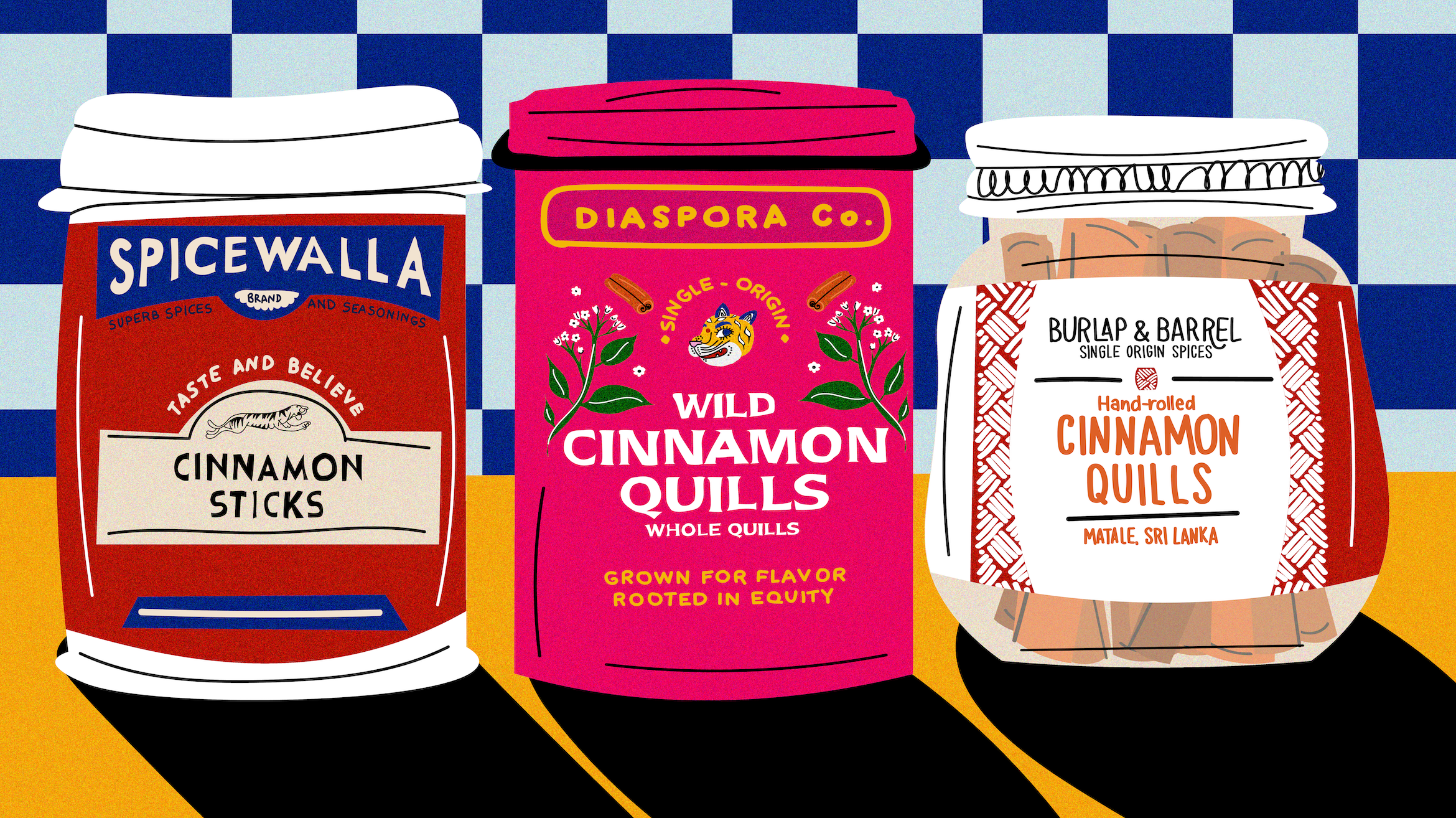
While admiration for their crop blossoms internationally, in Sri Lanka, cinnamon farmers are grappling with disruptions to shifting weather cycles, driven by warming global temperatures. From prolonged dryspells and increased extreme rainfall, the ideal steady rainfall cinnamon trees’ rely on, and Sri Lanka has long provided, is becoming less guaranteed. Too little water can be detrimental for the crop, while too much water can cause waterlogging. And, as co-founder of Burlap & Barrel, Ethan Frisch, points out, the impact of shifting weather patterns follows farmers from the field. “Most cinnamon farmers cultivating it are doing so in rural areas, where, just for that first step of the export process, you are driving from up in the mountains, down dirt roads,” he says. “If there is flooding, if you cannot get through, the whole supply chain is disrupted— beyond the more direct agricultural impacts of climate change, there are economic ones too.”
As worries emerge about the future of what has become known as “the world’s best cinnamon,” growers are deciding the fight ought to be an international one. Their strategy? Sow the seeds.
“We chose to work with this cinnamon because it’s something rare and worth sharing,” says Alexander Larsen of Guatemala Trading Company, a distribution partner for botanicals and spices. Since 2014, he and his partner, Walkiria, have been collaborating with neighboring farmers (they themselves cultivate cacao) who are growing and peeling true cinnamon in another place Cinnamomum verum trees have found a home: Cobán, Guatemala. “When someone tastes it in their chocolate or their coffee, or even a dish like pho, they are connecting to a crop that grows naturally and responsibly in the cloud forests, and that connection helps build demand for farming practices that respect the land.”
Woody, citrusy and complex, it creates depth in savory dishes too, from stews to tagines and curries.
Better known there as canela or Guatemalan cinnamon, the plant thrives in the misty, mossy, orchid- and fern-filled cloud forests, which provide steady rainfall, constant humidity, and rich volcanic soil. In Guatemalan cooking, cinnamon is the star of the show in atoles and kak’ik (a cinnamon-and-chili-centric turkey soup with Mayan origins). “The fact that cinnamon does so well in Alta Verapaz gives the spice another foothold, another safe place in the world—and that matters, because the more regions where cinnamon can thrive, the more secure its future becomes,” says Larsen.
Diversifying growing locations provides options as well as resilience. However, it also poses a question about what is missed when a crop is taken from its native land and planted somewhere else. “Ceylon cinnamon is Sri Lanka,” says Ambegoda. For him, part of what makes this spice so special is how it carries with it a story of place and of people who have preserved the labor-intensive technique required for shaping the delicate, sweet-heat flavor for which the spice is so sought-after. “Harvesting and processing cinnamon is a real craft, and in Sri Lanka, the skills to do so have been passed down through generations; it is a real ‘if my grandfather did it, he will teach me’ kind of thing,” Ambegoda explains. This process, too, is vulnerable, though. “More and more kids are moving away from farming jobs or the country generally, and the craft that goes into each step, like peeling, really is at risk of being lost.”
From growing on the tree to jarring the sticks, the total transformation of cinnamon requires six steps: pruning, peeling, sun-drying, rolling, drying again, and rolling again. Pruning, or cutting the tree branches, comes first. Traditionally, harvesting takes place at the end of Sri Lanka’s two rainy monsoon seasons, in order to ensure that the bark has enough moisture to be safely tampered with and won’t be brittle and crack. The next step is peeling. Using a small knife and great skill, the inner bark of the tree is cut into long, slender strips. They are laid out to dry in the sun at earth’s whim—a process key for locking in Ceylon cinnamon’s flavor and shaping the cinnamon sticks’ slightly curled ends. After about two weeks, much like the rolling of a yule log cake, the bark is gently and carefully rolled into itself and tucked in with extra strips of cinnamon (one way to recognize true Ceylon cinnamon is that its ends will not look like a singular spiral but instead resemble a multiple-sheet stack of cardboard). From there, sticks are dried again, only this time under the cover of a roof, laid over lines of string that form a floating bed with airflow. Finally, the cinnamon is tightly pressed and rolled once more to be cut into sticks of 8 to 10 centimeters, ready to be packaged and sold.
The total transformation of cinnamon requires six steps: pruning, peeling, sun-drying, rolling, drying again, and rolling again.
Today Ambegoda sells Ceylon cinnamon and more spices and botanicals cultivated by his family and other small farmers in Sri Lanka through the Louisville, Kentucky–based spice company CeyoLanka Spices (he is the US connection). Not unlike the wave of farmer-forward spice companies that have launched over the past decade, at CeyoLanka’s core is a commitment to safeguarding ecological knowledge by ensuring those who hold it can see a future for the industry. “During the pandemic, people really seemed to become interested in Ceylon [cinnamon],” he says. “Just from cultivating cinnamon alone, our farmers have been able to buy new homes, which is huge.”
Yet for many, there is value in planting Ceylon cinnamon in new places. For Keolanui, it comes back to building a more sustainable and local food system that puts people and the land first. “Ninety percent of all food in Hawai’i is imported, and that’s a problem,” she says. “But we create our own [cinnamon]; we do not have to buy it from a big-name brand from the mainland.”
In Mexico, Ceylon cinnamon has also become a local ingredient, a part of the country’s burgeoning agroforestry movement, which calls for intentionally planting trees to increase biodiversity and improve soil health. Alongside ancestral foods such as cacao, achiote, and chiles, Ceylon cinnamon is being planted, and the product is making an international name for itself. The Austin, Texas, chocolate company Hijita, founded and operated by former head chocolatier of the famous San Francisco–based Dandelion Chocolate, Ashley Ugarte has identified Veracruz-grown Ceylon cinnamon that she uses in her snowflake-shaped Toasty Horchata chocolate bars and drinking chocolate. Cinnamon sticks and ground cinnamon are also available for purchase. Both are accompanied by a reminder note that shows reverence for the people and labor behind the spice—something that seems to follow Ceylon cinnamon no matter where it goes. The slip notes that the spice was grown “from a cooperative of farmers in Veracruz who consider their land to be ‘edible gardens,’ ensuring that varieties of crops are planted, nurtured, and cultivated using agroforestry methods to ensure healthy soil for long-term growth and sustainability.”
Back in Hawai’i, Keolanui is planning to make the most of her Hilo-grown Ceylon cinnamon trees by turning leftover scraps from harvest into cutting boards or coasters to ensure nothing goes to waste. “We will continue to be here, and I will continue to be ‘the cinnamon lady,’” she says. “We will keep saving the seeds, and keep planting the trees.”